
Love’s Work
with Dora Budor, I.N. Cape, Jesse Darling, Ghislaine Leung, Diane Severin Nguyen, Ima-Abasi Okon, Lydia Ourahmane
10 December 2022 —18 February2023
Galerie Molitor
Kurfürstenstrasse 143
10785 Berlin, Germany


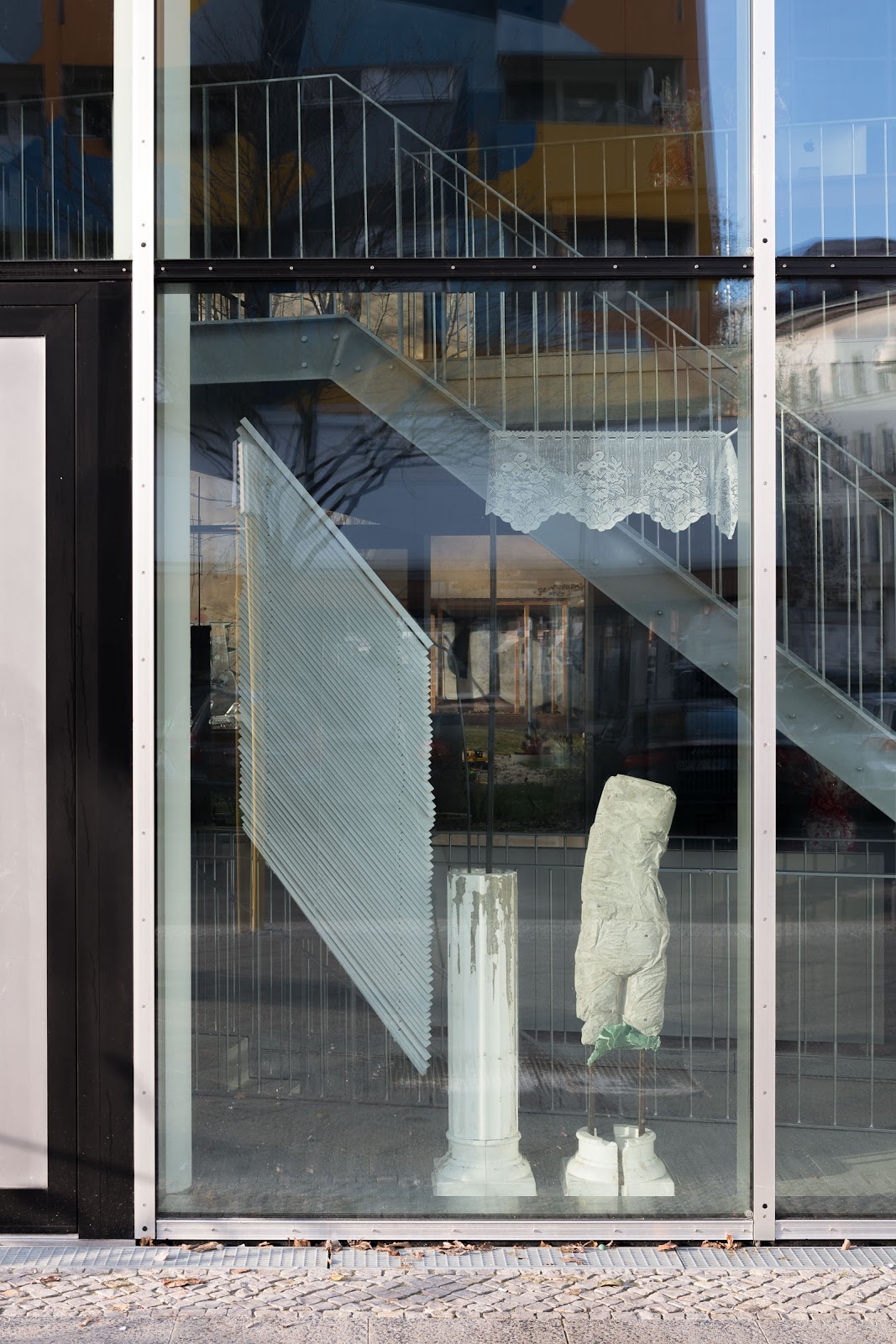

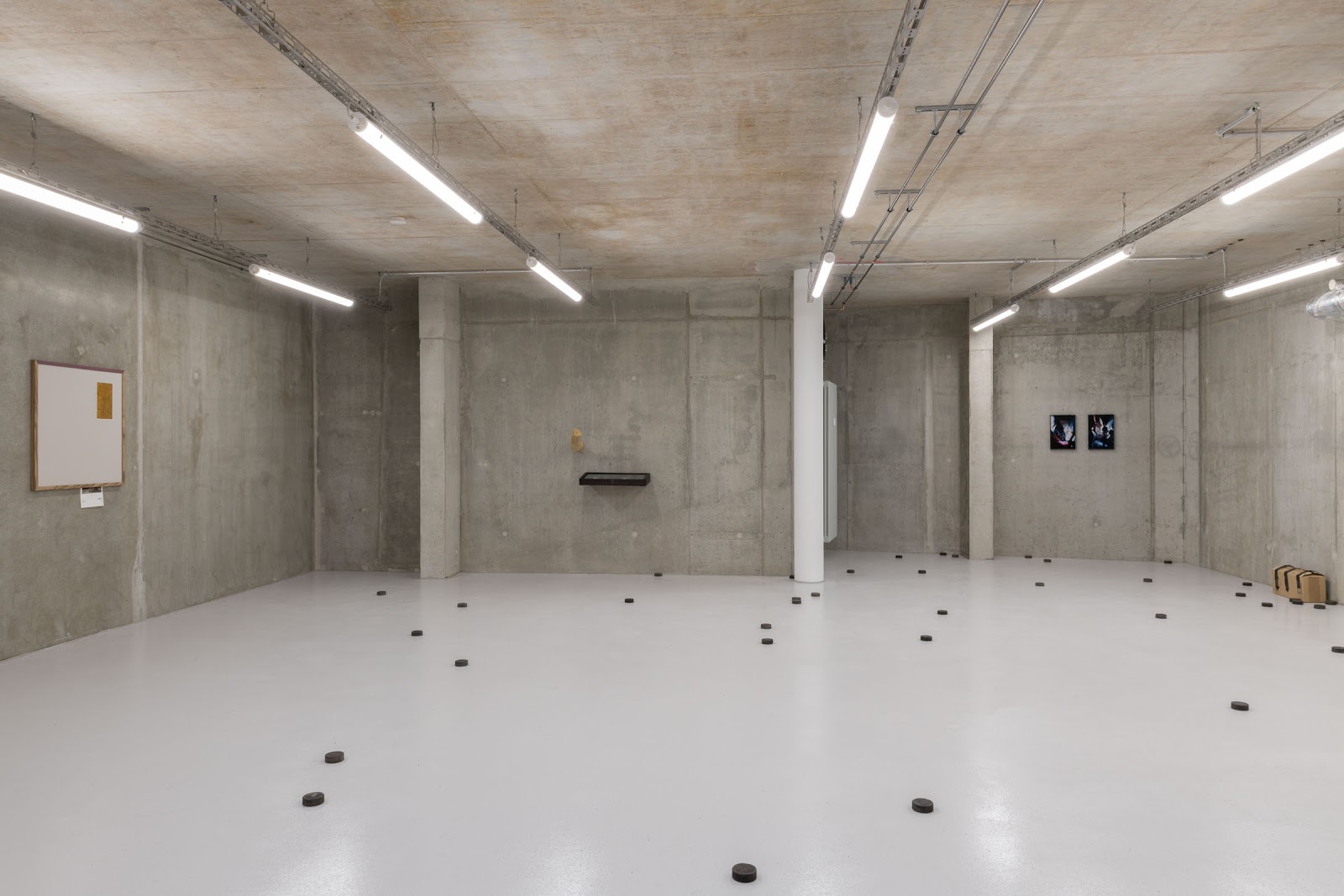


Love’s work. The phrase is potent and immediate. It’s persistent—let it get stuck in your head like a line from a pop song. Or follow the trails of its many permutations: what kind of labor belongs to love? Or stems from it? What does it mean to equate the two? Lifted from English philosopher Gillian Rose’s chronicle of her life, published shortly before she died of cancer in 1995, Love’s Work also nods to her reflection on the revelatory power of vulnerability. The book opens with an epigraph from Orthodox monk Staretz Silouan “Keep your mind in hell, and despair not” and concludes with Rose’s emphatic declaration, “I will stay in the fray, in the revel of ideas and risk; learning, failing, wooing, grieving, trusting, working, reposing—in this sin of language and lips.”
This exhibition brings together the work of seven artists who, in wildly varied ways, broach art as a form of love’s work. These are practices that pay attention to desire and attempt to tap into meaning on a material level. Artmaking as love’s work is implicitly experimental—expounding no thesis, feeling for the margins, moving towards the unknown. Critique emerges as an imaginative mode. And often a way of mourning. Consciousness of the conditions—embodied, institutional, sociopolitical—that inform the production and circulation of the artwork is a throughline as these artists are considerate of the stakes of participating in that ecosystem. Making art like it’s love’s work means being aware of how one takes part: tending to the boundaries between self and artwork, whether that manifests as wholehearted investment or some kind of opting out. Either way it’s about care and complicity. And carving out a space for something like hope.
– Camila McHugh
Through site-specific installations and interventions, Dora Budor positions architecture and institutions as systems with complex inner workings. She approaches these physical and bureaucratic structures as bodies that metabolize their political, cultural, and historical contexts and as beings that can be pathologized. As such, her work is often concerned with homing in on the border between interiority and exteriority and choreographing slippages and reversals of this partition: internalizing exteriors and externalizing interiors. In Love Streams (2022) sandpaper acts as a recurring background for a series of automatic frottages, made by the after-hours rubbing of escitalopram onto the floor and walls of the artist’s studio. Prescribed to treat depressive disorder and generalized anxiety disorder, the ingestible (and thus invisible) substance is repurposed as a raw material in apparitions that lay bare connections between body, psyche, and biopolitical structures. In Pucks (bagarreurs) (2021), the disciplinary tension associated with caffeine, a stimulant central to assimilating body rhythms into labor conditions, is released into the gallery. Leftover coffee grinds collected from the cafe at the Kunsthaus Bregenz in the months prior to Continent, Budor’s exhibition there earlier this year, were molded into solid disks replicating the dimensions of a standardized hockey puck. Pucks (bagarreurs) transforms what is usually a place for contemplation of art objects into the arena of an exceptionally physical and confrontational sport. These temporary anchor points also resemble a multitude of periods or ellipses that mark a linguistic instability or a disorienting negation of space.
In sculpture, installation, drawing and text, Jesse Darling destabilizes dominant narratives propped up by the likes of ideology, religion, mythology and politics, exposing a fundamental precarity in any claim to coherence. Recent works like Corpus (Half-Staff) (2022) and Inter Alia (2022) stand as the ruined relics of crumbling empires, picking up on how the (aesthetic and symbolic) pillars of (what understands itself as) western civilization converge around ideologies of the border. Darling reflects on a society surveyed, policed, and privatized, municipalities impoverished, and systems and people on the brink of exhaustion and collapse. AA half-mast flag of rusted steel fencing and lace and Venetian blind banners erected from concrete and polystyrene posts convey the flimsiness of these controlling infrastructures with both humor and grief. Darling takes the fiddly flourishes that dress up empire building to task in faulty parodies of its theatrical artifice. In Deeds II (2022), tools of violence are adorned like distracting toys, as ribboned hammers that resemble babies’ rattles, jesters’ batons or morris dancers’ sticks speak to scripts of labor, gender, and identity. Hands are a recurrent motif in Darling’s oeuvre and here a roughly constructed arm with an open palm extends from the wall as if to alludeto the messy and unfinished labor of coalition-building and collectivity.
Ghislaine Leung’s work revolves around the contingencies of art’s context. She works with scores in a mode of production she terms “constitutional critique”—or an inquiry into “how we internalize institutions and constitute, in bodily terms, their written and legal industrial design [and] the negotiation of rights.” Bosses II (2019), a pair of readymade mugs extravagantly wrapped in heart-dotted plastic and a big red bow, is a compelling example of her expansion of the terms of critique from specificity towards contingency. First presented as an edition of twenty in Leung’s exhibition at London’s Chisenhale Gallery, the three sets of mugs exhibited here map the registers of romance and the workplace onto another, while also invoking power dynamics within relationships. Hours(2022) offers another take on tensions between life, love, and work, and marks a shift in Leung’s practice, as she turns her astute attention previously directed at institutional structures to the conditions of her own life and artistic production. An incarnation of the score, “A wall painting the size of the artist’s home studio wall divided into all the hours of the week with the portion of studio hours available to the artist marked in black,” the work imbues the Modernist grids of Blinky Palermo or Agnes Martin with the lived limitations of being an artist with a child and multiple jobs. As Leung articulates, this work manifests, “a negotiation of what it means to have dependencies and be dependent. It is a negotiation of what it means to value the labor of maintenance. It is a negotiation of what it means to hold out and resist binarized identities.”
Lydia Ourahmane interweaves personal and political histories into minimalist installations that often deploy light, sound, and talismanic objects. Her elliptical narratives consider the visceral experience of colonialism’s mechanisms of control, drawing in particular on the colonial past and illiberal present of her native Algeria. Her work gravitates towards the unassimilable, as manifested in transcendent energy or experiences of wonder. Ourahmane’s attention to the opacities and stipulations of bureaucracy often functions as the underbelly of her psychic ecosystems. The blown glass Tear Catcher, an antique artifact from ca. 400 B.C. that Ourahmane purchased on eBay, stands as a formal incarnation of the reflection on questions of loss and empathy that motivate Ourahmane’s practice. Historically used to measure the duration of grief, the implement caught tears to be buried with the body of a beloved. The object also evokes the sound of crying, nodding to Ourahmane’s broader concern with the guttural and equalizing qualities of the sonic medium.
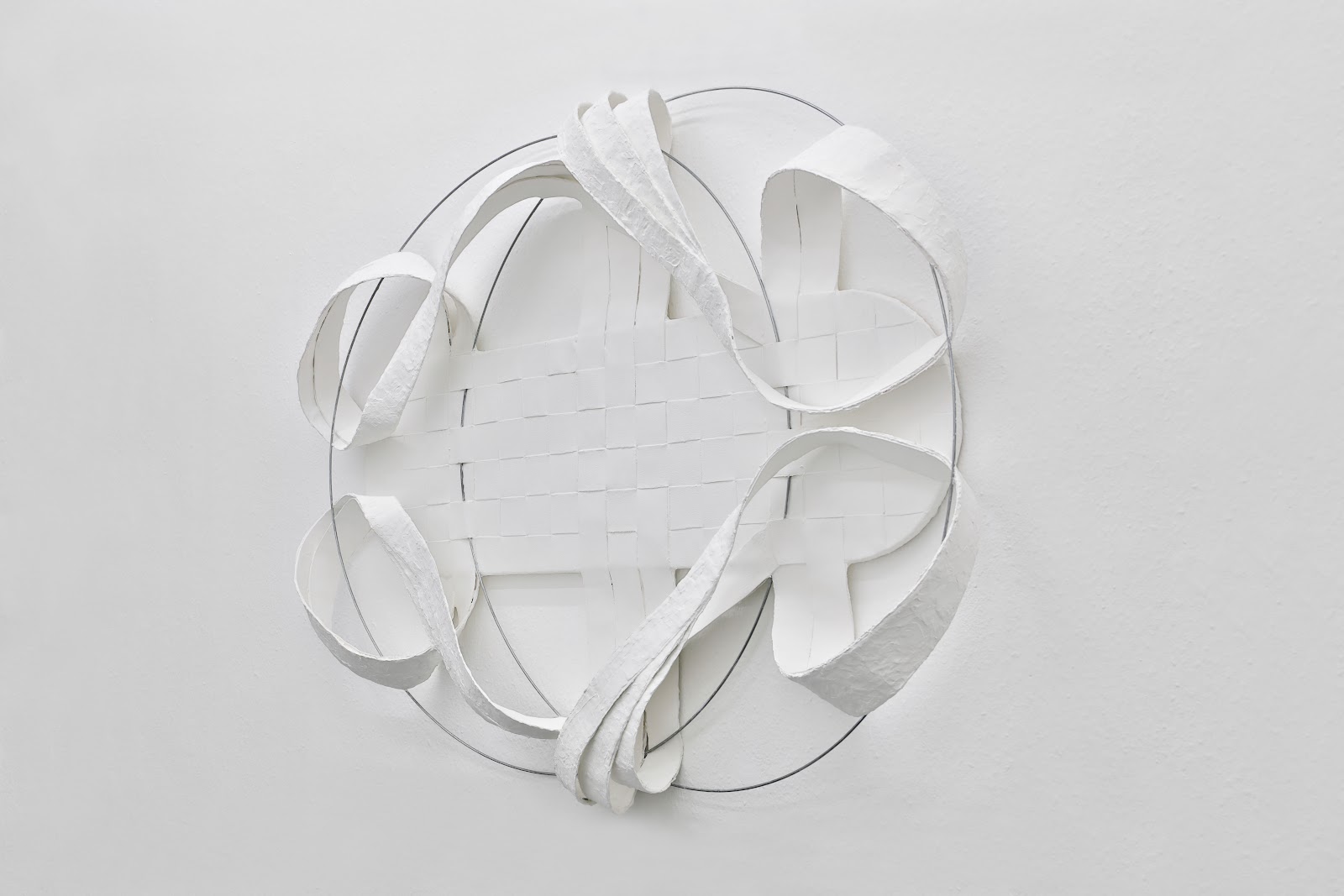
Ima-Abasi Okon works with sculpture, sound, and video to create installations that function like linguistic and grammatical structures. Reworking and swapping arrangements of varietal objects in a sentence-like syntax, Okon attempts to imbue hand-made and mass-produced items with a spiritual charge by way of a material rearticulation. This process draws attention to how materials are embedded in and exhausted by capitalist systems, exploring how systems of taste, value, and excess are formed—and how they might be reimagined. For Aspirational-LY appraised targeted HIGHLIGHTS —The Entanglement is Quantum; Resonating Frequencies as Mahalia GETS OVER over-over! Positioning [Non-residential entry] devices – s4 epEIGHT luscious!!RECAP!!, 2016-2017/ 2019 & 2022, part of the “Mahalia Jackson” series, Okon worked over a panel of Oriented Strand Board (OSB), a cheap engineered sheet wood, in thick layers of classic oak polyurethane wood varnish, and placed it in an unconventional and decorative wooden (zebrano and purple heart) frame. Enclosed is a double passe-partout, leaving only a small area of the painted surface visible. A printed email, an invitation to enter a lottery draw for a limited edition pair of sneakers, juts out from the bottom of the frame. Just as her objects constitute only one aspect of a wider pedagogy, so too do they direct towards invisible or extra-dimensional qualities beyond their physicality. Regarding the series, Okon suggested, “Whenever Mahalia is referenced in the title, know that there’s a conjuring of hope. Go and sit with Mahalia, everything you need to know about how these works operate or attempt to [operate], is with her.”
Diane Severin Nguyen’s photographs and videosfocus on subject matter in states of transformation, probing the division between the intimate and alienating. As she experiments with improvised assemblages of light and material in the studio, Nguyen pressures the camera to work against the impulse to identify and more towards a place of feeling. Promise to Witness (2019) and Story Control (2019) are notable works due to their site specificity, as they were made during a residency in Hong Kong amidst the 2019 protests. Conjuring the particular intensity of the light there, and employing found objects from public spaces, these images refract moments that were witnessed during a period of significant political upheaval and formation. The works embody the artist’s broader interest in how the camera facilitates our desires for individuation and identification, especially within a revolutionary context. Raindrop Bodywork (2019) is more abstract, as a dewy, green orifice crystallizes in and out of focus. Her play with contrast and contradiction extends to the works’ frames, which she burns to create an iridescent patina that looks almost wet.
I.N. Cape is an artist who paints under a pseudonym. They work serially in near-identical compositions, recently of stars, clocks and tally sticks—ancient memory aid devices used to record and document debts and other transactions. Two works from the latter two series, both Untitled (2019), are exhibited here. In obscuring their identity, I.N. Cape removes questions of authorship from painting to emphasize instead an exercise in the mediation of images. Working from screenshots and photographs of reproductions, their repeated images intervene like a stuttering pause in the act of endless scrolling.
https://daily-lazy.com/wp-content/uploads/2022/12/loves-work-at-galerie-molitor-berlin-1.jpgHANNA ROCHEREAU
01.12.2022 – 18.12.2022
curated by Héloise Chassepot
Lokal Int, Bienne/Biel
Rue Hans-Hugi 3, 2502 Bienne, Suisse


Photographer : Stefania Carlotti
INVENTORY
Hanna draws up an
inventory of various exhibition devices.
DESIRE
She conscientiously
picked and selected the items she desires. Sometimes it is fashion, sometimes its displays.
NAIVITY
In
a naive and juvenile attitude she acts as if, through the act of representation,
she could possess the items she paints.
HANNA’S BACKGROUND
Hanna
has a background in visual merchandising, which is an activity that deals with
the visual organization of sales areas or/and cultural areas in order to
optimize the presentation of products, the well-being and satisfaction of
customers, visitors
and staff. An activity that aims at promoting
dirty so-to-say. What you see is what you get, they used
to say.
SHOWCASES
They are
containers in which our desires and wishes are stored. In one of the painting, the showcase has been emptied. A shift that allows the object to be freed from its usual function,
eventually gaining the prestigious status of the one of the object of desire, fetishized.
EMPTINESS OR BLACK FRIDAY
Empty displays, as
if they had been robbed during the last black Friday, as
if there was nothing left to sell, nothing left to exhibit; we can eventually focus
one’s attention on the exhibition’s device
itself.
PINK RIBBON
A kinky pink
ribbon branded by the letter H wraps the shiny/glazed cube.
WRAPPED PACKAGGING
The wrapped
packaging.
FASHION RULES
As we all know really well,
fashion is ruled by a cyclic move, a seasonal renewal. Fashion is in perpetual
motion, having to constantly reinvent and renew itself, by constantly finding
new ways of arranging shapes, colors and materials, by drawing on past fashions
to bring them up to date.
STARS
The famous Adidas’ jacket, international and intergenerational (let’s say:
universal) star of the streetwear is here highly displayed on a white moulding
and carefully covered by a transparent plastic sheet. A displacement that
reminds us how fashion is the best example of cultural recycling, how class
belonging is masked behind a mix and match of clothing, how the big companies
might be happy about it. How funny, the painting is title Cover
the star ?
GOOD DEAL
The good deal. It’s a good deal. A recognizable sign, as seen
as the Mickey mouse white gloved hand is articulating a thumb-up gesture as to
say « It’s a good deal », a
sign of appreciation reminding how validation or dislike are omnipresent in
everyday life.
THE GLOVES ARE OFF
A unique transparent hand levitating on in a 90’s grey background. The
style of an advertising for a glove-holder in plexiglass that ironically thwart
the expression « the gloves are off », meaning when people compete or
argue unscrupulously.
KEEP UP APPEARANCES
In an overall, times seem to collapse. While the injunction « keep
up appearances » evokes the merciless rhythm of consumption and its social pressure, the
patching of various eras of interiors, styles and references layered by the
very personal spectrum of the artist’s envies and desires give the feeling of
an anachronistic compilation. The feeling of time are shuffled once again by
the slow-process of painting that certainly operate as a catharsis. The artistic process being way longer than the one of the commercial purchase provide a
kind of reverse chronology. Hanna reinvent the
idea of possession that can no longer be dealt with impersonal currencies but
need to be owned first: desiring the desire. Keep up with appearances is no
longer a threat, and the rules of the visual merchandising are no longer « what you see is what
you get ». It tells us instead that we do desire, we can then
see.
Margaux
Dewarrat & Héloïse Chassepot
GALERIE THOMAS SCHULTE GMBH
CHARLOTTENSTRASSE 24 D–10117
Berlin


To encounter the works of Leunora Salihu
is to encounter a noticeable presence. They make themselves felt with their
human dimensions, the power of their form and materials, their balanced and
conversational relationships with and to each other in space, and the amazing
crafting techniques used to make them. These sculptural-architectural chimeras
are characterised by their “being-there and being-so”.[1]
All these qualities are ones the artist has been working at consistently and
tenaciously for the last two decades.
In
2021, using the title Pieces, Salihu curated a selection of her recent
sculptural works for exhibition in the well-lit pavilion of the Waldfrieden
Sculpture Park. Enigmatic arrangements, displaying the rapprochement of nature
and technology through the cooperation of their organic and putatively
functional elements. Wood and clay—which bring together the nature-technology
pairing that is so central to her art—are unsurprisingly her two most-used
working materials. Wood as an industrially processed product and clay as one of
the oldest natural working materials in the world. If one takes the titles
literally, then it would seem that these most recent works deal with energetic
phenomena such as light, sound, heat and water, which transmit themselves in
wave form and materialise in open-ended systems and sequences. In Resonanz
(2020), the sculpture stretches out horizontally in a row of ceramic shapes
resembling sideways vases, which seem to oscillate in their expansions and
contractions in between the technoid fibreboards that hold them aloft and
connect them. Elsewhere (Welle, 2020), clay forms glazed on one side in
a matte black attempt to insinuate themselves into a pre-existing rational
system. The qualities at work here can be seen in the processing and handling
of the clay. The self-confident perfection of the piece is both enlivened by
and latently suffused with the obdurate nature of clay once it has been dried
and fired, as well as by its ability to remember and reproduce “every touch”.[2]
In Turm (2020), which from a distance resembles a powerful sound system,
the role of communicating perfection is performed by sophisticated glazing. The
rectangular tower rises up in blocky modules
and appears, at least from the sides
made from fibreboard panels, to be straightforward and functional. The two
other sides, however, are covered with rows and columns of black-green glazed
ceramic objects resembling convex suction cups, which reflect the light that
falls on them.
These
kinds of natural phenomena inspire Leunora Salihu’s drawings as well. A medium
that, in the course of her development as an artist, first came into play for
Salihu during her studies in graphical arts at the academy in Pristina. The
academic approach was strict, and instructors were unforgiving in their
revisions, because, after all, linework
must be exact. “It was tiring […] but it was always a wonderful feeling to have
made it through this process.”[3]
The high degree of sensitivity and precision gained from her studies is still
very much present in her current working method, which is intensive and
characterised by its diversity of production processes. It can also be seen in
her highly personal connection to the materials she works with.
The
artistic language of Leunora Salihu is defined by a passionate grappling with
materials, which find their way peerlessly into comprehensive new objects. The
themes that are most dear to her are bravely and self-confidently brought out
in her sculptures, even in these times of digitalisation, virtual reality and
NFTs. They illustrate burdens and burden bearing, touch on gravity and
lightness, acknowledge space and the space around space, and insist upon the
tactile and sensory qualities of material. In their suggestive visual power,
these works show themselves to be “carefully calculated flashpoints”,
unforgettable situations—experienced, observed and developed out of the
contrasts, contradictions and hazards of our modern world.[4]
These entities by no means expunge what is known and familiar to us through the
voiced silence of their obvious abstraction. Rich in ideas, evocative, powerful
and radical, they much rather help keep the known and familiar all the more
alive.
Text by Rita
E. Täuber
Cat.
Kunstpreis Böttcherstraße 2022, pp. 85-87
Leunora Salihu, born 1977 in Prishtina, Kosovo, from
very early on, took up a very individual track which she continues to pursue,
often combining in her sculptures different materials including ceramic, wood,
and metal. Her sculptures, along with the spatial bodies and installations,
explore the possibilities and limits of movements by using the repetition of
organic and constructive form-elements. She has established a considerable and
multi-layered vocabulary of industrial, architectural, and organic forms, which
grant her works a sense of functionality, blurring the lines between where the
sculpture ends and where the pedestal begins; between interior and exterior.
In 1999, she fled to Germany, moving her studies to
the Muthesius Kunsthochschule in Kiel and then further to the Art Academy in
Düsseldorf. Since then, she has received several awards and has been included
in a number of group exhibitions at institutions including The National Gallery
of Kosovo (2017), Philara Stiftung (2015), Herzliya Museum of Contemporary Art
(2015), Temporary Art Centre, Eindhoven (2015), Museum Kunstpalast Düsseldorf
(2014/15), and Kunstraum Düsseldorf (2012). Salihu’s first noteworthy solo
exhibitions were in 2011/12 at the Lehmbruck Museum in Duisburg and recently at
Skulpturenpark Waldfrieden in Wuppertal (2021), Philara Stiftung (2020), and at
the K21 Kunstsammlung Nordrhein-Westfalen (2017). She was also nominated for
the Prize of the Böttcherstraße in Bremen (2022). Leunora Salihu lives and works in
Düsseldorf.
[1] Leunora
Salihu, quoted in Julia Wallner, „Ein Kunstwerk ist für mich weniger ein
Objekt
als ein Gegenüber. Ein Gespräch“, in: Leunora
Salihu, Bielefeld 2016, p. 42.
[2]
https://vimeo.com/453738741 [10.03.2022].
[3] Leunora
Salihu quoted in Susanne Meyer-Büser, „Das Rätsel des Objekts“, in: Cat.
Leunora Salihu. Gravity on a Journey,
unstsammlung Nordrhein-Westfalen, Berlin 2017, p. 48.
[4]
Gottfried Boehm, „Das spezifische Gewicht des Raumes. Temporalität und Skulptur“,
in: Angela Lammert (pub.), Topos Raum. Die Aktualität des Raumes in den Künsten
der Gegenwart, Berlin 2006, p. 36.
Marco Strappato – Etica, Tecnica e Pathos
The Gallery Apart
Via Francesco Negri 43
Rome


.jpg)
.jpg)
.jpg)
.jpg)
.jpg)
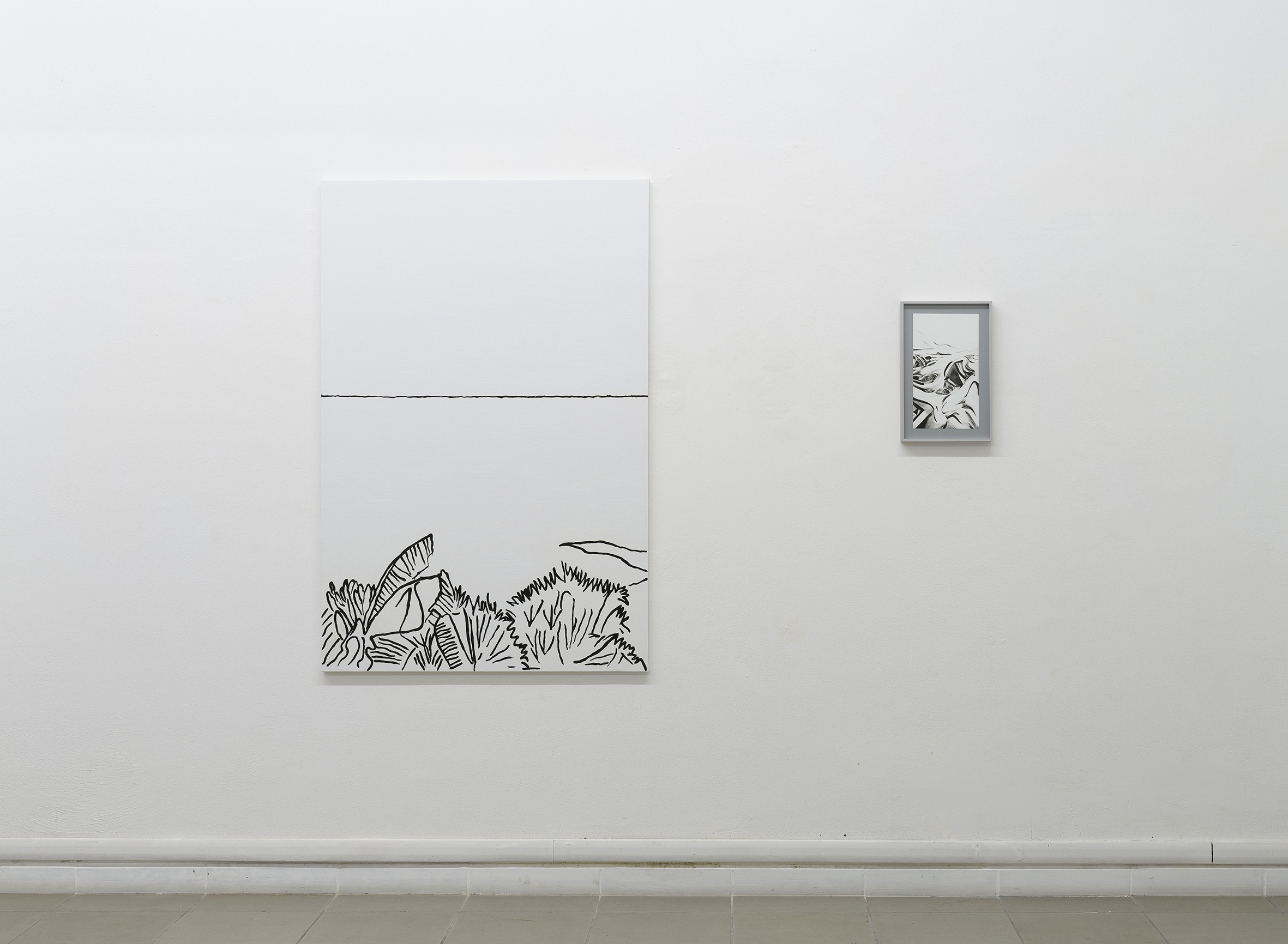
Cantava Giuni Russo nel rigoglioso giardino coltivato da Battiato. Incorniciata da una finestra, con le rose e le note del sintetizzatore cucite addosso, Giuni Russo si aggira […] Ancora e ancora […] trillando che: […] Una rosa è una rosa. E’ una rosa, è una rosa, è una rosa […]. È vero, a volte necessito di conferme. Per poterle ottenere ripeto spesso le parole come fossero dei fili da annodare e con cui ricamare la realtà. Senza accorgermi orno la mia di vita con diafore. Anche se è Giuni Russo ad avermi attirata verso la rosa è Gertrude Stein la gemma che scrisse: […] Rose is a rose is a rose is a rose.[…] Una rosa. No. Un filo di rose, come una collana, così intrigante che in molte hanno deciso di indossarla. Ogni rosa che brilla nei miei occhi amplia il panorama, la tensione sale e i profumi invadono i miei ricordi. Cosa mi stai dicendo Stein? Lei dice soltanto “rosa”. Il valore di questa rosa è dato dalla sua ripetizione. Petalo dopo petalo posso associarle poesie, posso donarle il cuore e posso azzardarne delle congetture. Sono libera di riempire la parola rosa di me.
È la ripetizione di forme e oggetti che appartengono alle nostre realtà e ai nostri ricordi che mi ha spinto a decidere di aprire un portale gurlesque, incorniciato da un festone di rose, nel quale poter progettare un’esposizione dedicata a Djellza Azemi e Giovanna Belossi. Grazie alle loro produzioni artistiche ho potuto essere trascinata in un luogo perturbante, dove ogni oggetto, ogni opera diventa un condensatore di relazioni. Come una rosa è una rosa. Oltrepassato quell’alone verde di Madeleine grazie alle due artiste puoi raggiungere un luogo dove poter placidamente pensare: il divano della mia stanza aveva tre o quattro cuscini? Ricordo davvero il santino della madonna di Barbana incorniciato sulla parete della cucina di mia nonna? Perché vuoi toccare la fiamma del camino?
Ironiche e trasgressive le opere di Djellza e Giovanna sovvertono le nostre realtà grazie a delle singolarità estetiche che si schiantano contro le ovvie generalità di tutte le rose. In questo spazio diventato una plage du temp proverò a sintetizzare di quante relazioni si sono riempite le rose.
.jpg)
.jpg)
.jpg)
.jpg)
.jpg)
.jpg)
Photo courtesy Danilo Donzelli Photography. Courtesy the artist and Galleria Umberto Di Marino.
In continuing the gallery’s current research around humanity, in its ephemeral, virtual, spiritual and self- representational representations, the exhibition unfolds through a series of works, most of them unpublished and created especially for the occasion, that explore the possibilities of painting beyond conventional techniques.
Painting seen as the main form of human representation and self-representation, deconstructed in its universal self-verifying claims, personalized, subjectivized through a playful process of learning and re-learning times, emotions and techniques, becomes an intimate expression of own life.
Following the main thread of his own research, the German artist presents a cycle of works with which he explores the possibilities, rigidities and elasticities of pictorial imagery, playing with materials, beliefs and presumed universal essence.
The creative process preserves the origin of the pictorial gesture in its simplicity by assimilating it to the search for the very essence of humanity through the representation of faces and mystical-spiritual realities, carved in the sand – between reliefs and sinkings – that become counterparts of relationship.
<< In my artistic work, I focus on the essence of the human being. In 2013, I spent a few months in Giverny as part of a studio scholarship awarded by the Claude Monet Foundation. In the wonderful surroundings of Monet’s garden, I had the chance to develop my artistic work further. I was very interested in finding new ways in my painting that would allow me to work in an even more playful way. The process of learning is an essential part of my work, as learning, in a certain understanding, is for me a direct expression of life, and art in turn is nothing other than life. During my time in Giverny I worked on wooden collages. At the same time, I discovered sand as a painting medium for the first time. I had already been experimenting with painting using only pigments in the years before, but the sand now brought me an incredible number of new possibilities. Since then I have developed my own techniques, which have allowed me to explore new avenues in painting and relief art.
Relief is a immensely exciting form of artistic representation for me. It makes it possible to depict the tense relationship between different realities in which human beings experience themselves in a special way. Depending on the type of relief, it is sometimes anchored more in one world and sometimes more in another. Through the development of new techniques, it is possible for me to work with the sand in a very fluid way, unlike conventional techniques. The way I approach my work often reminds me of an archaeological process, where I try to uncover something hidden in the depths. Time plays a role in my work in various ways. Especially through my experiences in accompanying people who are close to the point of passing away and the associated experience of the transience of the body, I am confronted with the question of a perhaps supra- temporal reality within us. Working with sand, the flowing transitions between painting and relief, open up special possibilities for me to contemplate time and timelessness. One detail is the rifts that appear when I draw through the sand with my finger. The rift, or trench, on closer inspection, is an exciting detail for exploring and interpreting relationships. It is like diving into the Mariana Trench to find that it is full of life. For the first few years, I was mainly concerned with the human face. In it, I can encounter the mystery of humanity in a great condensation. For me, there is great beauty in this. The sand, with its rough texture, its cracks and trenches, contrasts with a world that with its smooth surfaces often tries to suppress the fact of transience.
A new discovery for me is abstract painting, in which I devote myself entirely to colour, sand and my relationship to it. In the end, however, the intention is to bring something alive into the world, something that uplifts the human being and possibly also has a healing effect.>>

ON HEARING OF AN ABSENCE
Participating artists: Kirstine Aarkrog, Andreas Albrectsen, Anna Gonzalez Noguchi, Francesco Pacelli, Deniz Saridas, Jura Shust, Sasha Streshna, Markus von Platen
Curated by: Dinos Chatzirafailidis
November 25, 2022–January 13, 2023
Haus N Athen
6, Kairi Street,
Athens, Greece





.JPG)

.JPG)


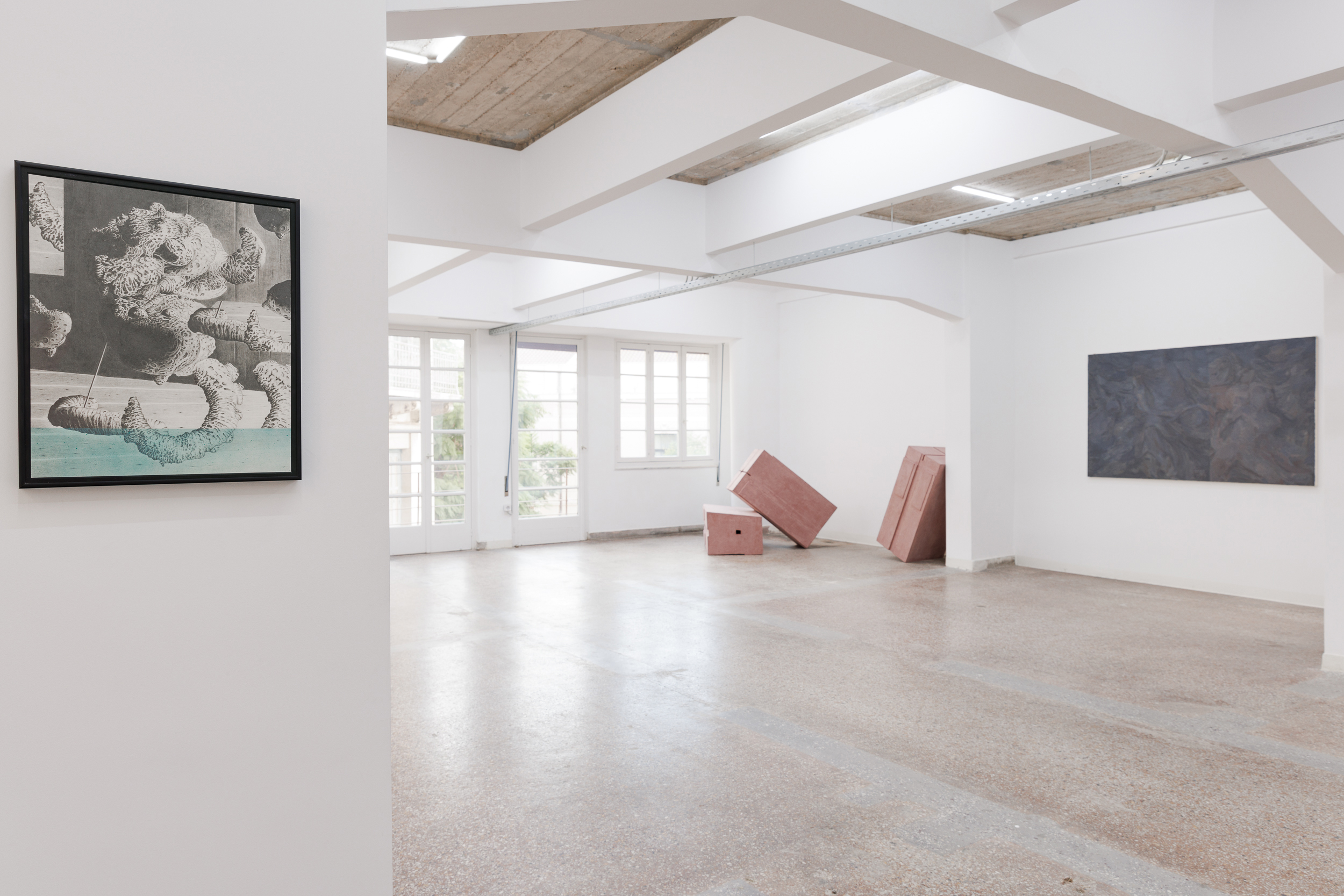
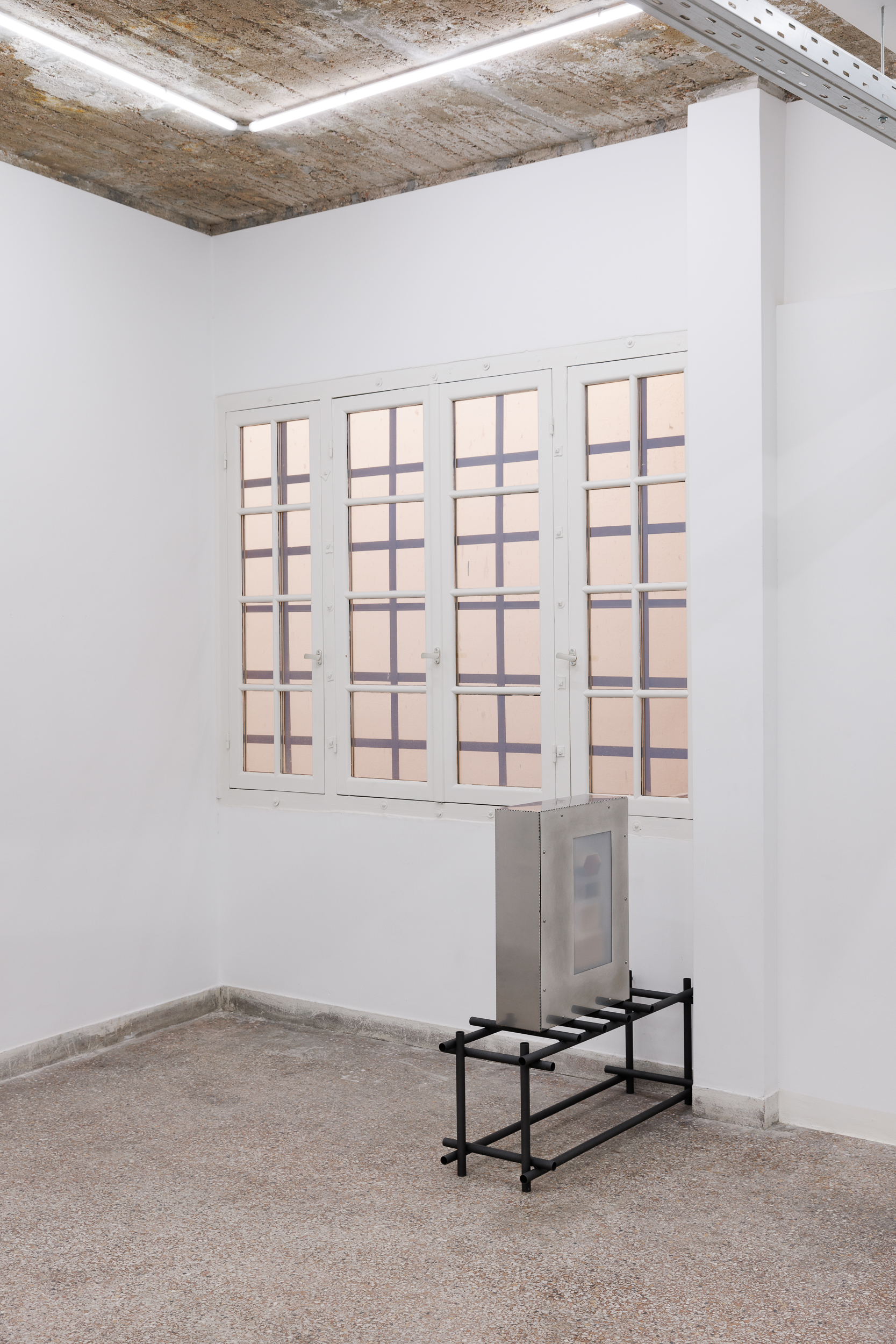
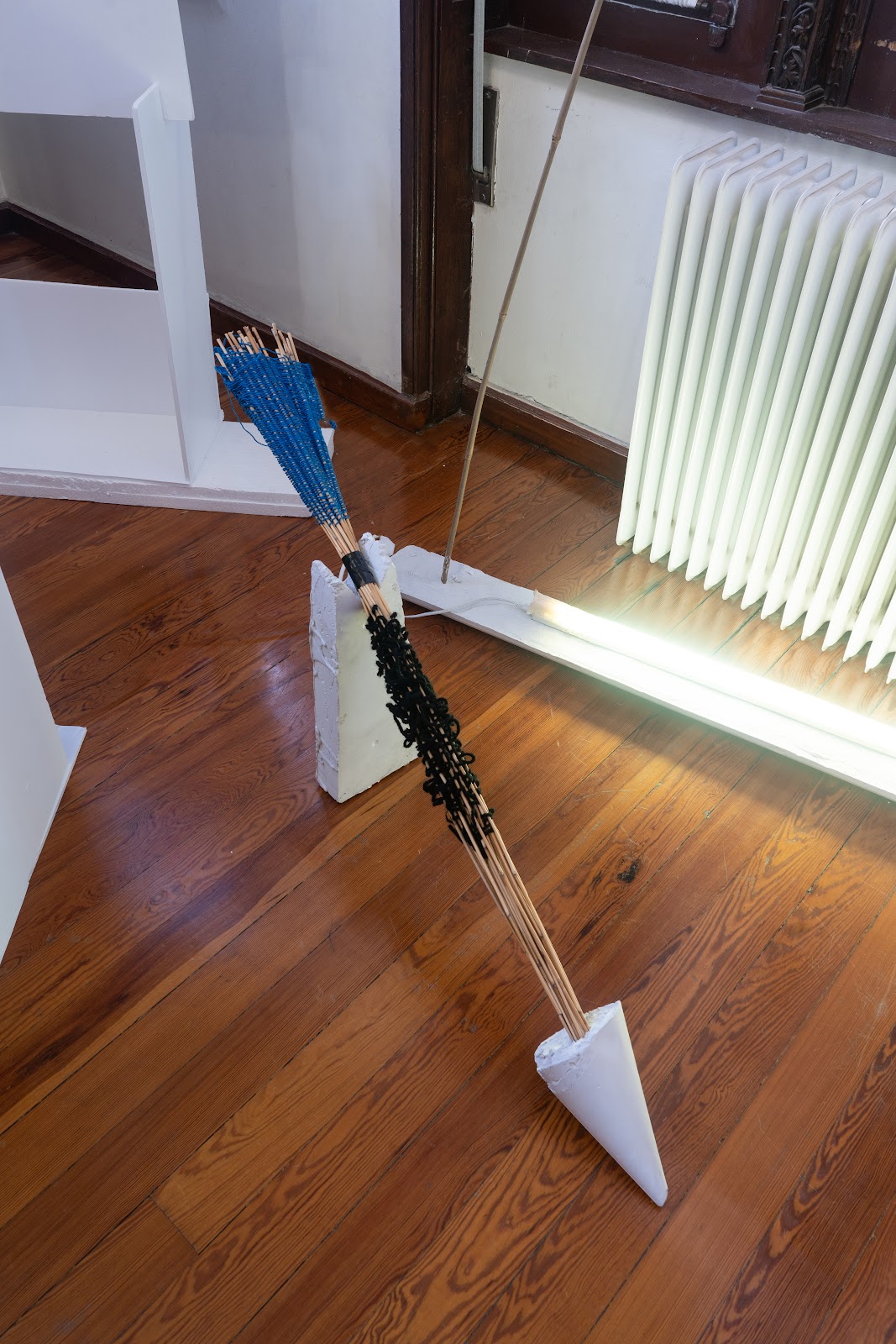
The exhibition On Hearing of an Absence acts as a hinterland that proposes a distorted journey to the unknown. It aims to radiate a quality of mood within an evocative setting. This mood exceeds clear and distinct figuration and is characterised by a set of ambiguities. In this process, the emphasis falls on what the works of art irradiate, making the presence of something inexpressible that operates within the realm of the affect, and encouraging encounters that are powerful through their emotivity.
The selected artworks do not represent a static spectacle, but one which is inscribed by some kind of affective intensity. Oscillating between real and imaginary space, some of them embrace things that no longer exist and events that leave ineffable mysteries behind. They turn the gaze of the spectator to what has hitherto been a void or an absence of some tangible reference. This type of imagery is predicated on the uncanny specter that underlies a sense of otherworldliness and calls for a de-familiarization with everyday spaces. Infused with emotion and developed beyond ordinary experience, these works represent what Gordon Burn calls the “anti-sublime”, as they can be found far away from the pleasure principle.
In this otherworldly terrain strewn with symbols and enigmatic entities, everything is concealed under a veneer of familiarity. Imbued with a sense of austerity, dereliction and bareness, the exhibited works are characterised by a dual, paradoxical aspect in that they appear to be familiar, while, at the same time, they possess an unsettling quality and so they have the power to disturb the mind of the viewer by being stretched far beyond the normal. They deny clear identification or orientation and operate as cryptic establishments, appearing to be inviting yet daunting at the same time.
Being immersed in and intermingled with such an environment, one is confronted with a sense of palpable hidden presence, an unfathomable world that is not able to be verified but can only be felt ‘in the air’. To this extent, the lines between what is present/ real and what is not become blurred. In this state of ontological inconsistency that operates beyond perceptibility, presence is being introduced in terms of absence, absence takes the form of presence and opposites are indistinct.




 images credits : photography Alexandra Masmanidi


René Kemp
Love Colder Than Death (Wall Pieces)
18 November 2022 – 28 January 2023
Galerie Khoshbakht , Jülicher Straße 24a 50674 Köln


Photographer: Mareike Tocha
An astute description of reality is an important language of realism. Spending time with things serves as entry point into their thingness, as well as the whirlpool of social situations they’re drenched in. Carefully observing, pacing your gaze becomes an inevitable privilege.
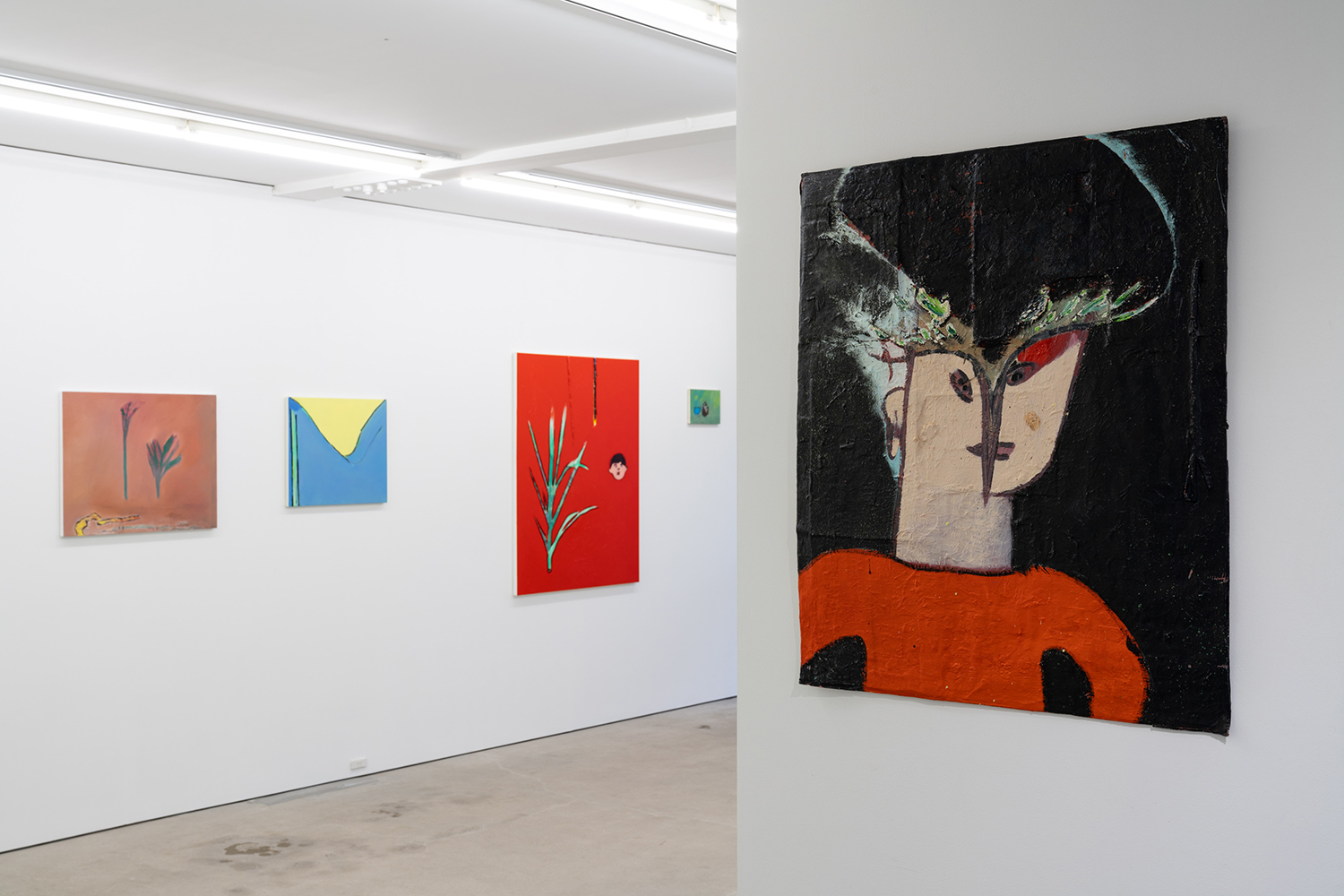
René Kemp worked on a new body of works titled “Wall Pieces”, which are presented within the framework of this exhibition. The works depict fragmented elements of several wall structures. Their size is a middle format, no bigger than 80 to 60 cm and they are all painted with oil on stretched canvas. The forms appearing atop of these canvases occupy their entirety, giving the image of a cropped detail and thus alluding to missing pieces of the wall that didn’t make it to the surface. They are based on impressions of walls around the city the artist came across in his daily commute through Cologne, sometimes elsewhere, operating in a rather diaristic manner. Some are based on photographs send by friends and colleagues. In their case a deliberately trivial modus operandi comes at play, to uncover something about the not-so-trivial quality of attention, which one could argue all forms of realism are ultimately based on. The artist works through the materials and visual traditions that come with the medium of painting, and yet he is perfectly aligned with the histories of conceptualism. Building on top of a productive system of images he ventures into a careful historical reflection.
Foucault wrote in „Manet and the Object of Painting“ (1971) that a wall operates like a canvas. It continues past the framed worldbuilding properties of the surface and bleeds through everything. But when walls entered paintings, they became, in Foucault’s eyes always, mere excuses for the medium to evolve and breath out. This fragmentary approach is perhaps more visible if one takes a closer look at the people in a lot of Manet’s works; in a standstill, running around, starring back at their viewers, being looked at, retreating. The Execution of Emperor Maximilian is a series of paintings by Manet, dating from 1867 to 1869 depicting a historical incident, which took place a year before in 1866: the execution by firing squad of Emperor Maximilian I of the short-lived Second Mexican Empire. Reacting to the incident Manet, who was an active supporter of the republican cause, produced three large oil paintings, a smaller oil sketch and a lithograph of the same subject. The final version was finished in 1869 but bares the date of Maximilian’s execution in 1866 alongside the artist’s signature. It is the only version of the work in this series depicting the execution scene in front of a large high wall. The wall structure stretches from one side of the canvas, all the way to the other, creating a clean horizon line and standing as a backdrop to the action.
Pacing artworks, allowing them the time to live their lives in full is the moral thing to do. If painting was able to voice opposition in a time of urgency, if is through reconditioning that she manages to escape contemporary obscurity. One of the walls of these “Wall Pieces” carries the inscription “love is colder than death”, which recalls the 1969 film with the same name, a crime love-trio drama by Rainer Werner Fassbinder about a pimp, a gangster, and a prostitute. There is an inherent irony in purposefully titling these works “Wall Pieces”, as if to render visible their status as failed communication devices or commodities, and emphasizing the alleged ultrabanality of a wall, its “worthiness” of depiction. As if they are, in the most literal sense of the word, pieces of a broken wall hanging from an unbroken one.
Text: Haris Giannouras
https://daily-lazy.com/wp-content/uploads/2022/12/rene-kemp-at-galerie-khoshbakht-cologne-1.jpgRyota Nojima / Culture Day, the Painting put on Hold
November 2 – December 3, 2022
HAGIWARA PROJECTS
1-13-6-1F Tokiwa, Koto-ku, Tokyo 135-0006 Japan






Words happen like clouds
Jiajia Zhang, Marco Rigoni, and a text by Janice Lee




CHAMBERS
Jessica Gispert, Selma Gültoprak, Sami Schlichting, Maarten Van Roy
Curated by Alfons Knogl & Lukas Schmenger
October 21 — December 10, 2022
FLⒶT$, Brussels


 Photography: Jan Hoeft
Anne-Mette Schultz / Feria


Broken Heart Syndrome / curated by Faidra Vasileiadou
Ileana Arnaoutou, Sevastiana Konstaki,
Mariandrie, Natalia Papadopoulou, Eleanna Balesi, Elektra Stampoulou, Evi
Zampeli
26/11 – 10/12
Two Thirds Project Space, Themistokleous 42, Athens, Greece


photography by Nikos Katsaros
Broken heart syndrome is a
now-recognized cardiomyopathy that mimics a heart attack: it manifests itself
with intense chest pressure, shortness of breath and sudden weakness, symptoms
that match a heart attack. The syndrome was discovered as a separate
pathological entity in the early 1990s by Japanese doctors and became known as
“takotsubo cardiomyopathy” due to the similarity of the shape of the
affected heart to the Japanese octopus fishing tool. Usually, this condition is
triggered by intense mental stress, such as the death of a loved one, a
breakup, anger, or the feeling of betrayal.
Can our heart literally break?
Disassemble into its component parts or even more? If it falls from our hands,
will it break into thousands of pieces?
After hearing the crack, we need
to face the hovering in the void left behind by abandonment, absence and loss –
a waiting room. We can imagine this suspension as mourning itself: a half-dead
condition of being in a state of numbing and disassembly. However, mourning is
not only a wound of the soul, but also a process of healing pain that allows us
to search for the fragments of our broken heart. In that case, its cracks don’t
make us imperfect, but whole once again. After all, a broken heart proves its
existence in the first place.
The exhibition Broken Heart
Syndrome recounts the ways that a heart can shatter and fall apart, while at
the same time elucidates the processes that occur after a major crack; an
attempt to find the missing pieces. The participating artists present works
that communicate with loss, emptiness and the levitation of absence, driven by
the desire for rebirth and re-composition.
Faidra Vasileiadou
museologist / art curator
Alexandros Laios / Flipping Coin
Curated by Christoforos Marinos






Images courtesy of the artist , Photos by Dimitris Foutris
Flipping Coin
Unlike the naked eye, the camera is able to
gaze straight at the sun without being blinded. The film The Shepherds of
Calamity (1967) by Nico Papatakis ends with an unforgettable scene: Thanos
and Despina, just before jumping off the cliff hand in hand, turn their eyes to
gaze at the midday sun. They are forced to turn their eyes away from it, their brows
furrowed. But the camera lingers on it. The lens is stronger than the human
eye. Undoubtedly, it takes guts to stare into the blinding, unfiltered light.
It is an act of self-transcendence. ‘Looking at the sun, one’s face cannot fail
but be richly illumined,’ preaches St Hesychios the Priest. But the same does
not apply to sleep: in dreams we never look at the sun, Nerval reminds us in Aurelia
(1855). Georges Bataille aptly sums it up in The Accursed Share (1949),
‘sun […] dispenses energy – wealth – without any return.’ His reasoning is set
forth in his early text Rotten Sun (1930), a homage to Picasso: ‘[…]
academic painting more or less corresponded to an elevation – without excess –
of the spirit. In contemporary painting, however, the search for that which
most ruptures the highest elevation, and for a blinding brilliance, has a share
in the elaboration or decomposition of forms,’ writes the philosopher.[1]
These new works by Alexandros Laios descend from
this rupture with the elevation described by Bataille. Laios’ self-described ‘wrinkled
portraits’ converse with cryptic Cubist collages and Picasso’s groundbreaking
portraits, where the figure emerges distorted, codified, deconstructed.
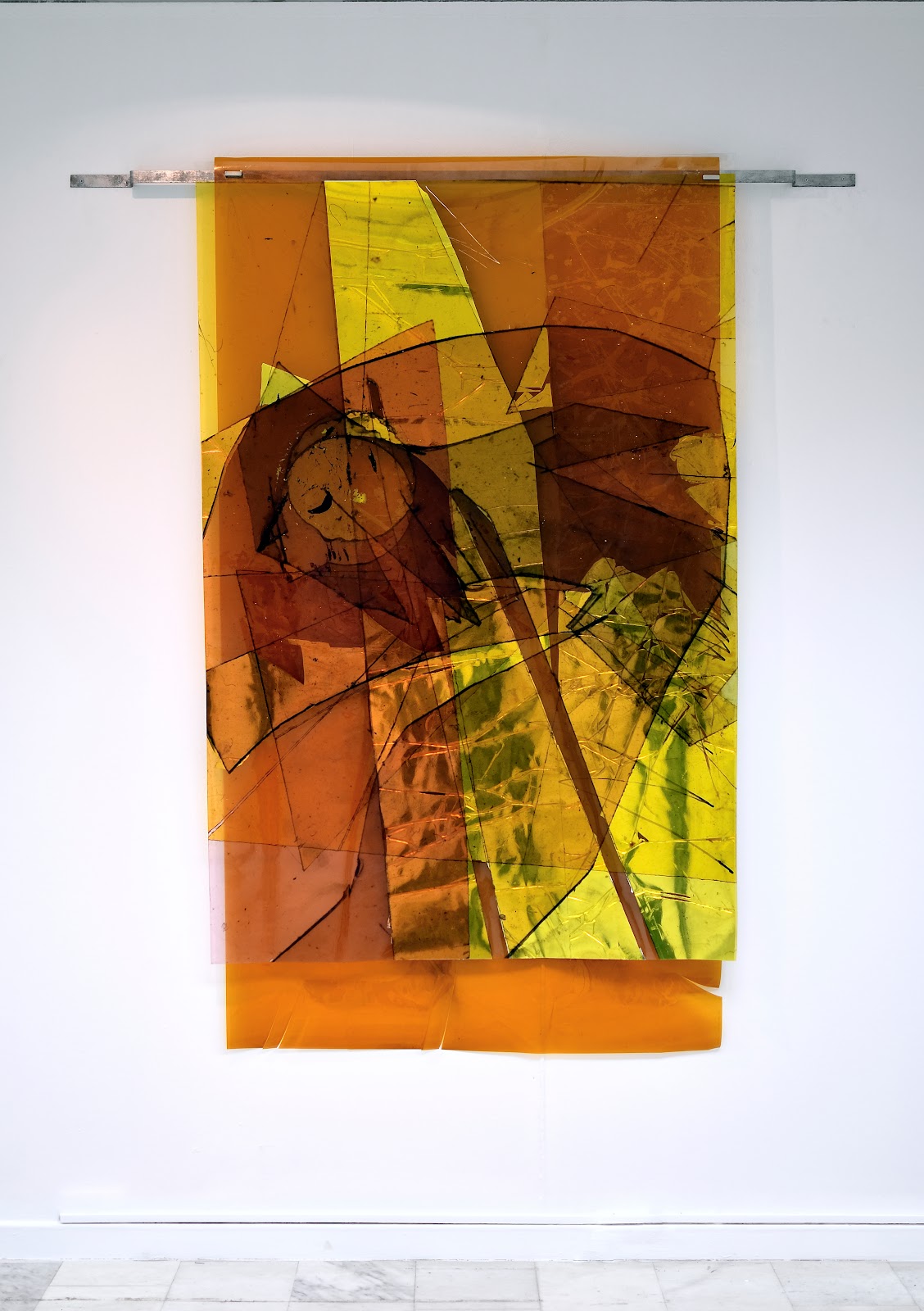
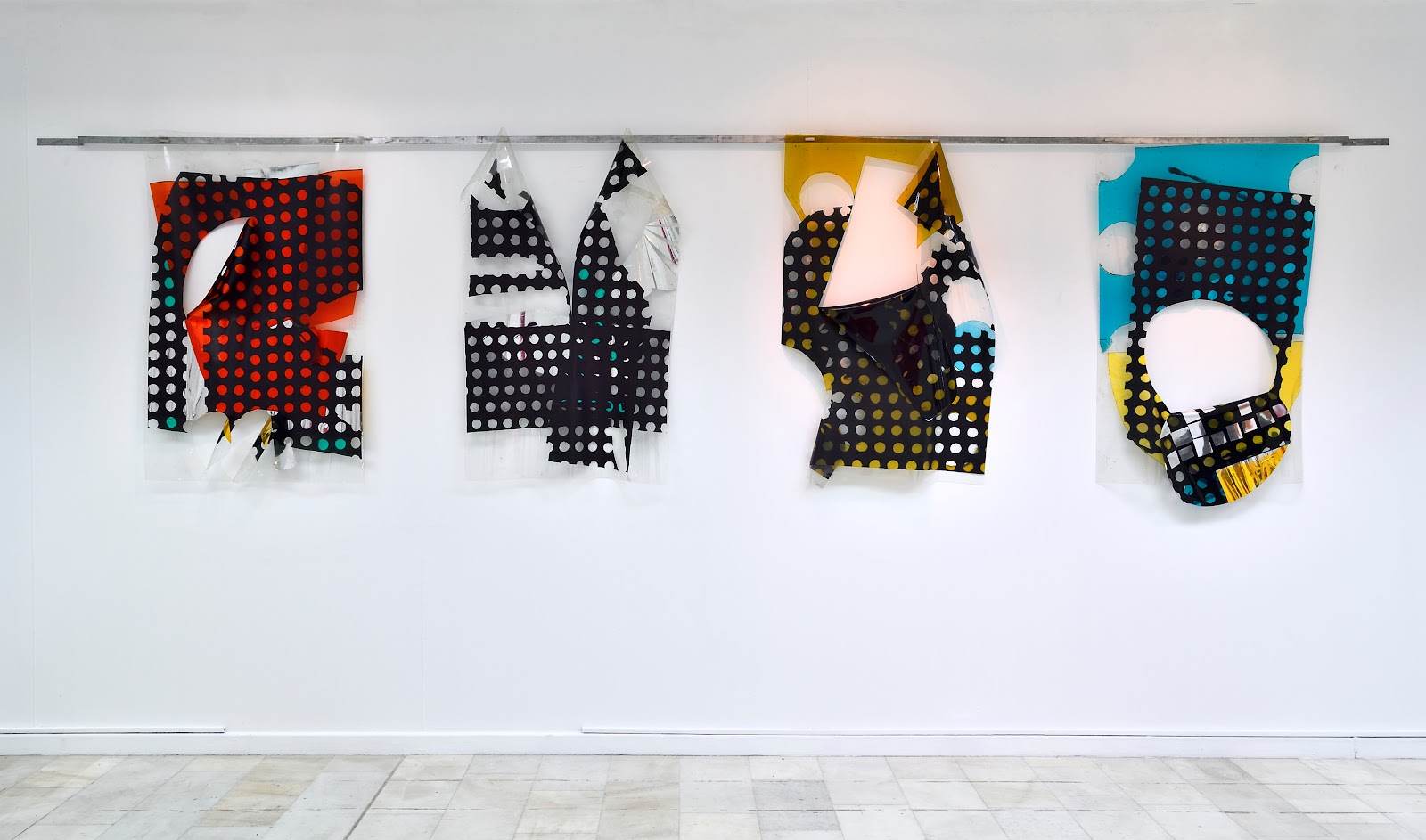
According to the artist, ‘The Wrinkled Portraits series (2020–22) evokes
the feeling we get when we look at the sun. The reflexive contraction of the
face is captured in the creases of the material mounted on the surface. My
intention is to highlight the phenomenon, rather than its representation. The
terms figure/portrait are an open condition anyway.’ Figure, to what extent,
then? To what extent portrait? What is certain is that in Laios’ mind
everything is a face. These indistinct faces – made on digital prints on
transparent awning fabric, self-adhesive mirror sheets and heat-resistant stage
lighting filters – reflect your thoughts and emotional state, questions and worries,
joy and anxiety. These distinctive portraits by Laios are based on a
bidirectional interplay with viewers’ faces and take shape through the triggered
mental associations.
Abundant, absolute light, combined with the
weakness/strength opposition of the human eye – that is, of vision – is an
overarching theme in Flipping Coin exhibition. The title evokes the
moment when the coin hovers in the air before hitting the ground, rather than
the randomness implied by the gesture itself – hence the artist opts for that
phrase instead of the expression ‘heads or tails.’ At the same time, the title
is a sly comment on our ambivalence towards science, which, according to Laios,
‘is not a magic bullet for every adversity in modern life, but an ongoing
narrative with an uncertain outcome – just like coin flipping.’
The exhibition features wall
works in mixed media and a series of light-activated sculptures, which the
artist names ‘chimeric creatures.’ Cinematic references abound. The format of Wrinkled Portraits
harks back to 1920s and 1930s Soviet movie posters, while Blue Cut
(2021), a series of small-scale prints, alludes to the groundbreaking editing
and other innovations by Sergei Eisenstein and other pioneering directors of
the time. Laios’ references also extend to Soviet science fiction literature.
His works, he argues, ‘form a dystopian region, a post-apocalyptic landscape,
leaving all options open, free of embellishment. All of the above begs the
question of our relationship with science fiction as narrative in the modern
biopolitical environment.’ For example, in the sculpture A Line After WE
(2021) the artist quotes a phrase (‘You poor poor thing’) from Yevgeny
Zamyatin’s dystopian novel We (1921). Displayed in self-adhesive
lettering on a fluorescent lamp placed on a spray-painted metal base (sled?),
the phrase performs similarly to an inscription on a funerary monument.
Divorced from its context, it can be interpreted in many different ways – as a
poignant comment on the end of minimalist sculpture, or as a hint at the
impoverishment of a country, its tragic present and ominous future. The
prominence given by Laios to science fiction in this series (he states that SF
was and still is perhaps the only grand narrative) reminds us of an observation
by Fredric Jameson, who argues that ‘the distinctiveness of SF as a genre has
less to do with time (history, past, future) than with space.’ Similarly, the
transparent, Laios’ colourful works are hallucinatory: they affect our
perception of space, ‘filtering’ dystopian reality like a pair of sunglasses
filters harsh light to help us endure it. Needless to say, the aesthetic
universe proposed by Laios seems to come out of SF films of the 1980s, such as Liquid
Sky and the more popular Blade Runner, both of 1982.
The art of Alexandros Laios is neither pleasant
nor unpleasant. It is suspended – like a coin in mid-air – on the threshold of
these two impressions, sometimes leaning this way and sometimes that. In his
new works, the artist foregrounds process itself. ‘I didn’t want to be trapped
in content, but to be able to work more openly. I now like to capture the feel
of things. In this work I have achieved focus – to be able to look at the work
and constantly find solutions,’ he tells me, standing before his ‘wrinkled
portraits.’ One thing is for certain, that after gazing at the works of Flipping
Coin for a while, the experience of standing under the glaring sun will
never feel the same again.
Christoforos Marinos
Art historian
OPANDA curator of exhibitions and events
Translated by Dimitris Saltabassis
[1] Georges Bataille, Visions of Excess:
Selected Writings, 1927-1939, Allan Stoekl (ed.), Allan Stoekl, Carl R.
Lovitt, Donald M. Leslie Jr. (transl.), Manchester University Press, 1985.






“Eros the once again limb-looser whirls me sweetbitter, impossible to fight off, creature stealing up”
Sappho
FRAGILE is pleased to announce the exhibition Tyranny of Tenderness by Leda Bourgogne. For the exhibition the artist conceived an installation of site-specific, newly produced, and pre-existing works composed of objects, fabric works, and an audio piece. Although the different groups of works function independently within the presentation, the exhibition is revealed through the interconnection of each element.
The artist took inspiration for the exhibition from Eros the Bittersweet, a 1986 publication by classical philologist and poet Anne Carson. Through various “close readings” of poems by ancient Greek lyric poets, such as the works of Sappho, Carson analyzes the structure of sensual desire and longing. According to Carson, that structure is divided by a triangle consisting of the lover, the beloved, and that element that stands between the two, which can trigger the connection or disconnection of the two such as an obstacle, time, or the differences of the couple.
The number three, as a structuring component and symbol for the triangulation mentioned above, influenced some of the works in the exhibition, such as the three book columns titled Alphabetic Edge, the three large fabric works titled Butterfly Effect (2022), Cataclysm (2021), and Clavicle (2022) as well as the audio piece Edge of Desire (2022), which consists, among other things, of three poems written by the artist.
In Tyranny of Tenderness, however, eros is not only negotiated as the libidinous desire for another person; for Bourgogne, reading, writing, and engaging in artistic practice are also linked to erotic desire, as all of these activities can only be performed through the power of the imagination. Desire, as an energy that is at once beautiful and yet also causes suffering, manifests itself in various ways within the exhibition.
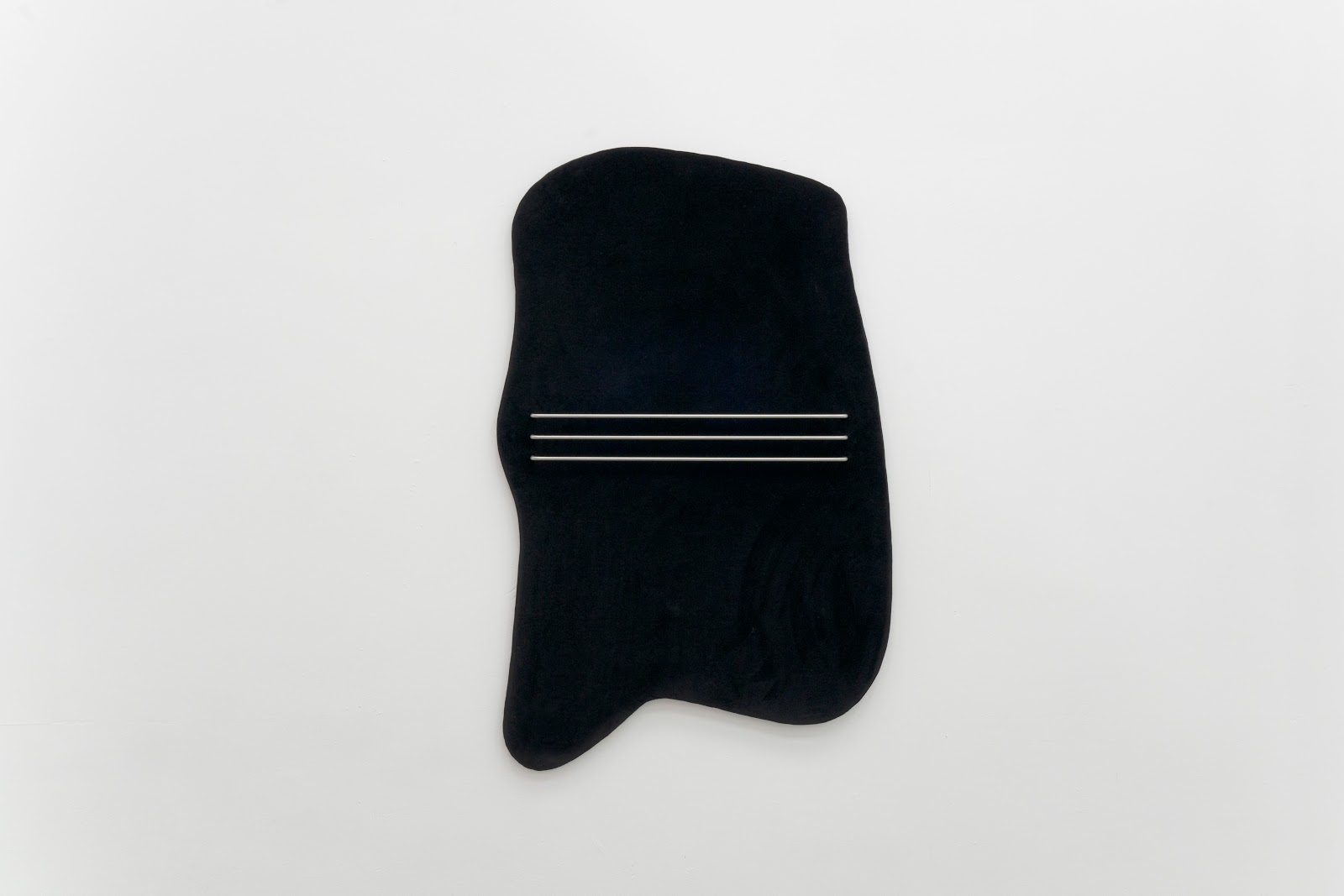
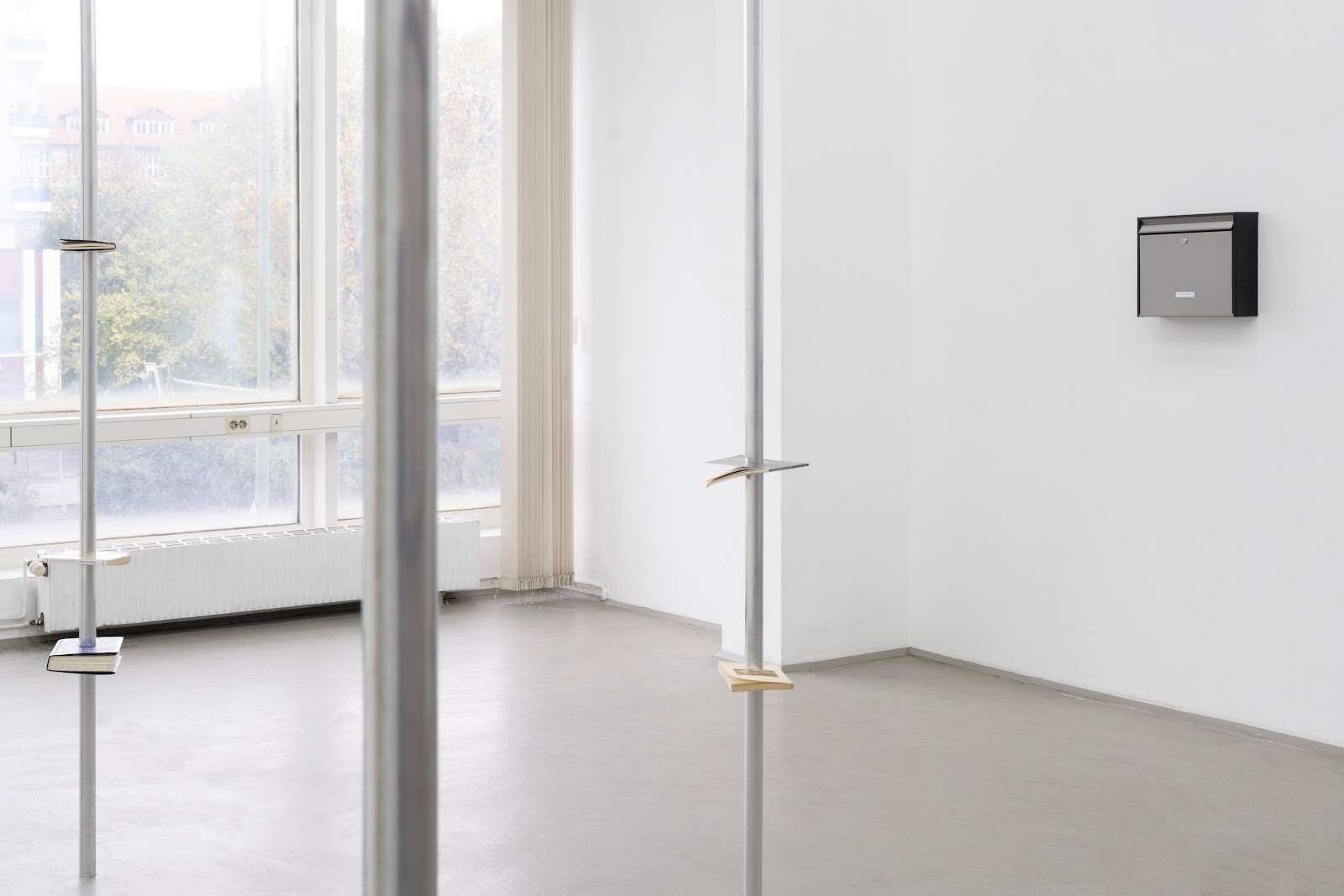
The large translucent fabric wall titled Interstice (2022) stretched in the main room can be read as a symbol of an obstacle or barrier: it allows a view of the works that are behind it, but at the same time prevents one from approaching them. Code of Conduct (2022) and Triangulation (2022) each attached to one side of the fabric wall, are composed of irregularly shaped wooden panels covered with velvet, on the surfaces of which a key box, as well as three metal handles, are attached. The use of the key box is, for example, directly related to the idea of encrypted access to a person or to the creative process. However, the key box is also relevant in relation to the letterbox mounted in the entrance area, which contains the loudspeaker from which the audio piece Edge of Desire is heard. The ideas of coded messages and (love) letters are symbolized by these objects and refer to the connection Anne Carson draws between desire and language: only through the invention of writing and the possibility of sending letters could private love messages, read only by the respective receivers, be sent. The artist contrasts this originally intimate notion of language with the contemporary notion of communication, which for the most part comes to us in an anonymous and bureaucratic form. Thus, love letters are no longer found in our mailboxes, but mostly official letters from institutions, businesses and authorities, as extended communication channels of a technocratic society. Bourgogne counters this cool almost clinical appearance of language with the work Alphabetic Edge: On three aluminum bars placed between the ceiling and floor of the main room, the artist threaded various books she had recently read, which circle around the different perspectives of desire. The piercing and threading do not represent a brutal act for the artist but symbolize the process of acquiring and incorporating knowledge while reading. After the books have been read, they not only become part of the work in a metaphysical sense but are material, ready for further processing. The artist describes this cycle as a metabolism, that is, the process necessary to transform substances in the body. Even if the body appears in Alphabetic Edge in more of a metaphorical context, it appears less abstract elsewhere: Butterfly Effect (2022), Cataclysm (2021), and Clavicle (2022) are working in which Bourgogne, inspired by the human skeleton, nerves and veins, finds a formal language that appears at once anthropomorphic and emblematic.
Tyranny of Tenderness can thus be understood as a kind of echo chamber for the different reflections and ideas on desire, language, and art production, within which the artist uses different dramaturgical means, similar to a play on stage, to negotiate her personal interpretations of the present themes. As is so often the case, she succeeds in dissolving the boundaries between intimate and public spaces, placing female sexuality at the center and making the political dimensions visible within the sphere of the personal.
Oedipus In Search Of Colonus
Loukia Alavanou presents a VR360 film at the Greek Pavilion
Curator: Heinz Peter Schwerfel
Associate Curator: Giannis Arvanitis
Assistant Curator: Phaidon Gialis
Commissioner: National Gallery of Greece
59th International Art Exhibition – La Biennale di Venezia
April 23 – November 27, 2022
Venice, Italy


Xavier Robles de Medina (b. Suriname, 1990) is a visual artist based in Berlin. He graduated from the Master’s program in Fine Art at Goldsmiths, University of London in 2019. In 2015 he was nominated for the Prix de Rome Visual Arts in the Netherlands, and was shortlisted for the Royal Award for Modern Painting, also in the Netherlands.
His research-based practice is centred around a methodically organised collection of images and texts that stem from various digital platforms and physical sources. He accumulates and collages these materials in a process of discovery, forming the basis for monochromic works that are mathematically plotted and remain at once poetic and political. They translate and reinterpret personal fascinations and generic pictures drawn from his archive.
Recent solo exhibitions of his work include If you dream of your tongue, beware at Catinca Tabacaru Gallery in New York City (2017); Ți-a ieșit iepurele în cale (the rabbit got in your way) at Another Mobile Gallery in Bucharest (2020); Faya Lobi at galerie Praz-Delavallade in Paris (2020); and Wan Destination Wanhoop at SCAD Museum of Art in Savannah (2020). 2022 exhibitions include What if the tongue is cut out?, Robles de Medina’s solo presentation with Catinca Tabacaru Gallery at Art Basel’s show in Hong Kong; Senegal’s fourteenth Dakar Biennale; and The Palliative Turn at Künstlerhaus Bremen.
Soil Thornton / Decomposition Evaluation
Curated by Nadine Droste
August 20 – October 30, 2022
Kunstverein Bielefeld
Welle 61
33602 Bielefeld, Germany


%201.jpg)
;%20White%20boy%20(gouache%20on%20canvas,%2050%20X%2060%20cm%20and%2080X80%20cm)%20.jpg)

;%20Yellow%20shepard%20(gouache%20on%20canvas%2018%20x%2024%20cm)%202.jpg)
;%20Yellow%20shepard%20(gouache%20on%20canvas%2018%20x%2024%20cm).jpg)
;%20Black%20boy%20(50%20X%2060%20cm%20and%2080X80%20cm)%203.jpg)



.jpg)
;%20Althar%20of%20delicious%20cookies;%20painted%20wood%20and%20ceramic%2020%20x%2040%20x%2025%20cm%201.jpg)
;%20Black%20boy%20(50%20X%2060%20cm%20and%2080X80%20cm)%202.jpg)
;%20Black%20boy%20(50%20X%2060%20cm%20and%2080X80%20cm)%203.jpg)
;%20Black%20boy%20(50%20X%2060%20cm%20and%2080X80%20cm).jpg)
;%20Deltitnu%20(bird%20in%20raw%20clay,%2014%20x%205%20cm);%20Yellow%20shepard%20(gouache%20on%20canvas%2018%20x%2024%20cm).jpg)
;%20White%20boy%20(50%20X%2060%20cm%20and%2080X80%20cm)%203.jpg)
.jpg)
%201.jpg)
.jpg)
%202.jpg)

.jpg)
Nanna Abell /
Curators:
Paola Paleari and Anne Zychalak Stolten
August 27th – September 25th, 2022
Vestjyllands Kunstpavillon, Videbæk (Denmark)




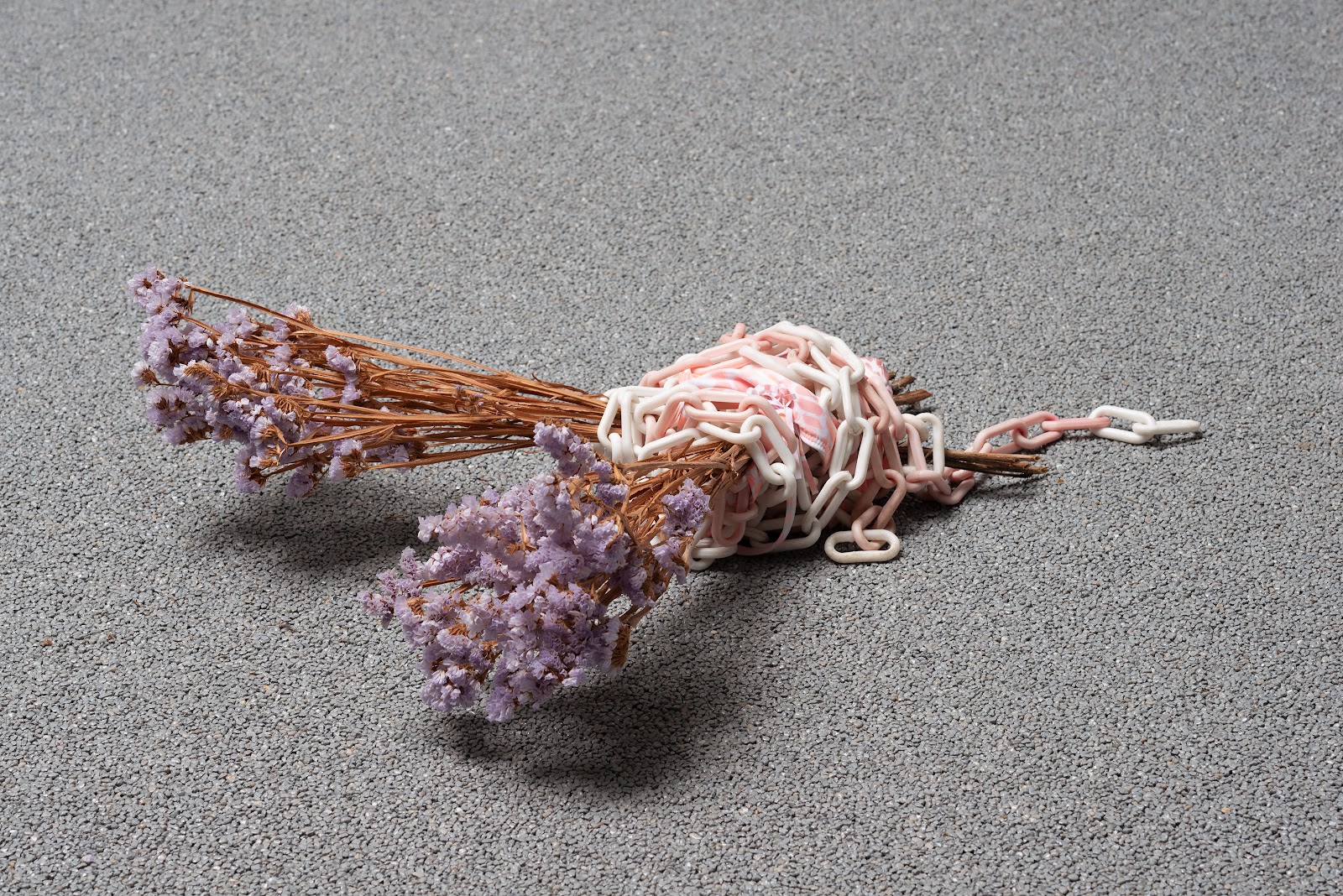


Photographer: Jacob Friis-Holm Nielsen
“And you feel that it’s a gift because you experience, right at the source, the suddenly indubitable present of existing miraculously and materially.”
– Clarice Lispector, Água Viva
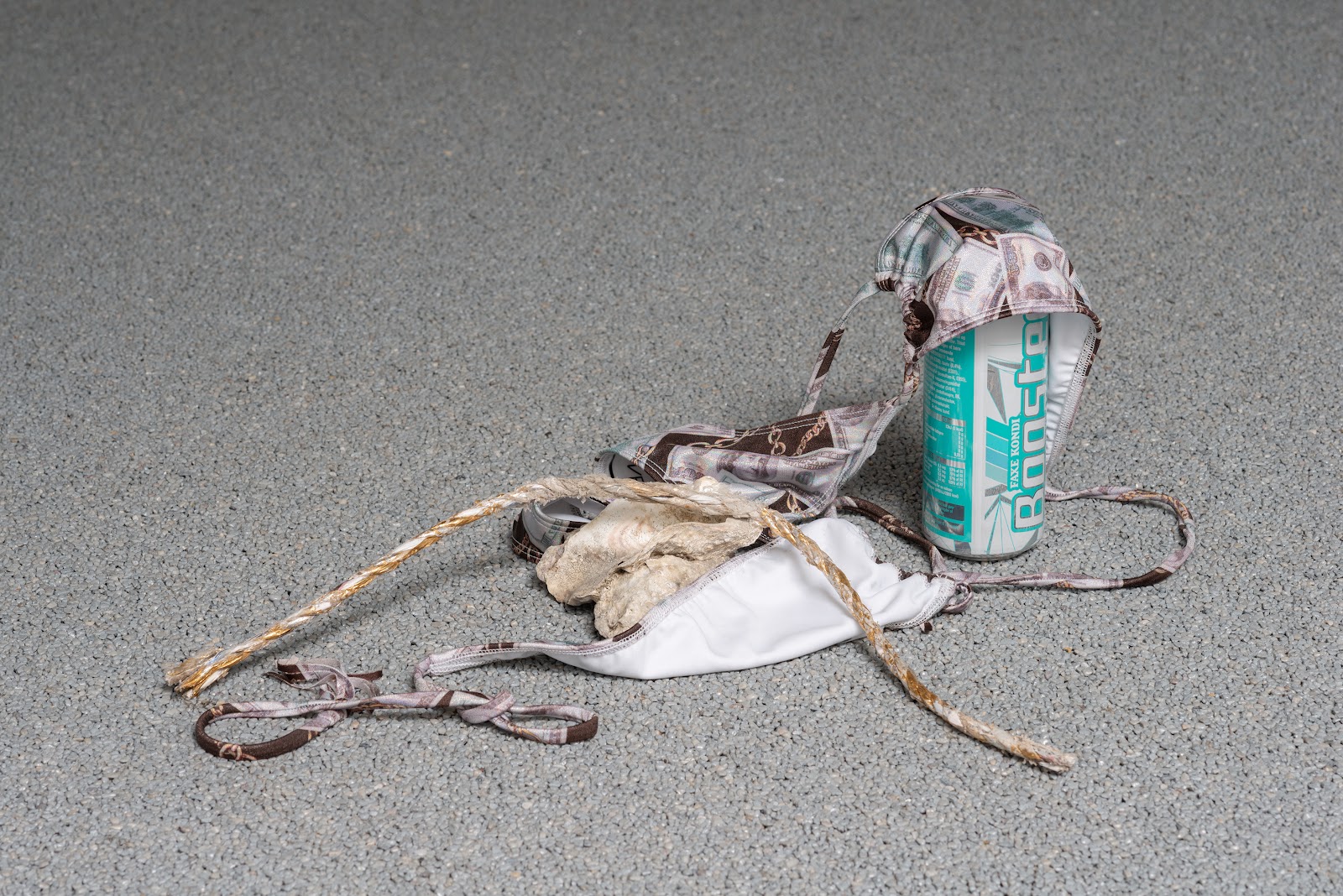
In Nanna Abell’s solo exhibition Psychodile at Vestjyllands Kunstpavillon lies an invitation to become material. The found objects – although selected and arranged by the artist – have always already been modelled by external conditions, and their surfaces carry physical ornaments of climate, consumption, exhaustion, fire, moisture, desire, décor.
A lost flip flop dried up by the sun and sea salt appears in line with some of the exhibition building’s distinctive features; all together they act as a touch point – a sensory outset suggesting that the objects’ most subtle characteristics play a guiding role in these compositions.
Abell’s sculptural organizations contain something untranslatable and non-reproducible: an anchor to the now and a physical specificity that attends to our body and receptiveness. As an alternative to the modus operandi of the information age – which trains us to scan existence through data, symbols and representation – the artist proposes entering in contact with what we don’t recognize and can’t categorize. Simply, but not easily, we are asked to stay with what is present.
Rather than exhibiting single works, Abell establishes a framework where materiality doesn’t concern only the physical qualities in themselves, but also and foremost the poetry of human, messy affairs with the physical outside world.
Psychodile is a suggestive attitude that seeks stimuli in an analogue register. Weak intensity should not be confused with weak effect. It is an exercise in sensitivity and surrender that Nanna Abell invites us into.
The exhibition is supported by The Danish Arts Foundation. The VK contemporary art program 2021-2022 is curated by Paola Paleari and Anne Zychalak Stolten and supported by Det Obelske Familiefond and The Danish Arts Foundation.


Courtesy the artist & Galerie Guido W. Baudach, Berlin
Foto/Photo: Roman März
Galerie Guido W. Baudach is delighted to present its fourth solo exhibition of works by Tamina Amadyar. Under the title setting the table, the Berlin-based artist is showing new paintings as well as a new sculpture.
In recent years, Tamina Amadyar has become known for her equally expressive and reduced color field paintings, which emerge from the transformation of personal experiences into abstract painting. The starting point has always been representational works on paper, in which the artist primarily processes her reality. In addition to spatial motifs, objects and people from Amadyar‘s immediate environment often appear.
The latter are now also the focus of her new paintings. Thus, in the exhibition one encounters mainly portraits, or more precisely, shoulder pieces in frontal view. The consistently large format paintings show faces belonging to members of the artist‘s family. They convey a sense of intimacy, an impression that is reinforced by the largerthan-life depiction. At the same time, these portraits are anything but naturalistic reproductions of the likenesses of her protagonists. For, analogous to her other painterly practice, Amadyar does not attempt to reproduce her motifs faithfully here either, but on the contrary endeavors to dissolve them and to work out what seems substantial to her.
Various ink and watercolors form the painting material specially selected for this series of works. They have similar properties to the glue paints of the abstract color field paintings, they are transparent and dry quickly, but they also lead a life of their own that is difficult to control, for example by involuntarily melting or flowing into each other. Subsequent corrections to the picture are more or less impossible. Amadyar therefore approaches the canvas lying on the floor with due calm. A few, quickly executed brushstrokes must suffice to create the desired image of the person portrayed. Details, such as clothing, are only hinted at. The background is always the white of the untreated cotton canvas.
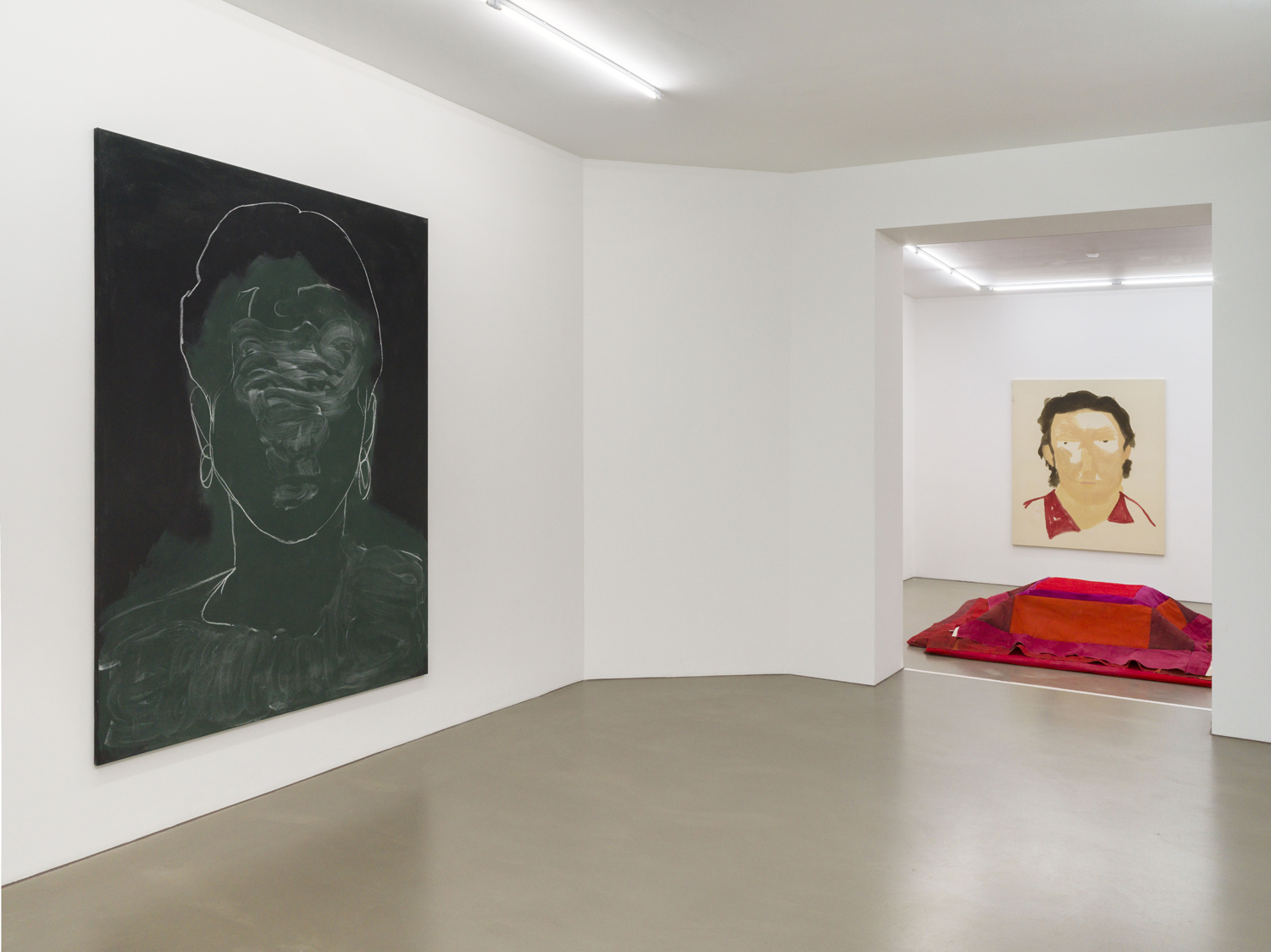
Amadyar‘s painterly economy goes almost further in two canvas portraits also on display, executed in white chalk on a dark panel background. Figures and faces appear here as pure silhouettes, sometimes drawn through as if with a single stroke, sometimes blurred, repositioned and modelled into the blurred. The works appear as delicate as they are intense. The contrast with the light backgrounds of the ink and watercolor paintings creates an additional tension.
In the midst of this situation, Amadyar places a work that may surprise some in terms of its medium and at the same time builds a bridge to her hitherto predominant practice: a floor sculpture made of pieces of pigmented canvas of different sizes that are sewn together to form a kind of cover that lies on a substructure hidden underneath. The colored fabrics in different shades of red come from various color field paintings that Amadyar found unsuccessful, assorted and cut up. Circumferential seat cushions of the same material round off the peculiar-looking arrangement.
sandali, as the work is titled, is inspired by a traditional warmer of the same name from Amadyar‘s country of origin, Afghanistan, where glowing coals are piled up under a flat table covered with blankets so that the whole family during the cold season can make themselves comfortable, eat, drink and chat together.
With setting the table, Tamina Amadyar expands her previous practice. New working methods and pictorial languages are finding their way into her work, appearing alongside the familiar painterly abstractions and the figurative works on paper. At the same time, with the exhibition she creates a place where all parts of the whole, like the members of a family at a table, come together.
Tamina Amadyar (*1989 in Kabul), lives and works in Berlin. She studied at the Dusseldorf Art Academy from 2008 to 2014. Since then, her work has been shown in various exhibitions at home and abroad. She is represented in numerous collections internationally. From 2018 to 2020, she was a visiting professor at the State Academy of Fine Arts Karlsruhe. In 2021, Tamina Amadyar was awarded the ars viva prize for fine arts by the Kulturkreis der Deutschen Wirtschaft.
Stephanie Stein | Oase
28.10. – 26.11.2022
SETAREH, Schöneberger Ufer 71, 10785 Berlin






Matthew
Cangiano /
24
September – 6 November
Afternoon
Projects | 603 Powell St, Vancouver, BC, Canada V6B 0B9
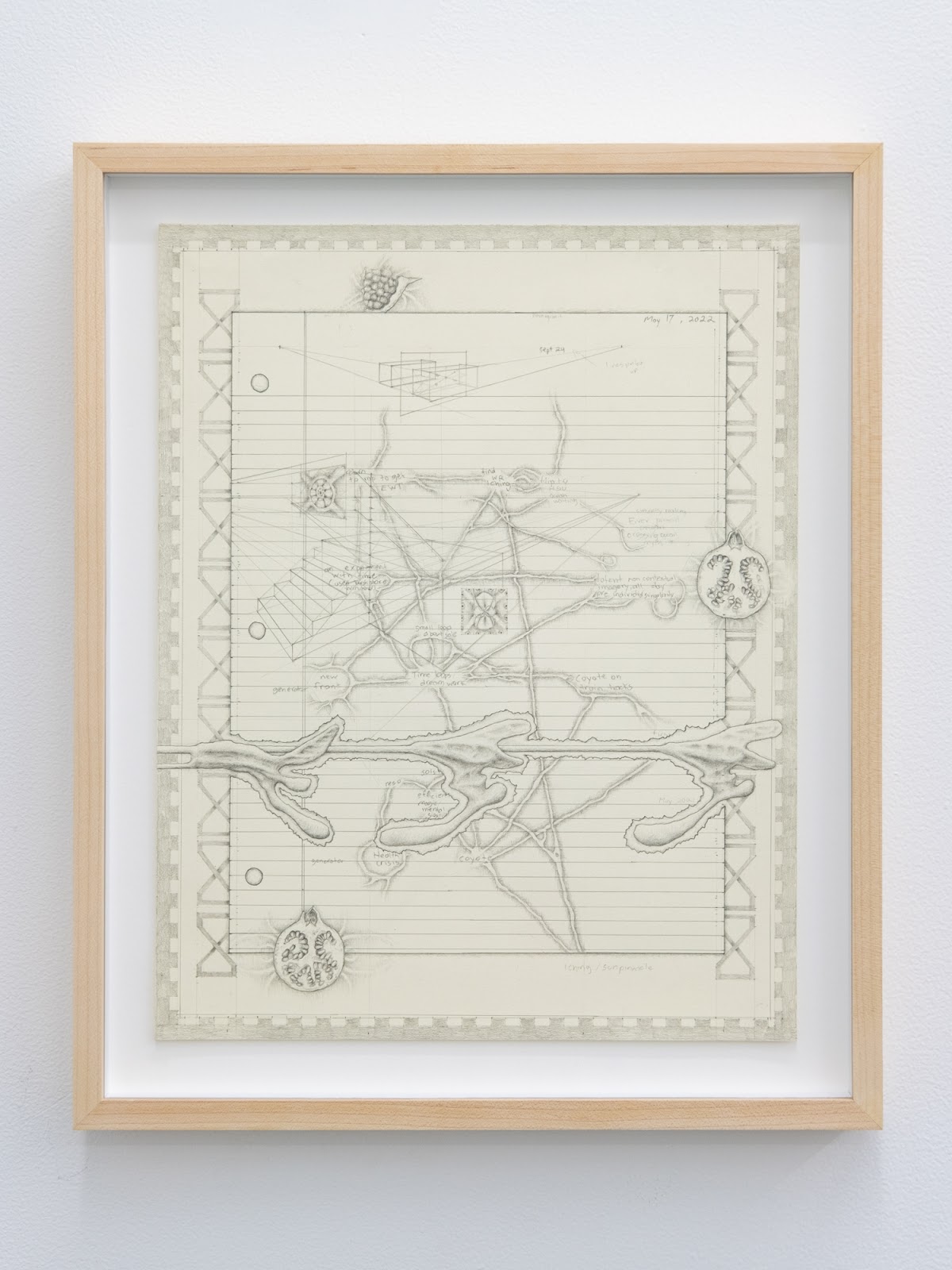


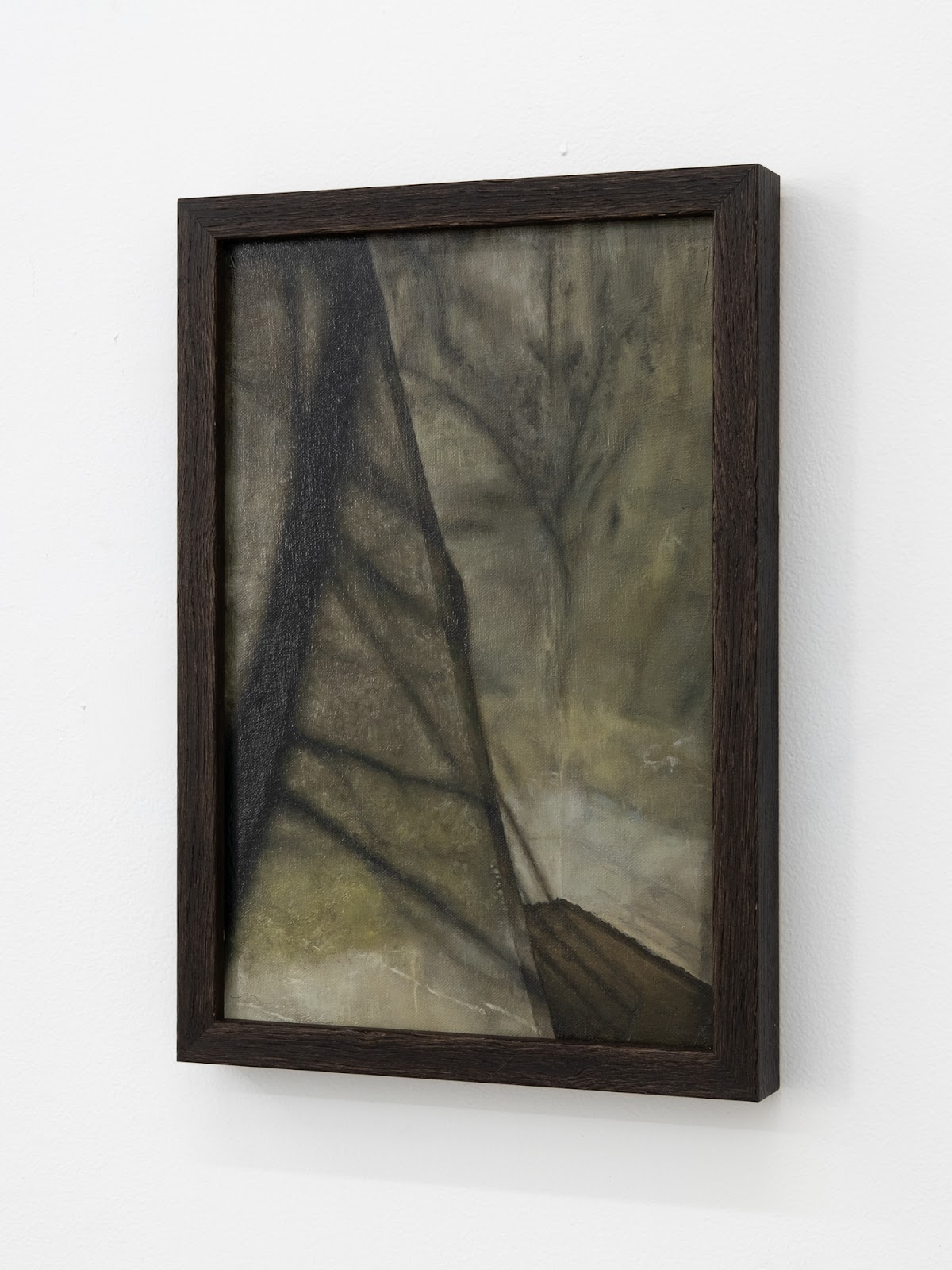


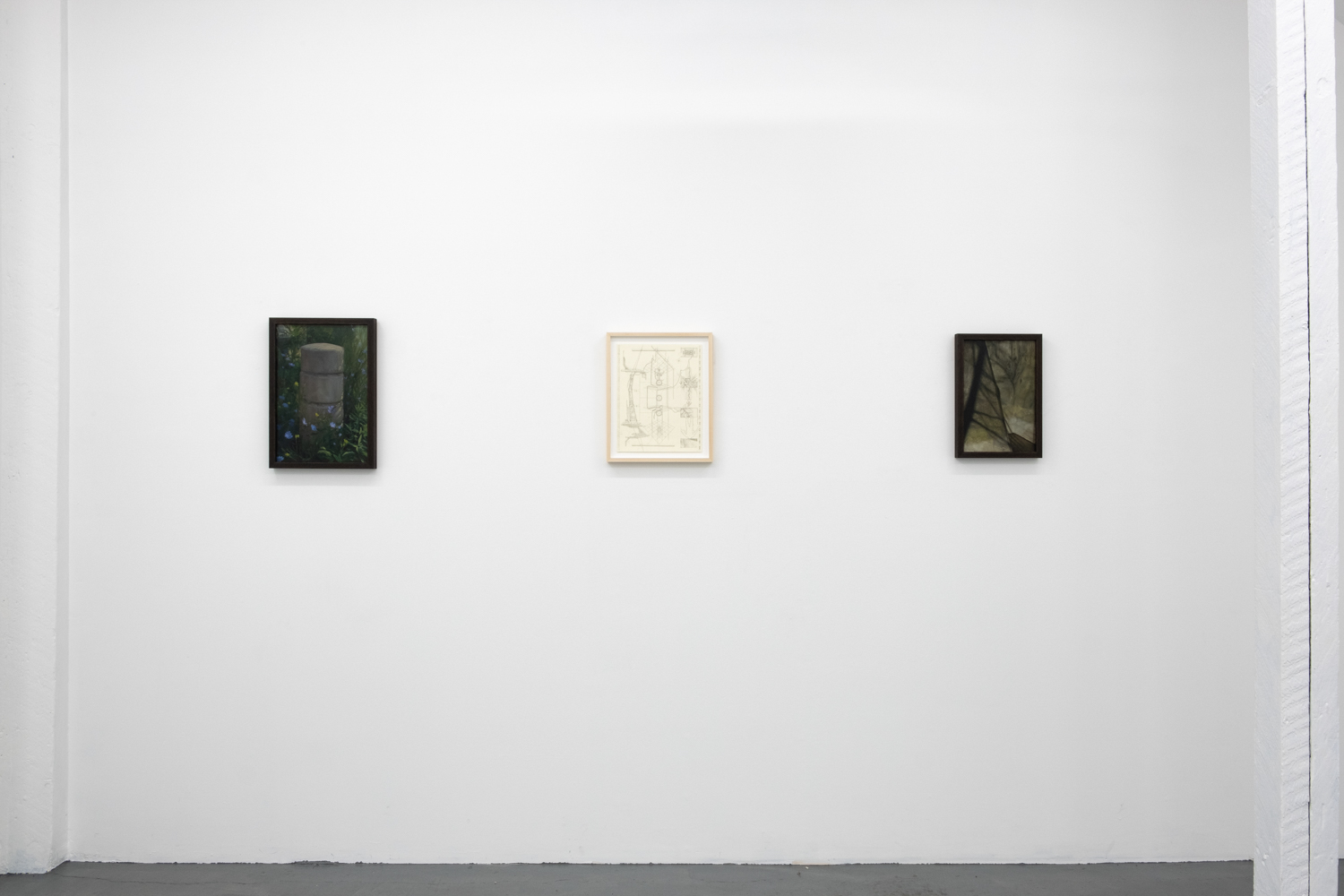 The Problem of Inner and Outer
The problem of inner and outer is one that can be taken in many ways, yet however one takes this problem it seems to be one that is necessarily posed by life. No matter our preoccupation, spiritual or philosophical commitments, life presents itself in two apparent orders; one that varies with the individual and their action, and one that appears to go on independently of this. This double articulation of reality permeates life and all its various aspects, be it personal, social, political, philosophical or spiritual. This is true in my own life; it is a problem that stays with me, accompanying my thought and experience. I call it a problem, but not in the normal sense of the word. It is not a puzzle that contains a prefigured solution to be uncovered, but rather it can be seen as a field of potential, a question that does not contain its answer, a space in which new possibilities can emerge. In this sense, it has been there like a friend rather than an issue; a friend that challenges me to engage with life and to partake in its creativity.
Art, in the broadest sense of the term, occupies a particularly interesting and privileged position in relation to this problem, for it can be seen as an attempt to open one to other worlds, to breach one’s own world, and to make true contact with an other. It has become apparent that this is what it means for me to make images. In a moment of clarity, I put it like this:
“As I continue to pursue this strange path it becomes clear that there is, for me, but one pressing question; what, if at all, of the artist’s internal state makes its way into their work? This is a question which is doomed to never find an answer, for the singularity of any affective state does not only go beyond language but is even obfuscated to the being who turns around to try and catch a glimpse of what it is they feel. It’s as if the vibrancy of these living states dissolve the second they are exposed to meta-consciousness like a roll of film in the sun. Thus it is not a question I ask to find an answer, rather it is one I ask by doing and by experiencing. I have faith that our individual boundaries are porous enough that we can reach outside of ourselves and make, even if only the slightest amount, real contact.”
‘The Problem of Inner and Outer’ is a dual aspect series of 5 drawings and 5 paintings that coordinate with two distinct directions of experience; one towards the sense-perceptible and the other towards thought. Put in spatial terms; one aspect pointed outward and the other inward. What was discovered is that these directions are not so distinct and that what we expect to find in one, we find in the other.
The zones that emerge as a by-product of determined structures, whether they be a threshold of plants to the side of a road, the space along a water runoff that cuts through a city, or a ravine that lays in the shadows of a high-rise apartment building, have had a peculiar effect on me since I was a child. They have the capacity to grasp my immediate attention, to pervade me with their feeling, to make me unaware of anything outside of that milieu, or the distinctions within it, in short, to make me porous to an outside. This is an outside that feels truly other, something that doesn’t conform to my world, but rather dissolves it and subsumes me into it. What is found here, is what we are conditioned to attribute to subjective interiors, that is; feeling, quality and meaning. Suddenly the world is turned inside out. It is through my paintings of these zones, the plants and objects that occupy them, that I further absorb these alterities, and question if they can make themselves felt in the image.
The drawings in ‘The Problem of Inner and Outer’ tend toward those worlds we do not experience with our senses. Each drawing starts with a simple scaffolding of ruled lines or shapes on which the drawings begin to develop their own desire and logic. My role is like that of a gardener; tending to the conditions of the drawing and allowing it to grow. In this process ideas spontaneously emerge that exceed my own understanding, revealing later their foreign logic of symbols, ratio and space. By going ‘inwards’ toward thought, I am confronted with a world beyond myself. Again we arrive at an inversion of our associated expectations.
In the case of the sense-oriented paintings it is as if an inside was reached by going out, and in the thought-oriented drawings an outside by going in. This inversion has given a new sense to the problem of inner and outer. A sense that sees one in the other. A glimpse of light seeping through the cavernous walls of individual experience. An invitation to the possibility of unmoderated contact with an other, with the world in itself.
Matthew Cangiano is a Toronto-based artist whose interest lies in the idea of images. He sees art as a way to experience, explore, and discover their unique capacities. ‘The Problem of Inner and Outer’ is his first solo exhibition in Vancouver.
Seeds, Voids, and Tailored Cloth
Daniel Graham Loxton, Jens Fröberg and Matthew Peers
27 Oct to 10 Dec 2022





 Photo credits: Conceptual Fine Arts (CFA)
Johanna Odersky / Memory Aids
Shore Gallery








cream
In the presence of an event or in its
absence ___________ here, let it wash over you, here _____________
.
.
Sugar mammal, slit throat
Infinitely tender in
your cadence
Telling people you love them
Selling them ice cream
Holding their hands on an airplane
Forgetting you’re not in Heaven
Then forgetting you’re in Heaven
Then forgetting nothing
Remembering it all
Forgetting this is what heaven feels like
Like a manageable sucking
Gentle
August
I gave pleasure to paintings 30.000 years
ago
I am etching “here” into my lover’s language, Here, I
was here,
her body changes the lines Here in these
frames many voices speak, a cacophony and each is diffractively threaded
through and enfolded in the other.
May
The social depends on more or less convenient
agreements of how to measure space and time
Lines are created as an effect of the
repetition of certain walks and expressions
Laugh lines, furrows through the fore
head Here
Here Here
Well walked upon forest paths. But the
paradox of the footprint is that lines are both created by being followed and
followed by being created.
June
if memories are stored in the body, then
to remember is nothing less than reincarnation.
don’t disappear
into my lips April
It is by following some lines more than
others that we acquire a sense of who we are.
July
Yesterday we sold out of pistachio,
cookies and cream, matcha, earl grey lavender
Body orients towards person with strands
of curly, gray hair. i ask: waffle or wavers she says she hasn’t had wavers in
fifteen years, proceeds to call the moment “prustian”. i have no idea what she is
saying, respond “prustian ice cream temporalities,” she
laughs approvingly, the line behind her is getting long, what would it be like
to lick, where the ice cream goes it drip drops onto her collar bones her neck
her fingertips i’d like to suck them gently make her giggle
quick and sticky it is a 100 degrees, she says, whats your name on venmo, i
want to tip you i say theres a tip jar right there, she says, but your name, i
say yes
yes
yes
three more times Here it smells good down
Here would you like a sample
Sugar mammal, open throat
Tethered to the thickest part
Life is full of far and close most of all
it’s the breezy stuff
that keeps me Here
– Amanda Monti
ON GOING
Michaela Zimmer
13 October – 24 November 2022
Platform-A Gallery
Middlesbrough Railway Station
Zetland Road, Middlesbrough TS1 1EG


Michaela
Zimmer – ON GOING
In the UK
and the US, full-body suits are back in fashion: cosy and colourful as pyjamas
or house suit. Featuring rounded ears or a stubby tail, the onesie then looks
like a domesticated form of Heracles’ coat of the Nemean lion, which made its
wearer almost invulnerable. Slipping into someone else’s skin has always proved
advantageous to humans, be it from cows or crocodiles. Conversely, few
Christian depictions of saints are as gruesome as that of Bartholomew, whose
martyrdom consisted of being flayed. In murals and sculptures, he wears his
skin over his arm like a limp, empty onesie.
Empty overalls
also lie on the floor in Michaela Zimmer’s exhibition ON GOING, some hanging on
welding rods as if waiting for their next assignment. How that might look like
is shown in a sequence of images that runs in a loop on a screen: three figures
dressed in Zimmer’s full-body suits roam the eerily beautiful industrial
dystopia of Middlesbrough and its surroundings. Their faces averted or obscured
by hair, they appear isolated and stern. Their suits become an incorporate
uniform.
These
onesies are not made of colourful plush: assembled pieces of shiny black cloth,
as if covered with oil, grey painted canvas and white disposable protective
suits made of polypropylene seem to shield their wearers from an inhospitable
outside world in which the human body needs more than the strength of a lion—rather the constitution of soldiers: Each of her suits is still based on
the cutting pattern of a British Army boilersuit, that Michaela Zimmer took
apart some twenty years ago.
From the
beginning up until now, the overalls are closely connected to the movement of
the human body — a theme that has long pervaded Michaela Zimmer’s art. The
works 220605 and 220604 shown in the exhibition seek to make
something as ubiquitous as the movements of our bodies perceptible. Michaela
Zimmer approaches this phenomenon with the help of an annotation system inspired
by choreographic notations recording the reverberation following movement
repetition during her daily run. From the resulting archive of a movement vocabulary,
she has transferred the memorised curves, lines, and dots larger than life onto
Lacktex Oil Cloth using acrylic spray. Michaela Zimmer abstracts the physical
intuition of movement into a filigree visual immediacy that connects with the beholders’
through their mirrored black image.
With these
works, Michaela Zimmer’s own powerful jogging movements become a stimulus for
the boilersuit-wearing performers. If you look closely, her movements are to be
found everywhere in the exhibition: they are present in the material of the
disposable coveralls worn and spray-painted in previous performances, as much
as in the grey or gesturally blue painted canvases, now enclosing other people’s
arms and necks as parts of the coveralls. Zimmer’s own energy finds a transfer
in this: the impasto layers of paint and the synthetic textiles promise
protection and strength, but they also trail behind the wearers in a train of
stretcher bars partly covered with canvas. To set this material from her past
in motion too Michaela Zimmer equips it with heavy duty caster wheels. But
movement proves difficult for the canvas frame: the asphalt of the industrial landscape
is not its natural habitat.
Stretcher
frames and wheels, movement and liminality, dance, and boilersuits: in ON
GOING, materials and techniques from Michaela Zimmer’s long artistic career in
Great Britain and Berlin come together. Like a remix, the works inscribe
themselves into each other, develop each other further and open up trains of
thought: how does movement coming from within us influence the full-body suit made
out of skin, fabric, space and environment that surrounds us every day?
Anika
Reineke, Nov 2022
Nana Sachini / Through the Clearing
curated by Panos Giannikopoulos
30 September to 19 November
Korai
Nicosia, Cyprus






“…a tiny flicker of fire in the middle of the gleaming black varnish of
the darkness” W. G. Sebald, Austerlitz
Korai presents Nana
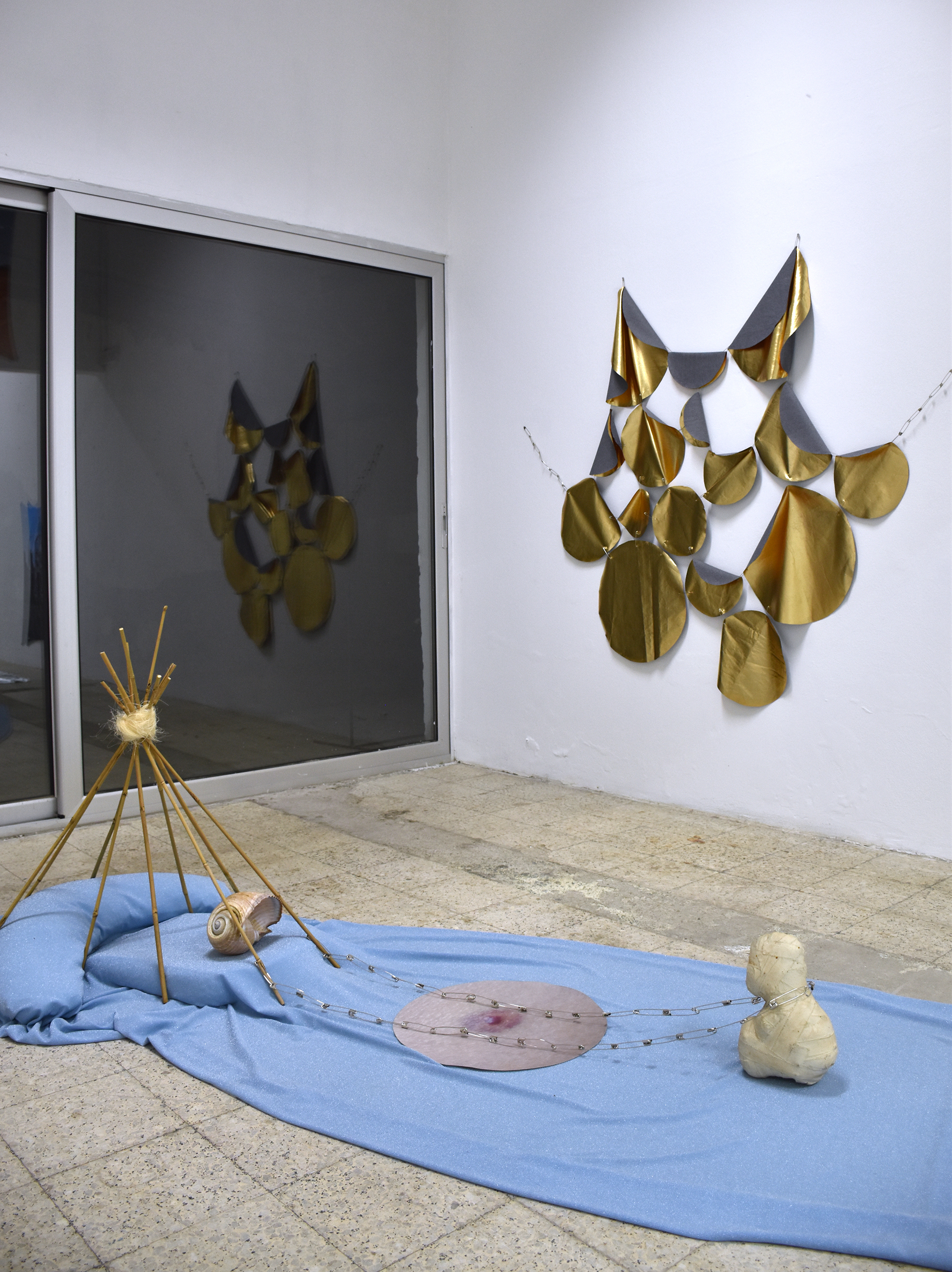
Sachini’s first solo exhibition in Cyprus, entitled Through the Clearing.
Calypso inhabits a clearing. She is hiding, seducing, emitting waves of light
around the planet Saturn. The revelation is part of the concealment, the
material of the myth inseparable from the cosmic reference. The clearing in the
forest, the crack in the ground, the craters and loosely connected materials
smoothening the surface of the moon bearing the nymph’s name all relate to each
other beyond language and form; all reflect each other’s image.
A clearing is a
paradox found in nature. It is formed by uncontrollable factors: the composition
of the soil, natural disasters, fires, avalanches or human intervention. At the
same time, it is a place where life grows, providing shelter and a resting
place for travelers.
Heidegger uses the
concept of the clearing to refer to a space free from conventions, a poetic
dwelling of things in harmony with the world, which bears within in the notions
of care and protection. For Heidegger, our subjectivity is not an enclosed
entity but rather an open structure of possibilities forging a passage into a field
of consciousness. This space is the clearing, which yields new entities,
things, words, vocabularies, practices, and beliefs. For Henry David Thoreau,
it is the space where one could potentially settle, the possibility of a new
reality, a potential location for a house. It is the place where everyday life
and habit are consolidated; the familiar and worn by us, appropriated, and
fenced in some way.
The clearing is a spot
for meeting and for gathering, serving both as opening and as enclosure,
foreground, and fringe. It is a place of ceremonial flight, where witches dance
in the collective imaginary; a place where nymphs dwell but also a square in
the city, a multiplicity impossible to entrench. It is a permanent, creative
contradiction.
In Nana Sachini’s work, objects are covered to
reveal the world. The work does not function as a representation, but as a game
of covering and revealing. Sculptural installations made of soft materials,
prints, elastic fabrics, as well as ready-mades (objects drawn from the
banality of everyday life) create a playful installation evoking the autonomy
of its parts. The installation is an open space for a performative assembly, an
attempt to construct a multifaceted and elastic environment. The Calypso moon,
the shadows, the eclipses, the bodies of warrior-witches, the wounds/open
tissues are conjoined to the notion of the clearing and together they bring
forth a new cohabitation context. Sachini privileges living processes by
binding her forms to elements unknown, and yet complementary.
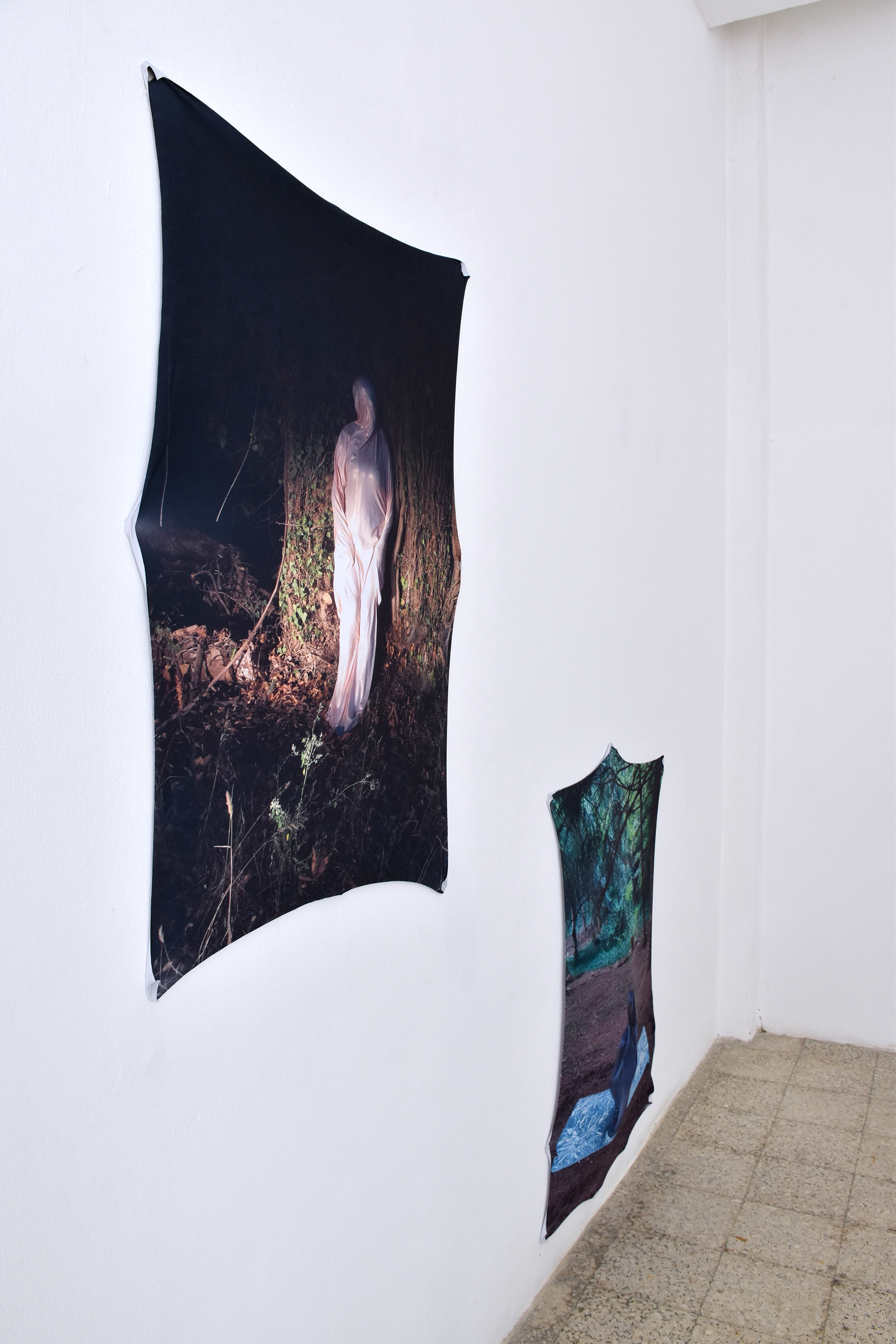
The artist combines
and reconfigures found materials and sculptural forms, while at the same time
implicating her own body into the work. The prints reveal an opening in the
forest populated by covered bodies, silhouettes which become part of the
landscape placed within clearly demarcated boundaries, in niches and in tree
trunks, in recesses of the ground. Her materials, ideas and references are
porous, constantly bleeding into each other. The process is reminiscent of Ana
Mendieta’s Silueta series performances (1973-1980). In this case, however,
there is no allusion to the absence of the body, which is instead driven back
to its materiality.
Sachini’s work calls
to mind the “wrapping” and covering of figures, so familiar in the
history of art: from the depiction of ceremonies to the folded fabrics found in
Baroque sculpture, the Rococo burial shroud and veiled marble sculptures, the
cloth-covered faces in the work of Rene Magritte; and no less in the erotic
forms of Hans Bellmer and Unica Zürn, the idea of the gift, as well as the
objects, architectural structures and female bodies presented as wrapped
figures by Christo and Jean Claude, where the object turns into form and
aesthetic decision, into a different way of observing the familiar.
Sachini puts in place
a grid within which subjects and objects are jointly transformed. Fabric, body
and representation, three-dimensional rendering and photographic impression
come together through ritualistic gestures. A mask is placed in relation to a wire
mesh, a plastic shell to decomposing petals, body parts to product packaging,
archetypes of houses to protective shells hosting animals of the sea.
Presences both living
and non-living are treated with care, wounds are covered and revealed. The
artist’s figures stretch and contort between the wall and the floor. Their
gendered features are draped over, yet the sense of femininity, the description
of the body and the importance of vulnerability and precarity pervade the work.
The figures are concealed, the fabric takes the place of the skin, of
feathering, of scales or becomes the sheet with which children make shelters.
All this results in a multitude of cover systems, blending mystical scenes
derived from mythology or from science fiction. The weight of history covers
entire regions.
Text by Panos
Giannikopoulos
Bio: Nana holds a
Master and a Postgraduate Diploma in Fine Art from Chelsea College of Art and
Design, London, UK and BA Hons- School of Fine Arts in Thessaloniki, GR. She
has presented work in Greece, UK, U.S.A., Germany, Austria, Lebanon and Cyprus.
Her work can be found in DD Collection-Dimitris Daskalopoulos, State Museum of
Contemporary Art, F.Kyriakopoulou and other private collections. She is also
founding member of the live-art group “KangarooCourt”. She lives and
works in Athens since 2010 and she is the mother of a 8-year-old girl.
6–8 Korai str, 1016,
Nicosia Wednesday 4–7pm Sat 11am–2pm and by appointment via
Funded by the Cultural
Services of Cyprus Deputy Ministry of Culture










Apartment Named Desire
An exhibition by the students of Frances Scholz from HBK, Braunschweig University of Arts, Germany.
Flip Project has always been a ‘case study’ within the independent/artist-run space scene along with many colleagues carrying out similar projects in various Italian and overseas. territories.
Many students over the course of this decade have dedicated their dissertations to non-profit realities.
Flip Project strongly believes in the educational role outside the traditional academic context through an international exchange of educational institutions with an experimental approach, but above all through the relationships and collaborations that activate a fluid ‘art making’, far from pre-established structures.
A multifaceted and energetic group of young artists engaged Flip Project in dialogue and discussion during drinks and as a reaction to their brief affair with Naples.
Apartment Named Desire explores and leaves traces, temporary fragments, a Déjà vu – nevertheless, it stays for those who join in this moment of passage.
Apartment Named Desire is a real place.
Artistic ideas that are often getting lost during realization, are transferred to another location. What is gained or getting left behind during this process is up to the viewer to desire.
Apartment Named Desire è un posto reale.
Flip project is an artist-run space in Napoli. It is an independent curatorial project, aplatform for discussions devoted to developing models of collaboration that expand on interests in contemporary culture and artistic practice.
Flip is motivated by continuous changes in location and spontaneous occurrences thatextend from the local to address the current milieu. Flip presents across a multiplicityof spatial situations where discussions take shape as exhibitions, publications or digitalfragments.
With the Matronage of Fondazione Donnaregina per le arti contemporanee, Naples

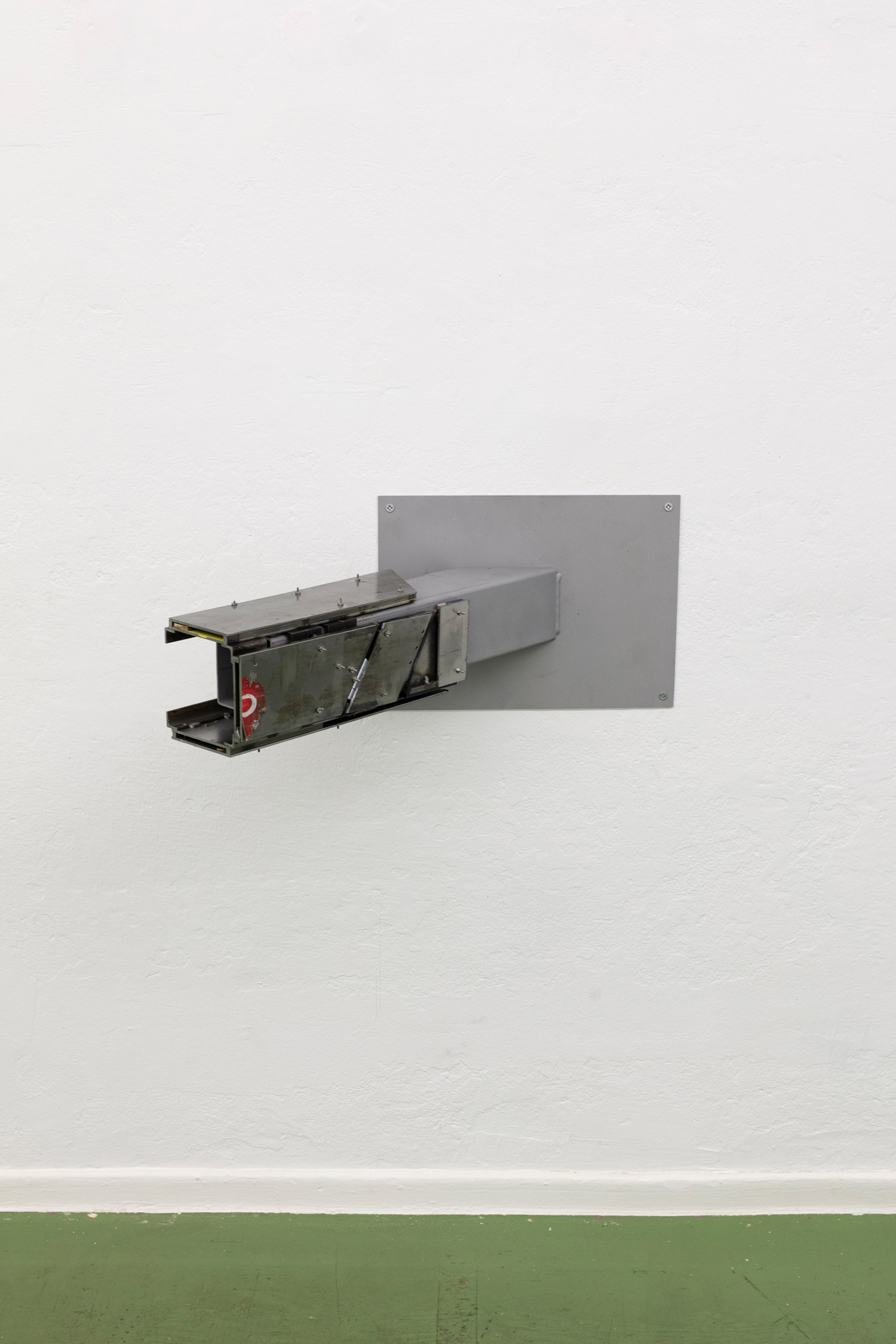


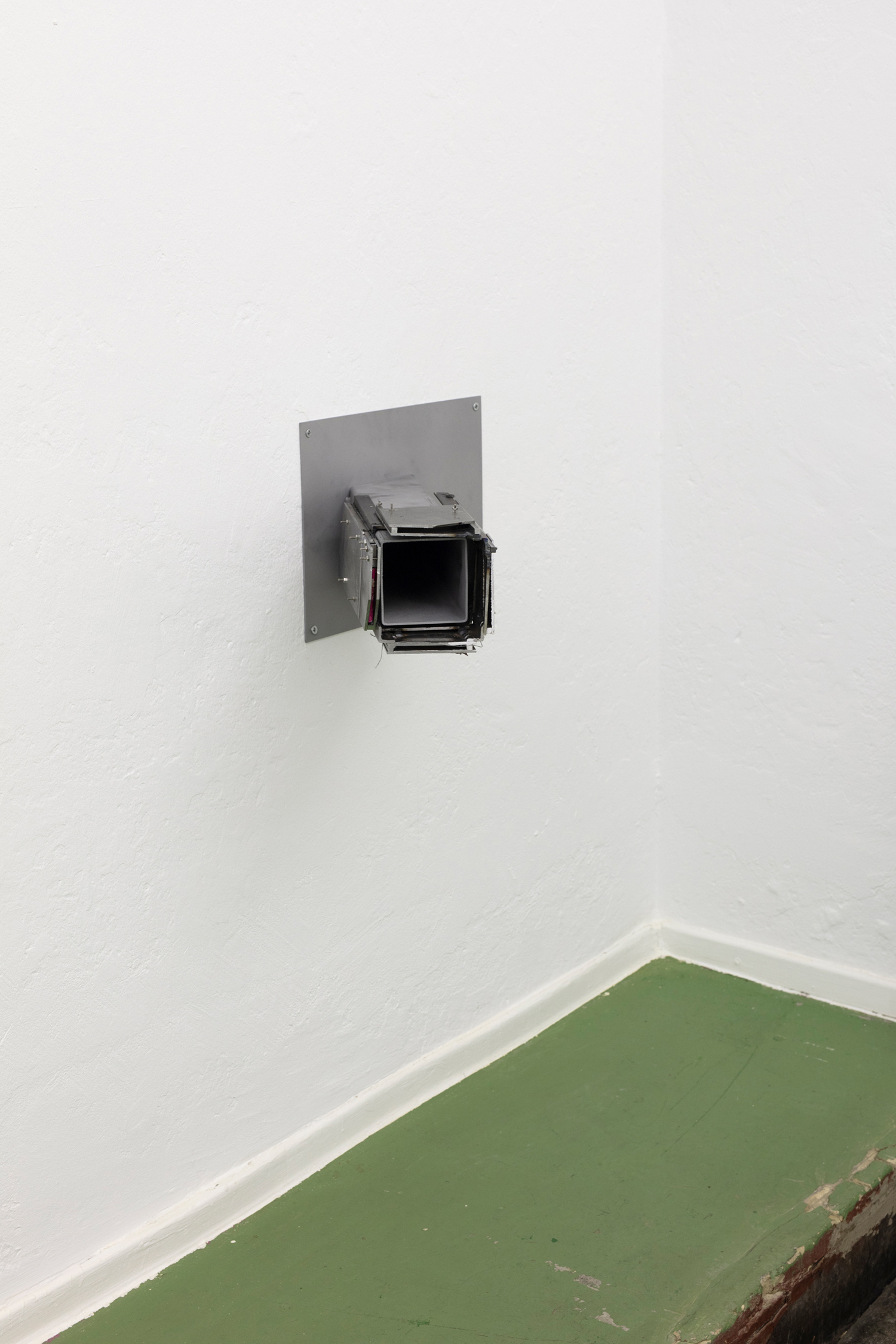


In HAUS, Rachel Fäth creates a variety of references and connections to the rooms, doors, windows, the cellar, yard, hallway and lighting, as well as to the house opposite of Keithstrasse 15. In parallel, Cinthia Marcelle shows CRUZADA (2010), a video work in which four groups of four musicians meet at the intersection of two sandy streets.
Biographies
Rachel Fäth (born 1991 in Berlin) studied Educational Science and Fine Arts at the Ludwigs-Maximilians-University Munich, the Academy of Fine Arts Munich, and is currently enrolled as an MFA student at Hunter College New York City. Her recent exhibitions include: Under the Vulcano II, Lomex Gallery, New York, 2022, THE AGE, Shahin Zarinbal, Berlin, 2022, Die zwei Seiten der Medaille, Mauer, Cologne, 2022, Lock, Loggia Loggia, Munich, 2022, Katakomben, Haus der Kunst, Munich, 2021, Haus Wien, Vienna, 2021, Metal Machine Music, Louis Reed, New York. Rachel Fäth lives and works in New York City.
Cinthia Marcelle (born 1974 in Belo Horizonte) lives and works in São Paulo. Among her recent solo exhibitions are: A Morta, Wattis Institute, San Francisco, 2018, Family in Disorder: Truth or Dare, Modern Art Oxford, 2017, Project 105: Cinthia Marcelle, MoMA PS1, New York, 2016, and Dust Never Sleeps, Secession, Vienna, 2014. Recent group shows include: A Clearing in the Forest, Tate Modern, London, 2022, Língua Solta, Museum of the Portuguese Language, São Paulo, 2021, Soft Power, SFMOMA, San Francisco, 2019, and Push the Limits, Fondazione Merz, Torino, 2019. She participated in numerous international biennales and represented Brazil at the 57th Venice Biennale in 2017 receiving a Special Mention from the jury.
Strukturversagen / Paul Kolling
September 20 — November 5, 2022
14a
Poolstrasse 34
20355 Hamburg


In a series of new works produced for the exhibition, Paul Kolling addresses the shifting historical significations loaded onto Germany’s energy infrastructure and its rhetorical treatment in the public imaginary. In a sequence of images on offset printing plates, framed pieces of anarcho-leftist ephemera, and a sculptural work spanning the two stories of the gallery, he dramatizes the separation between energy producers and distributors, state and citizen, historically amplified by nuclear Cold War-era geopolitical tensions and the Chernobyl meltdown – schematizing the potential transgressions by which these dynamics could be inverted.
Contemporary discourses of energy politics intertwine with those of political activism of the 1980s through imagery sourced from the German autonomous-leftist magazine radikal[1], which was subsequently banned and dissolved for disseminating subversive information. The publication’s transgressive content resulted in the German state filing criminal proceedings against them for promoting the formation of terrorist organizations. Its ensuing censorship made evident how not only electrical power flows through these infrastructural layers, but also narrative signification: the electrical grid channels energy into citizens’ homes, but is also a vector of statecraft and ideology.
A massive, imposing electricity mast – reproduced at 1:1 scale based on plans and schematics from a major electricity grid operator – is rendered as the stage on which these tensions are materialized, itself a product of state and institutional collaboration. The falling power mast invokes a particular image of averting state control, the anti-nuclear stance standing in for a larger opposition to prescribed exercises of technological power. These implications later shifted when, amidst a turn towards neoliberal green policies, a larger portion of the power grid and infrastructure became available to be developed and reclaimed by private enterprise, no longer hindered by the regulatory hurdles and cost and value proposition related to nuclear energy production and development.
Spatially, the sculpture is equally represented on both stories of the gallery, jutting through the floor, providing a linkage and serving as a reminder of power masts’ imposing scale. The bottom floor houses the inceptive ideological orientation and orchestration of proposed sabotage, the lower portion of the mast representing the initial point of contact for felling an electricity transmission tower, while the upper floor visualizes the resulting destruction. The reconstructed mast stands at an angle – which enhances a standing mast’s stability, but in this configuration, signifies its imminent collapse.
Whereas the scale is accurately represented, the material basis is skeuomorphic, consisting of 180kg of MDF – its reality is an evolving symbolic structure, not unlike the propositional gestures contained within the pages of radikal, its semiotic power functioning as both figurative rallying ideology and actionable proposal.
In parallel to the fragmentary reproduction of the infrastructure, the series of offset printing plates depict a tower in the process of toppling based on simulations resulting from scientific collaborations with TU Berlin – the plates that serve as their substrate gesturing towards the act of reproducing printed matter, the medium by which this subversive knowledge was once disseminated. Oriented counterclockwise, upon arrival a diptych displays the beginning of the structural failure, its sculpture counterpart providing the point of origin and looming sense of referential scale.
The models are deformed and rendered via the outcomes of a finite element method undertaken by the Department of Structural Mechanics and Analysis (TU Berlin) utilizing the schematics and blueprints Kolling requested and received from an energy transmission system operator. The last plate in the sequence presents a close-up of the rendered image in its final stage of destruction – portions of the image containing sharp edges and jagged lines, exposing the fidelity and resolution of the simulation. As a result, each image plate encapsulates a meta-contextual essence of the energy required to run the complex computer simulations in order to render the destructive depiction.
Each printing plate has the capacity to print its embedded image up to 500,000 times. In order to preserve this capacity while on display, the plates are installed as floating wall objects, hung with hardware similar to the kind used during printing, thus retaining their ability to eventually function as intended. Due to the recent spike in energy costs related to aluminum productions in the past 6 months, the producer has decreased the thickness of these plates from 0.4 mm to 0.36 mm (within a 10% norm deviation).
The rough translation of radikal’s motto (issue on display nr. 133 august 1987) is “newspaper for the seething underground.” Displayed in the basement of the gallery, which contains a kitchen floor pattern that would have been typical of the shared flat of this era where the production and political visions of these magazines might have been carried out, Kolling employs a masking technique to highlight the visual language that most appealed to him in the formation and development of the exhibition. The cover of the issue is situated as something akin to a piece of iconography, the other pages featuring the reappropriated seminal and eponymous characters of the German children’s classic Max und Moritz sabotaging an electricity tower and an anti-nuclear passage. In one depiction, the diagram’s caption loosely translates to “they removed the nuts and bolts from the masts”; the nuts and bolts are also notably absent from the mast reproduced in the gallery. In the lead-up to this publication and noted in its pages, there had already been 60 documented attacks on electricity towers, spiking after the Chernobyl disaster.
The demise of radikal was, in some ways, the end of an era: autonomous and anarchist leftist organizations promoting sabotage and forms of militant protest abated with the rise of neoliberal ideology, which located private individuals, not state structures, as the locus of shifting public attitudes towards energy and its representational authority. Nearing the end of the 1980s, the anti-nuclear narrative was one of a number of developments that guided Germany’s foray into neoliberal green policies. By then, the public appetite for nuclear energy had waned as new regulations dismantled the ability to build its controversial infrastructure – and opinion was swayed by high-profile disasters – as the narrative shifted towards “cleaner” forms of renewable energy. The rendering, simulation, and 1:1 sculpture were all produced from the plans and schematics Kolling received from a leading European energy distributor, providing the structural basis for the renderings and sculptural components – an act that would have been considered unthinkable at the peak of radikal magazine’s era. Across these works, Kolling shows how visual language has been transformed into information, creating an ambiguous narrative between the emotional entanglement of the attackers and the abstract technical processing of data: deconstruction reconstructed.
[1]radikal is a magazine first published in West Berlin on June 18, 1976, which sees itself as the mouthpiece of the left-wing or radical left-wing movement. In the 1980s and 1990s, the newspaper had the largest circulation and was probably the most influential paper of the autonomous movement. Between 1984 and 1997, 210 investigations were conducted against the magazine for the formation of a terrorist organization, making it the magazine most frequently affected by criminal investigations and criminal proceedings in the Federal Republic of Germany. The magazine was published anonymously and conspiratorially from 1984 onward and appears irregularly. [Medico International Frankfurt / Paranioa City Buchhandlung Zürich und andere (Hrsg.): 20 Jahre radikal Geschichte und Perspektiven autonomer Medien. Berlin / Hamburg / Münster 1996]
⁓ Christopher Dake-Outhet
Magnus Gitt-Henderson / CRISISCORE VOLUME 1
The Lathe of Heaven
with:
Andreas Angelidakis, Claudio Coltorti, Chioma Ebinama, Panayiotis Loukas, Olga Migliaressi-Phoca, Angelo Plessas, Mathilde Rosier, Amalia Vekri
Curated by Amalia Vekri
29 September – 5 November, 2022
Haus N Athen
Kairi 6
Athens, Greece


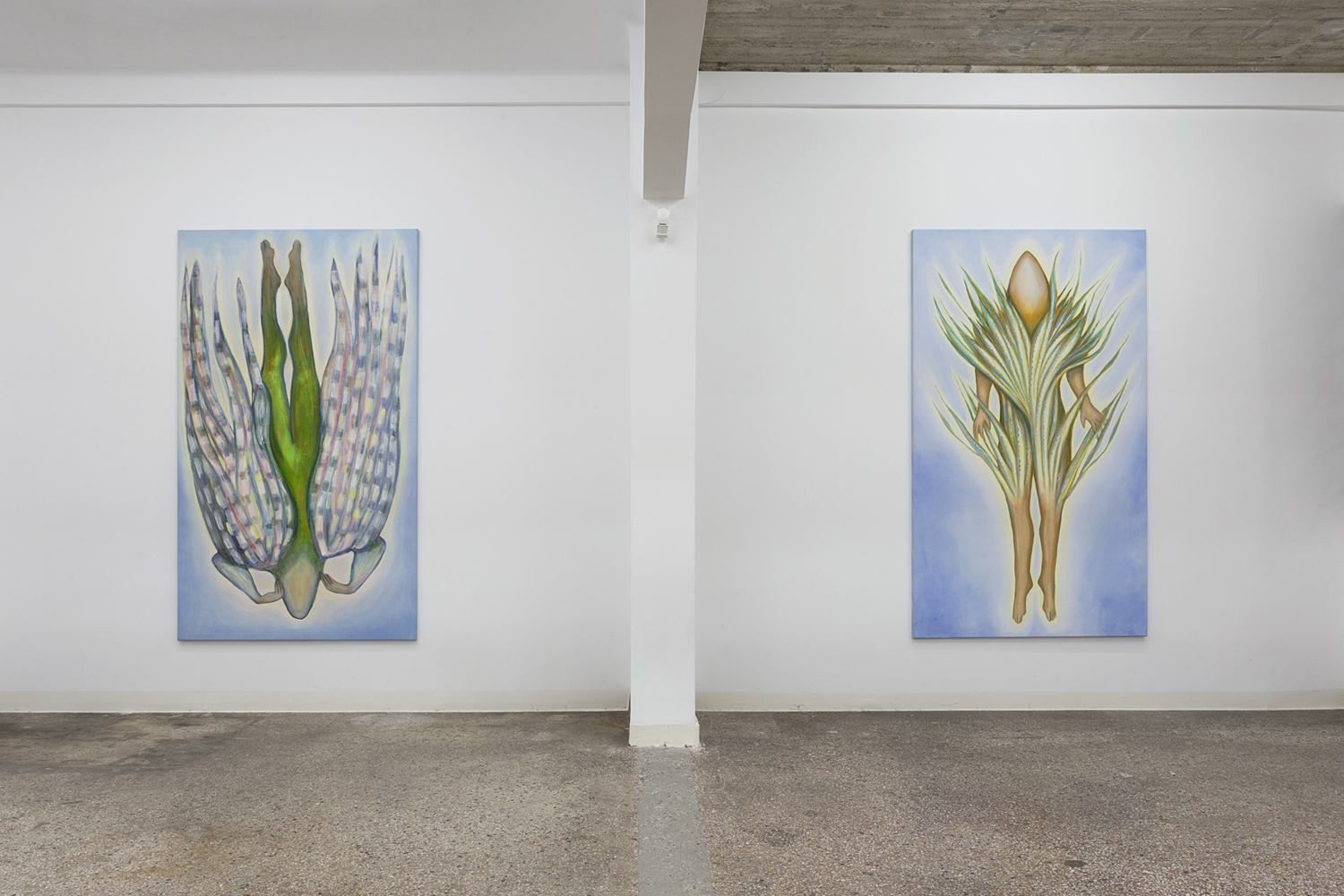


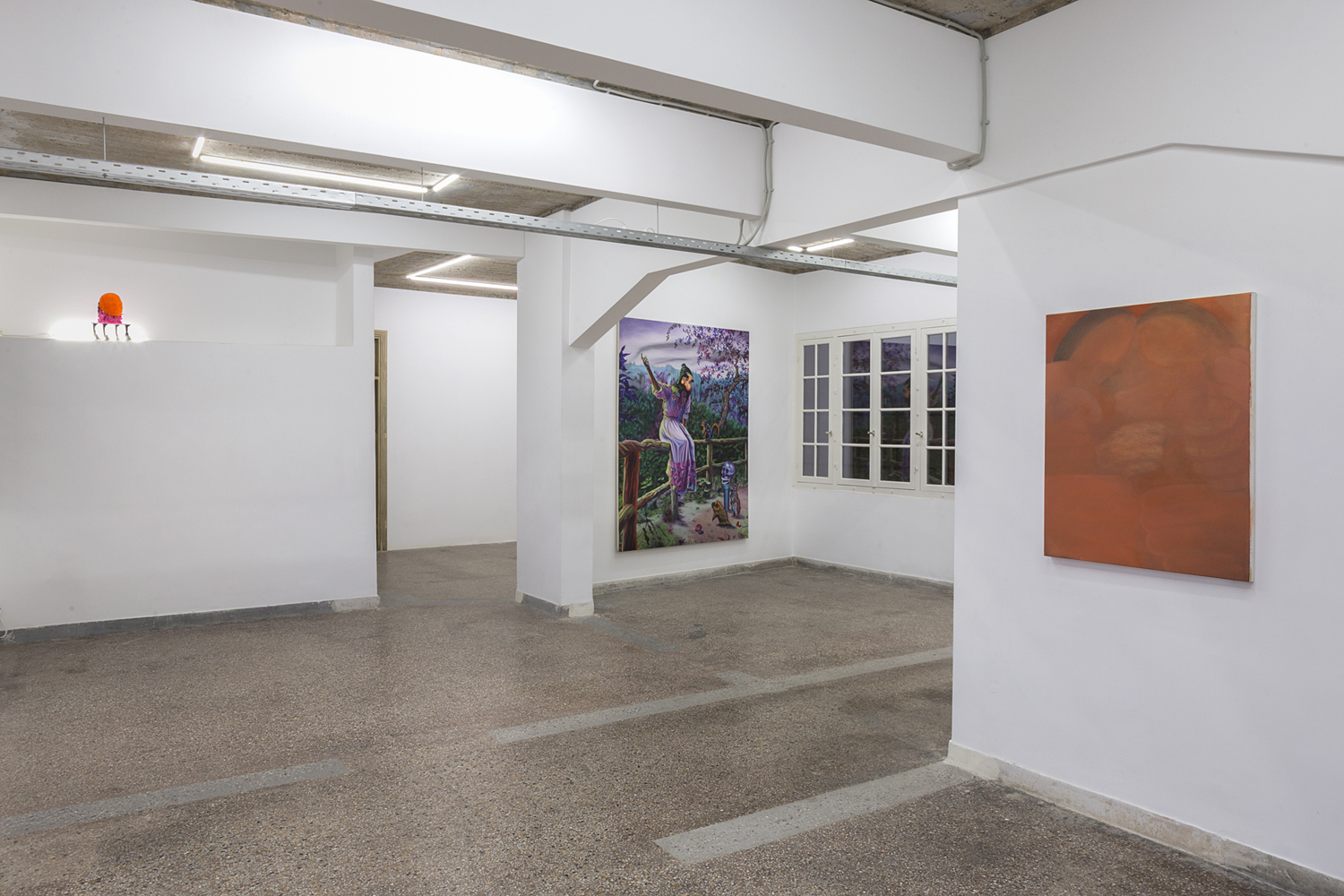
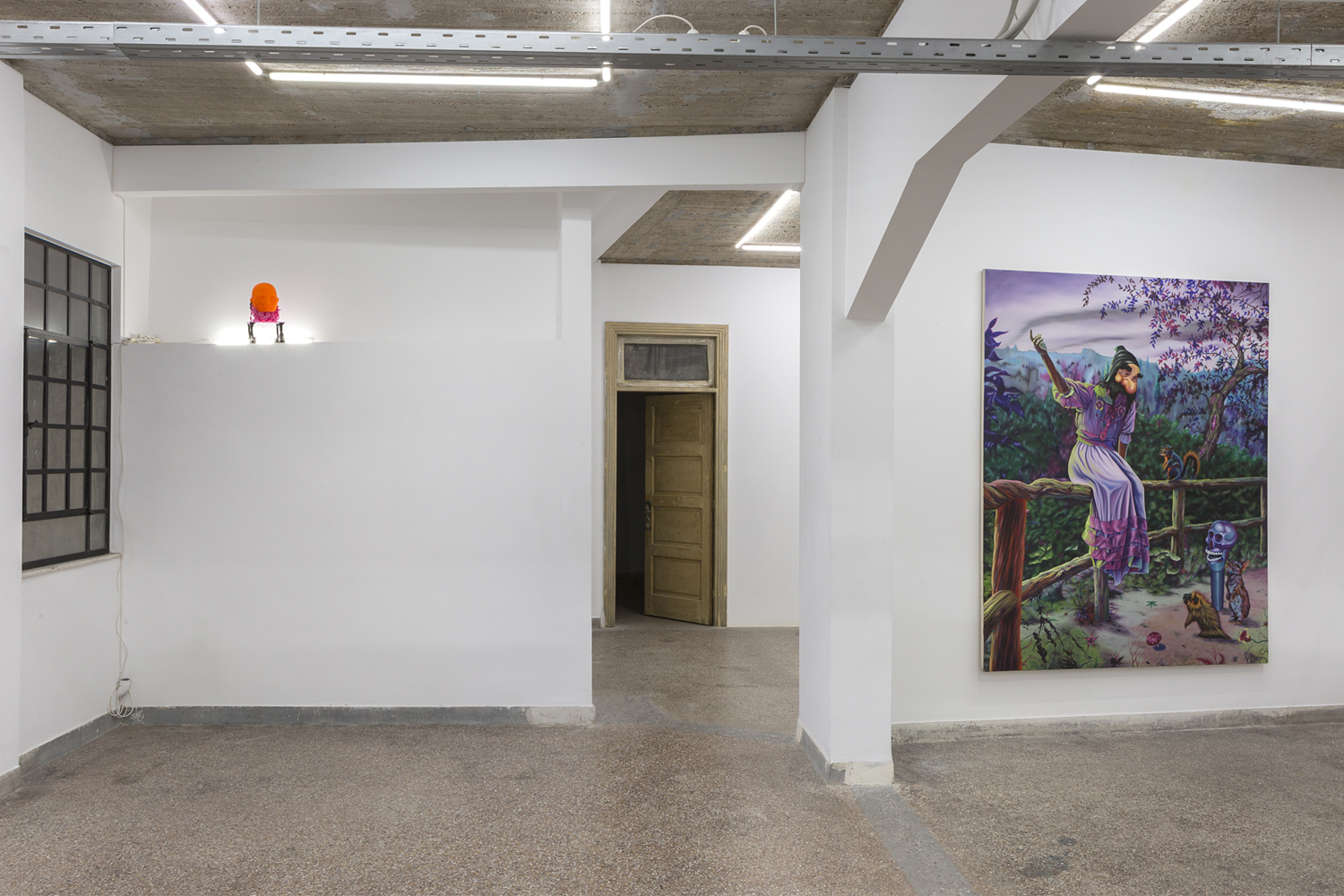


‘Cold, cold. Hard. Bright. Too bright. Sunrise in the window through shift and flicker of trees. Over the bed. The floor trembled. The hills muttered and dreamed of falling in the sea, and over the hills, faint and horrible, the sirens of distant towns howled, howled, howled.
She sat up. The wolves howled for the world’s end.
Sunrise poured in through the single window, hiding all that lay under its dazzling slant. She felt through excess of light and found the dreamer sprawled on his face, still sleeping. “George! Wake up! Oh, George, please wake up! Something is wrong!”
He woke. He smiled at her, waking.
“Something is wrong – the sirens – what is it?”
Still almost in his dream, he said without emotion, “They’ve landed.”
For he had done just what she told him to do. She had told him to dream that the Aliens were no longer on the Moon.’
The Lathe of Heaven, Ursula K. Le Guin, 1971
https://daily-lazy.com/wp-content/uploads/2022/11/the-lathe-of-heaven-at-haus-n-athen-athens-greece-1.jpgKelly Tissot / Spurious Crops
Olga Balema | Geta Brătescu at Galerie Barbara Weiss, Berlin
September 11 – November 5, 2022


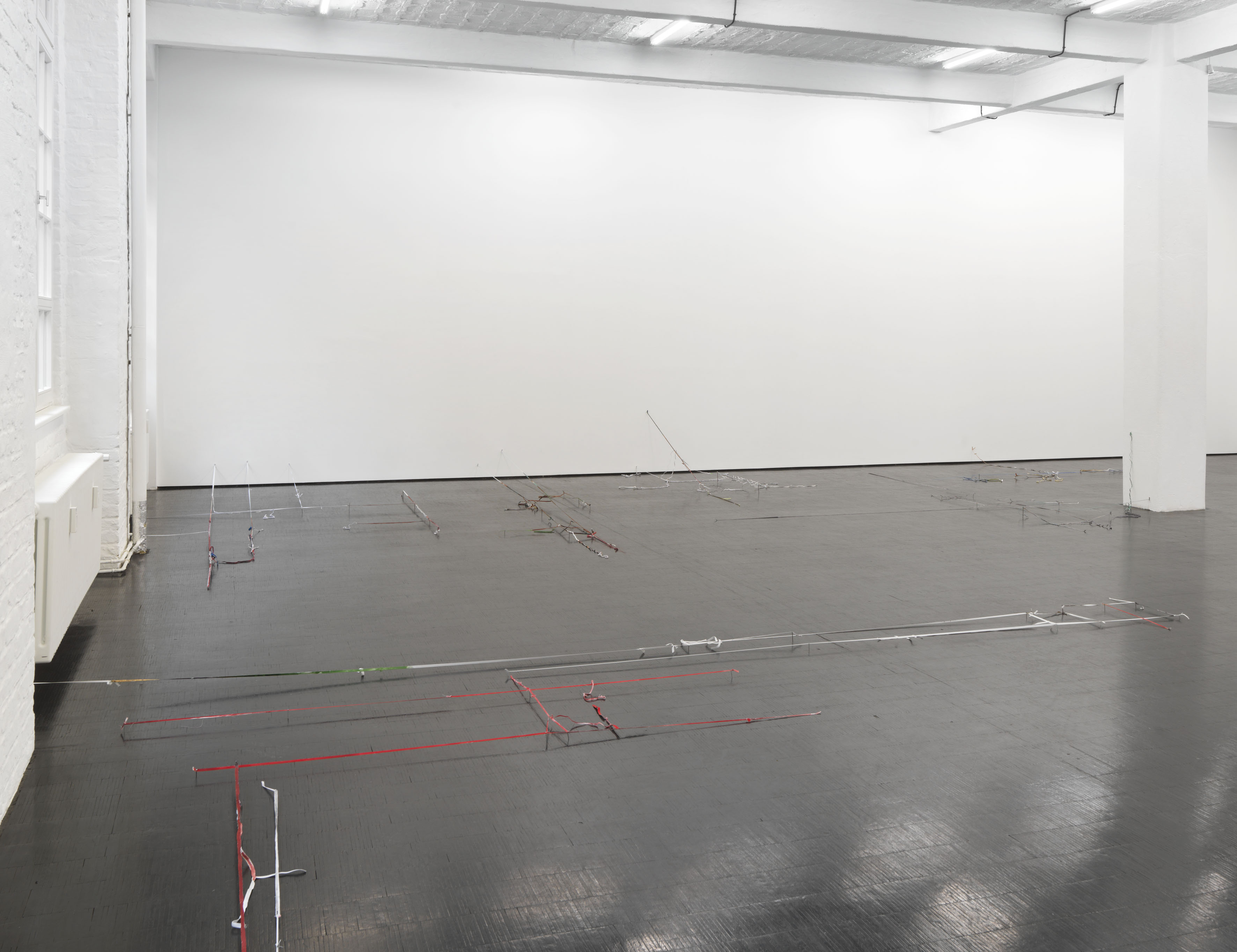







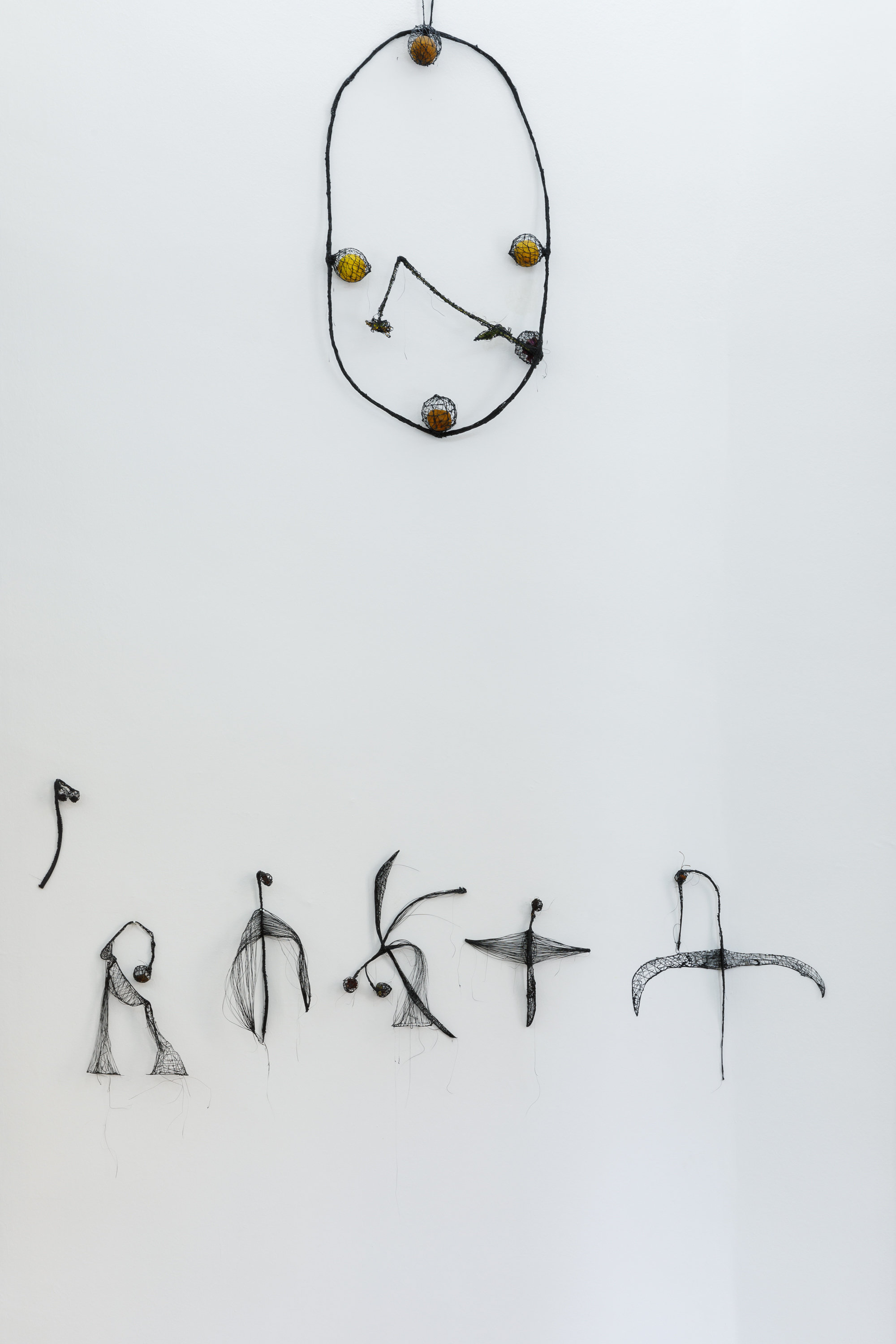


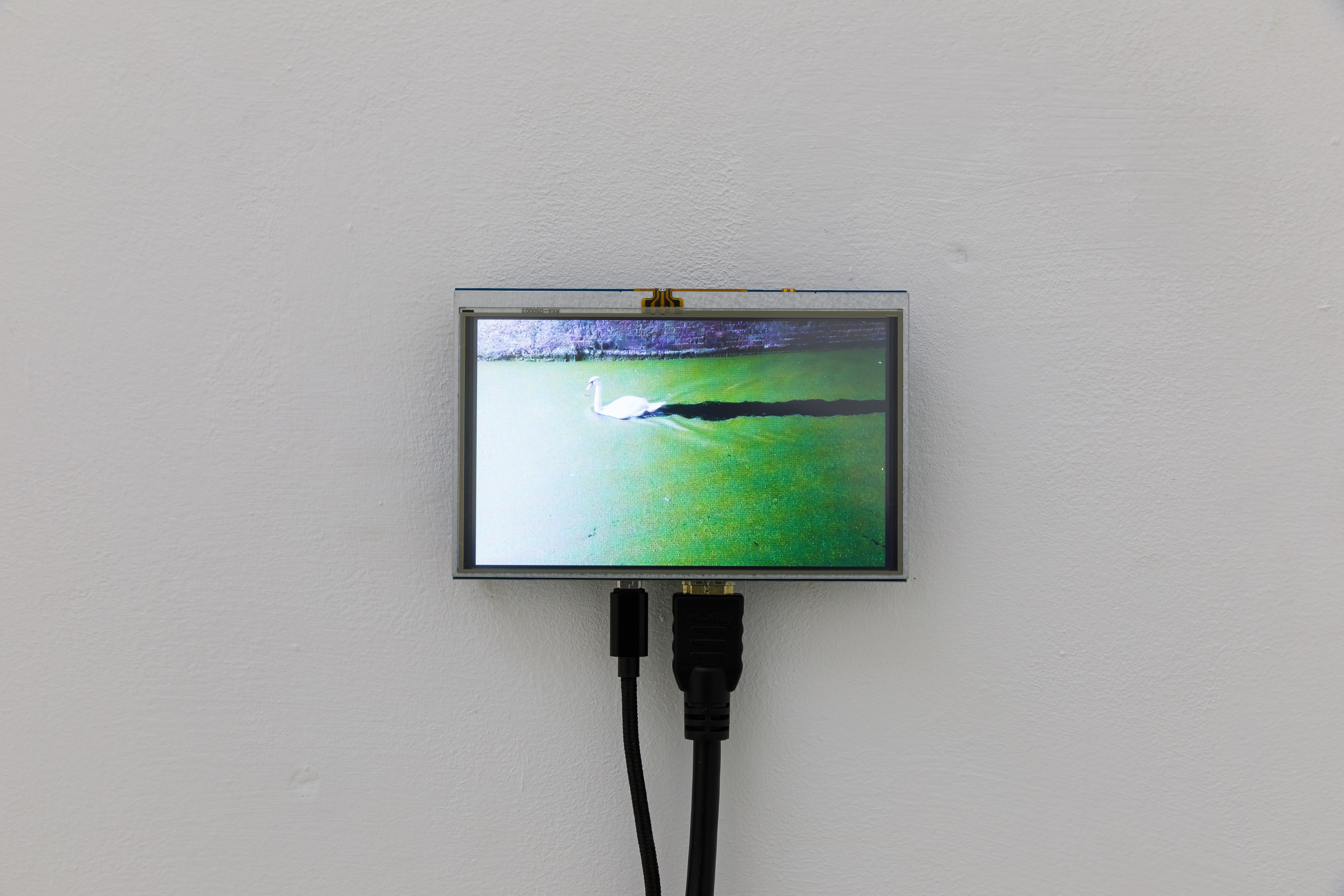


Zheng Wei / Zombie or God
Curated by Feng Xi
September 23 – November 10, 2022
WishinART
B1 Block C, Jing Yuan, Ying Ke Center,
Beijing, China


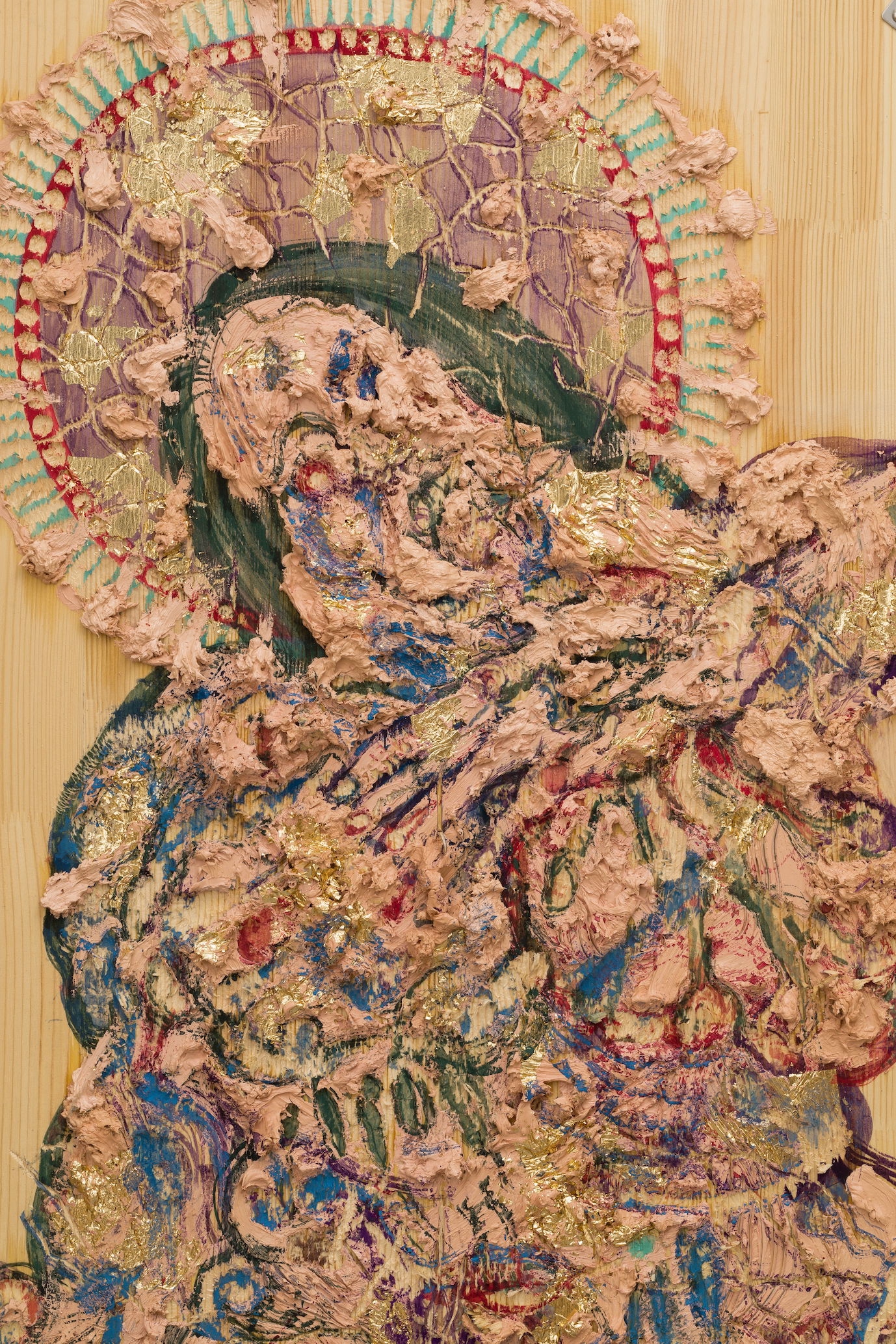
In dealing with the normalized epidemic prevention, the individual will is dissembled and reassembled into new collectivism, leading to the intangible and giant capsule. Combining wood carving and painting has been one of the methods used by the artist. This In dealing with the normalized epidemic prevention, the individual will is dissembled and reassembled into new collectivism, leading to the intangible and giant capsule. exhibition will present his woodcut paintings spanning 16 years as a point of departure to study his creative methodology. Given the homogenized artistic trends, these woodcut paintings reveal his stubborn and stereotypical pursuit, like his sincere and honest personality, and distinguish them from other artworks.

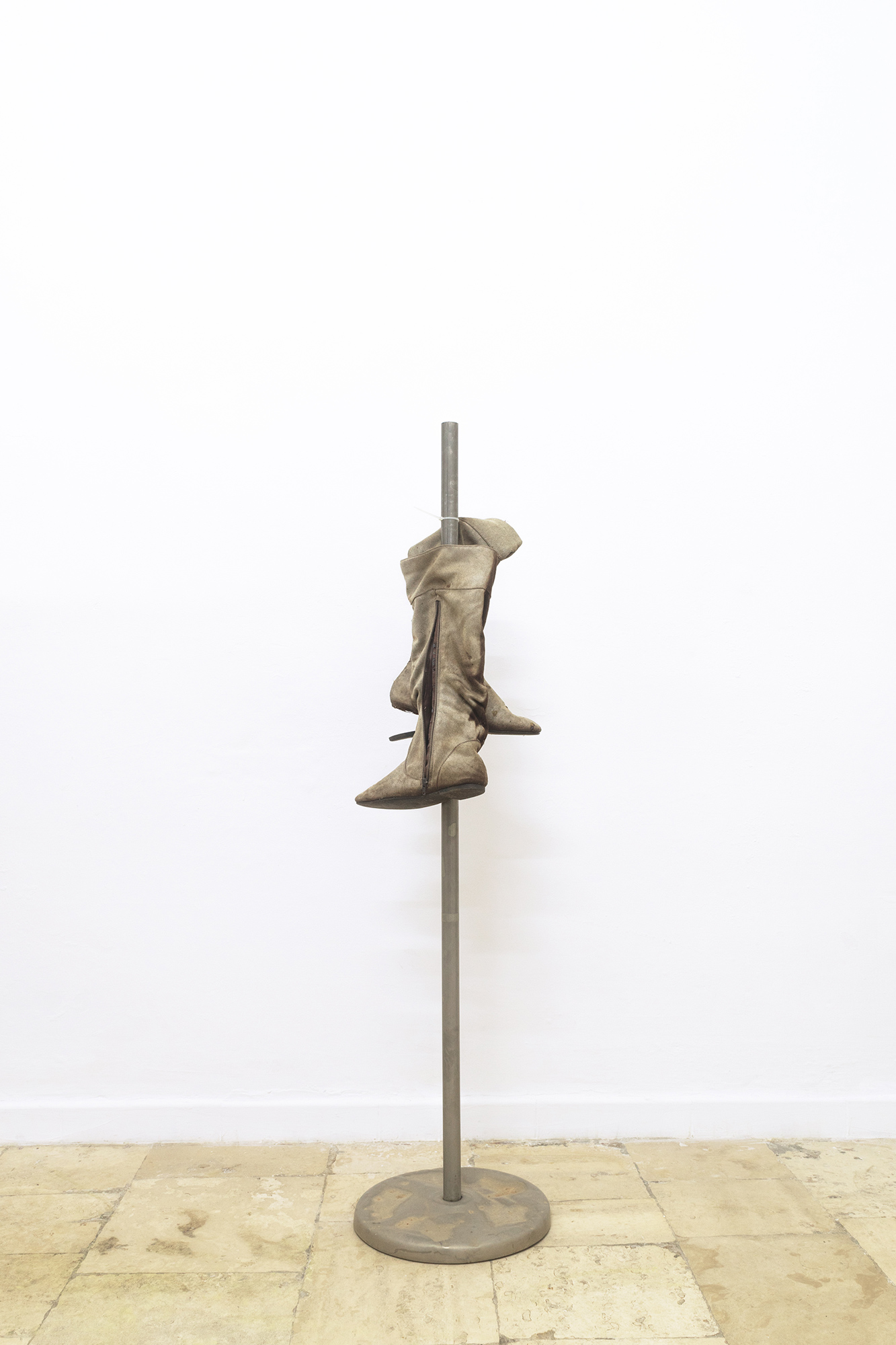


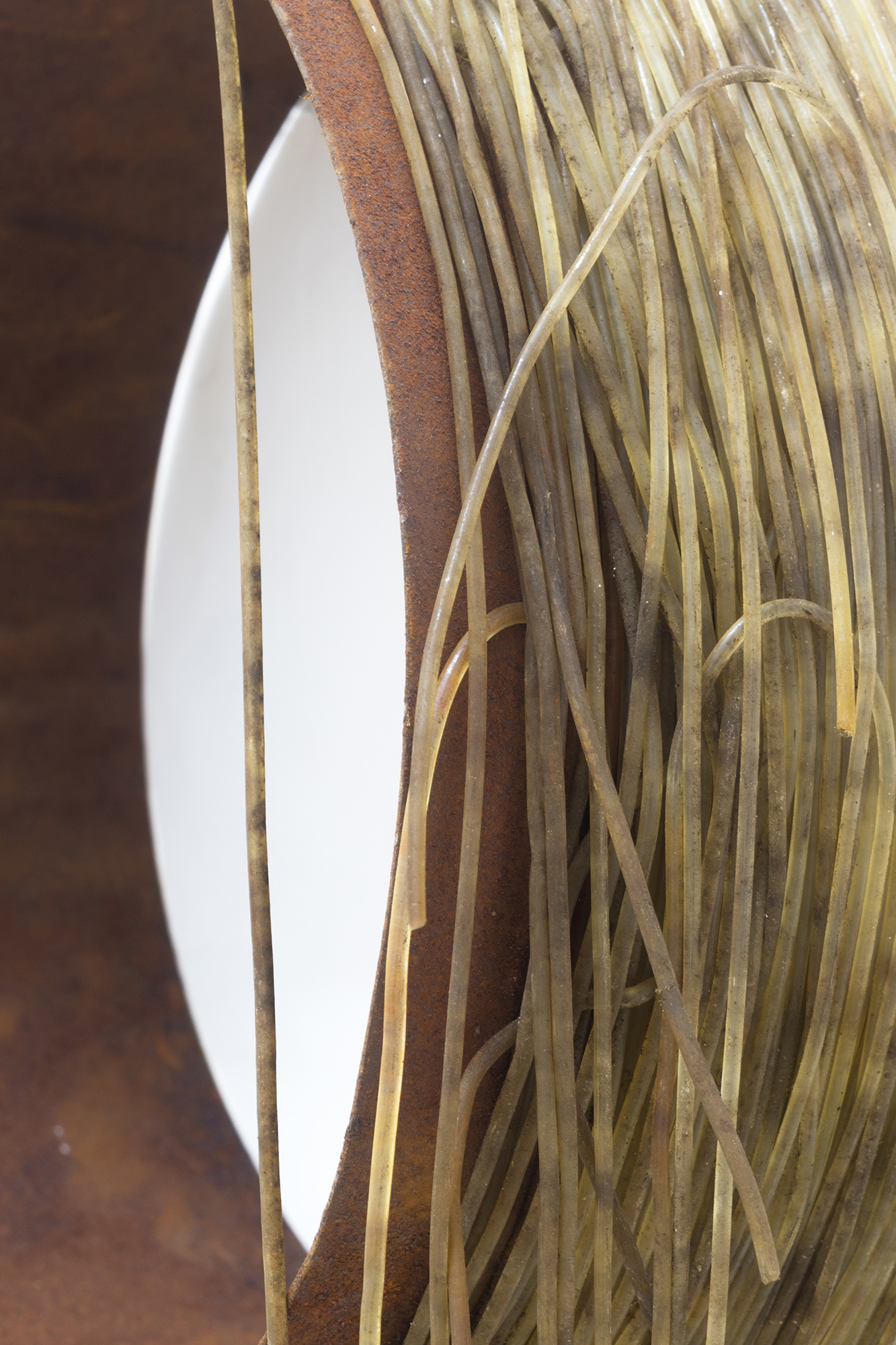


One year after Ecotoni I, with Laurie Anderson, Ericka Beckman, Jenny Holzer, Joan Jonas, Agnieszka Polska and Jenna Sutela, Like A Little Disaster is proud to present the second chapter of the series which involves three new artists: Daniela Corbascio, Jumana Manna and Nguyễn Trinh Thi.
A transition between two adjacent but different ecosystems, the ecotones appear as both gradual shifts and abrupt demarcations. But more than just a marker of separation or even a marker of connection (although importantly both of these things), an ecotone is also a zone of fecundity, creativity, transformation; of becoming assembling, multiplying; of diverging, differentiating, relinquishing.
The inhabitants of an ecotone are zones for brave pioneers.
An ecotone is simultaneously an anticipated past and a remembered future.
Through different practices, poetics and semantic fields, the three artists on display structure territories of transition or tension between two or more heterogeneous natural-cultural community ecosystems. The ecotone thus becomes the most effective strategy and method for reflecting on the interlaced relationships between nature and culture.
“Something happens.
Estuaries, tidal zones, wetlands: these are all liminal spaces where “two complex systems meet, embrace, clash, and transform one another.”
Eco: home. Tone: tension.
We must learn to be at home in the quivering tension of the in-between. No other home is available. In-between nature and culture, in-between biology and philosophy, in-between the human and everything we ram ourselves up against, everything we desperately shield ourselves from, everything we throw ourselves into, wrecked and recklessly, watching, amazed, as our skins become thinner”
—–
It is hard to find a comprehensive definition for Daniela Corbascio‘s work. Her research phagocytises languages follow a personal stream of consciousness, regulates and orchestrates the forms of their memory, making them co-exist in balancing acts. Her primary approach is that of an independent researcher who takes an original, anti-academic method, identifying a starting point and then following an evolution dictated by the alternation of modular strictness and random coincidences. Daniela has an extraordinary ability to appropriate a space in which organizes strictly forms and materials ambivalent between what she creates with her hands and what she found, gathered, collected, and preserved. The material and immaterial logic of this theatre offers philosophical insight into the relationship between signs, things, language and perception. Her installations operate as phenomenological staging grounds which are highly tuned to their surrounding architectural spaces. Daniela’s interventions are a memory that turns into a landscape – not intended as a scene but as a contingent space through in time – is accompanied by a memory made of forms; the minimalism with its basic forms and their positioning in the gallery, the post-minimalism with the corruption of these same forms, the conceptual, while not adhering to the dematerialisation of the work, the land art, the arte povera, etc.. A memory of forms involved in a number of sculptural practices or semi-practices inherent in the recent generations of artists with whom Corbascio also shares the practice of “collecting” as one of the tools to reach a state of authorship and in this poetic assembly, the transformation; divergent and differentiated multiplication become fertile territories for new mysticisms.
Appropriation, alteration and rethinking of objects, elements and forms of phenomenal reality mark their action and through these steps, allows us to think of reality as a game of differences, while we normally think of it in terms of similarity, analogy, and identity. Her practice investigates the possibilities of giving new purpose to everyday life elements, intentionally removing them from the dominion of automatic perception and making them abstract in order to place those elements and their relationships, using connotations on show.
Through the dissociation of objects and concepts, the artifice of the works on the show makes the perception slow and permanent, generating a strange contradiction because the same concepts and objects are fragmented or separated from their mechanical use, in order to support a closer and lasting gaze. Like paradoxes, her interventions have the unique ability to amplify contradictions, speaking out through their confusion, so that the viewer must pause and think about what might be their connections and developments. What “confuses” in the exhibition’s works is that they present us a comment through the attribution of new intentions, offering at the same time a branch of sensations allowing various interpretations cause they activate a chain reaction of reflections.
These premises implicate complex issues such as the relation between copy and original, seen and interpreted by the artist as mutually constitutive of the thing and its double, the thing and the shadow. Through a continuous process of calling into question the logic of representation the artist suggests repetitions, “doubles”, estranged objects and subjects that host multiple realities within them or fall apart, disconnected and become whole. This process alters in countless ways the logic of the original and the copy, so as to deny any ruling image of thought and to emancipate it from the enslavement to and the hierarchy of any form-default image.
Jumana Manna is a Palestinian artist working primarily with film and sculpture. Her work explores how power is articulated through relationships, often focusing on the body and materiality in relation to narratives of state-building, and histories of place.
Through sculptures, films and texts, Manna questions the paradoxes of conservation practices, particularly in the fields of archeology, science and law. His research takes into account the tension between the modernist traditions of categorization and conservation and the potential “recklessness” of ruins as an integral part of life and its regeneration.
Wild Relatives, 2018
64min, HD video
Deep in the earth beneath the Arctic permafrost, seeds from all over the world are stored in the Svalbard Global Seed Vault to provide a backup should disaster strike. Wild Relatives starts from an event that has sparked media interest worldwide: in 2012 an international agricultural research center was forced to relocate from Aleppo to Lebanon due to the Syrian Revolution turned war, and began a laborious process of planting their seed collection from the Svalbard back-ups. Following the path of this transaction of seeds between the Arctic and Lebanon, a series of encounters unfold a matrix of human and non-human lives between these two distant spots of the earth. It captures the articulation between this large-scale international initiative and its local implementation in the Bekaa Valley of Lebanon, carried out primarily by young migrant women. The meditative pace patiently teases out tensions between state and individual, industrial and organic approaches to seed saving, climate change and biodiversity, witnessed through the journey of these seeds.
NGUYEN Trinh Thi is an independent video/media artist and director based in Hanoi. In her practice, she explores the power of sound and listening, and the multiple relationships between image, sound and space, with continuous interests in memory, representation, landscape, indigenousness and ecology. Her work investigates the role of memory in complex cultural histories.
Nguyen studied journalism, photography, international relations and ethnographic cinema in the United States. In 2009 she founded Hanoi DOCLAB, an independent center for documentary cinema and the art of moving images in Hanoi.
She is known for her layered, personal, and poetic approach to contentious histories and current events through experiments with the moving image. Regarded as one of the pioneers of her home country Vietnam’s independent cinema, Thi is seen as the most notable video artist in Vietnam’s contemporary art scene.
Inspired by her heritage, her pieces are powerful and haunting, and they focus on social and cultural issues, especially the complex, traumatic history of Vietnam and its after-effects in the present. In her longer documentary films, she employs calm and quiet visuals while eschewing voiceovers in order to let the people of her country speak directly to the camera. Her diverse practice has consistently investigated the role of memory in the necessary unveiling of hidden, displaced, or misinterpreted histories, and she has examined the position of artists in Vietnamese society.
How to Improve the World (2021)
Single-channel video, colour and B&W, sound, 47 minutes
Set in the Central Highlands of Vietnam where a large concentration of groups of indigenous people live, How to Improve the World is a film about listening. The film reflects on the differences in how memory is processed between the culture of the eye and that of the ear, while observing the loss of land, forests, and the way of life of the indigenous people in this part of the world. ‘Do you trust sounds or images better?’ Nguyễn, off screen, asks her daughter, who replies ‘images, mum’. Of the cultural dominance of images and looking at the expense of other sensory modes, Nguyen has said: ‘As our globalised and westernised cultures have come to be dominated by visual media, I feel the need and responsibility as a filmmaker to resist this narrative power of the visual imagery, and look for a more balanced and sensitive approach in perceiving the world by paying more attention to aural landscapes, in line with my interests in the unknown, the invisible, the inaccessible, and in potentialities’.
Letters from Panduranga (2015)
Single-channel video, colour and b&w, sound, 35:00
The essay film, made in the form of a letter exchange between a man and a woman, was inspired by the fact that the government of Vietnam plans to build the country’s first two nuclear power plants in Ninh Thuan (formerly known as Panduranga), right at the spiritual heart of the Cham indigenous people, threatening the survival of this ancient matriarchal Hindu culture that stretches back almost two thousand years.
At the border between documentary and fiction, the film shifts audience attention between foreground and background, between intimate portraits and distant landscapes, offering reflections around fieldwork, ethnography, art, and the role of the artist.
Intertwining circumstances of the past, present, and future, the film also unfolds a multi-faceted historical and on-going experience of colonialisms, and looks into the central ideas of power and ideology in our everyday.
Fifth Cinema (2018)
Single-channel video, color and B&W, sound, 56 minutes
With text by Barry Barclay (“Celebrating the Fourth Cinema”, 2003)
Fifth Cinema begins with a quiet statement “I am a filmmaker, as you know.” That text and what follows, by Maori filmmaker Barry Barclay, who coined the term ‘Fourth Cinema’ to distinguish Indigenous cinema from the established ‘First, Second, and Third Cinema’ framework, provides structure to Nguyen’s hybrid essay film that moves on multiple cinematic and topical terrains. Eschewing voice in favor of the written word and juxtaposing moving images of the filmmaker’s own daughter with archival images of Vietnamese women seen through the lens of the “ship’s officers”, the film slowly leads the viewer through a narrative of colonialism, indigeneity and cinematic limitations in representation.
The Ring Beyond the Mat – an exhibition in three chapters
Oct 7 2022 – Jan 1 2023
Curated by Ashik & Koshik Zaman (C-print)
Artists: Clément Courgeon, Jasmin Daryani, Dev Dhunsi, Ditte Ejlerskov, Constantin Hartenstein, Theodor Johansson, KOR’SIA, Josefina Malmegård
 |
| The Ring Beyond the Mat, installation view, Konsthall 16/Riksidrottsmuseum, Stockholm. Curated by Ashik & Koshik Zaman (C-print) |
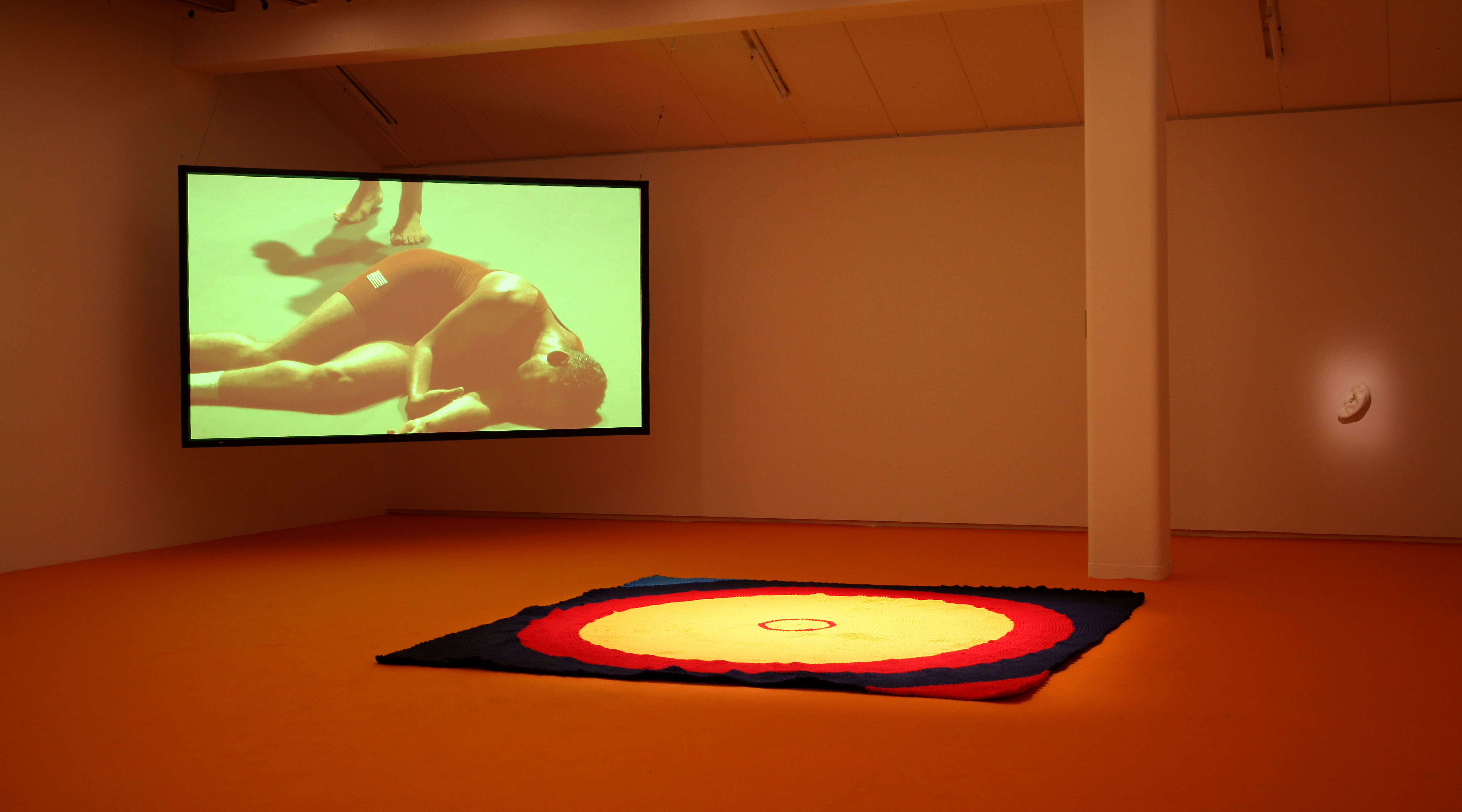 |
| The Ring Beyond the Mat, installation view, Konsthall 16/Riksidrottsmuseum, Stockholm. Curated by Ashik & Koshik Zaman (C-print) |
 |
|
Ditte Ejlerskov The Altorilievo Fight, 2021 3D printed relief sculpture in HP MJF PA12 spray painted white, 37.3 x 35.4 x 8.4 cm |
 |
| Dev Dhunsi Akhada temporarily closed due to fog, 2022, Mixed media sculpture, 150 x 200 x 150 cm (detail view) |
 |
|
KOR’SIA HUMAN, 2018, choreography by Mattia Russo and Antonio de Rosa, inspired by a play by Umberto Ciceri, 15 min and Theodor Johansson Inherited Repetition, 2022, crochet, 250 x 250 cm
Jasmin Daryani, Headlocked, 2022, Stereo litography, 14.5 x 14.5 x 18.5 cm |
|
|
 |
|
Constantin Hartenstein, FEIT, 2011, Super 8 transferred to HD video, 2:11 min |
|
Clément Courgeon, Wrestling Society/Part one, 2022, Wood, acrylic, metal, rope, 41 x 34,5 x 14 cm
Josefina Malmegård, Heavenly Bodies II, 2019, Ultra HD video. 4:43 min loop |
|
|
Why wrestling? What makes wrestling interesting in a way not always considered by a larger public?
Ashik & Koshik Zaman: Wrestling is a fascinating sport in so far centuries old and one that has such geographic reach around the world, with regional variations found. It’s the OG (original) sport. There are so many aspects inherent in wrestling, from the athleticism to eroticism, that make it an interesting study. Perhaps for some pain and violence comes to mind with combat sports in general but we’ve often linked wrestling to dancing, if yet with a whiff of controlled violence. With this exhibition we wanted to broaden the audience view on wrestling beyond the stock image of muscular white bodies in singlets and bring thought to this close connection to dance and choreography. Moreover, for instance we also want to serve a reminder of wrestling as something that historically has been practiced also between women even though that often gets edited out of history the way it’s conveyed. Every artwork in the exhibition speaks to one or several interests and/or realities found in wrestling; some of which are more novel and surprising than others. With this exhibition it was also important to steer away only from a Western world image of wrestling, without for that matter resorting to a very documentary approach. At the core it’s a very conceptual art exhibition inspired by wrestling.
What can be said about the theme and form of your work Akhada temporarily closed due to fog (2022) in the exhibition?
Dev Dunshi: The theme of the work is directly connected to Kabaddi and the “akhada” which is the name of the arena where most of the practices and performances take place within the sport. It is treated like a temple where you are not allowed to bring in tobacco or other substances and indeed have to follow certain rules. Since it’s a team wrestling sport and based on the connectivity and movement within chaos and order, I felt the desire to translate this “holy playground for wrestling”-sphere to the exhibition, without only bringing direct documentation from my on-site research.
In simple terms, the installation is a sandbox containing elements from an akhada. The sand is red just like a classic akhada, and it can also resemble the north indian sunsets glaring red light because of fog or pollution, often called smog. Four glasses of milk resembling how the wrestlers drink milk directly from the cow kept near the akhada. Speed boxing bags chained together as one big bunch of grapes. With lastly the projection on shaped sand and its soundscape. The film (Temporarily, HD-video 40:00 min) is a birds-eye view of the movements of 8 dancers following and breaking the rules of Kabaddi. One of the rules for instance is when an attacker from the one team tries to touch or tackle the opponent team, they have to hold their breath. For referees to keep track they are forced to repeat the word kabaddi. Creating visual evidence of how the breath is slowly burning out, sometimes one can hear their next moves by the tonalities and rhythm combined with their bodily movements.
What are the gender connotations of the presented work The Altorilievo Fight (2021) and in what context was it originally made?
Ditte Ejlerskov: My general work with this sculpture of the wrestlers in different media is part of a millennia-long Eurocentric tradition. The oldest male version of the wrestlers is to be found at the Ufizzi – but it is itself a marble copy of the now-lost Greek original in bronze.
With this “original” in mind my aim was to create a piece that could visualise an inner struggle like the one I had experienced at the birth of my first child and subsequently wished to process and change in preparation for the birth of my second child.
For me the two wrestling bodies came to symbolise this inner struggle. When I was pregnant with my second child, I began working on this female version of the wrestlers as a way of processing two conflicting emotions: anxiety and love. My first birthing situation had been dramatic and dominated by fear. An overproduction of the hormone adrenaline will typically prevent the body from releasing oxytocin, also known as the love hormone, necessary during childbirth and breastfeeding. Seeking to take control of my own body in order to make my upcoming childbirth calm and loving, I created the sculpture of the two wrestling women as a meditation object capable of accommodating conflicting physical states.
In the studio, when re-drawing the males into females, for me, the two bodies became avatars of oxytocin and adrenaline. I would view them from all angles in the hope of manifesting a calm home birth far away from hospitals and medical procedures. I live and work in the same building, so I was able to work right up until the moment I had to give birth. For me, art is not just work, it’s a way of surviving. I take all important personal issues with me and bring them to bear in my work.
________________________
https://daily-lazy.com/wp-content/uploads/2022/10/the-ring-beyond-the-mat-at-konsthall-16-riksidrottmuseum-stockholm-1-scaled.jpg
Claude Eigan &
Jake Kent /
17.09.22 to 15.10.22
gr_und
Seestrasse
49, 13347 Berlin


As squatters we would take over a
house that had been empty a year or many. We’d break the door open and a gust
of dust would wheeze out along with the dead dream of somebody’s investment,
motes and figures accumulating in the unmade silence while the speculators
waited for the market to crash or to cash in their flats. But nothing is worth
a shit if all it’s worth is money, and the empty houses all knew it too, sad
city drool in the rainpipes and the door maws scowling shut.
When we took over the house we would pull all our chairs in there. Maybe a
mattress or a horseshoe for luck, some flowers someone found outside a
restaurant. You and me drinking our beers in there and looking out the windows
on to the new street. Everyone living on stale loaves and chickpeas until one
day someone cooks up a pot of stew and after that we take it in turns. The old
dust gets bright and wet with the smell of cooking and people start bringing
their lovers back and we’re calling it home. And slowly, the house stops its
long sulk and we all start to go about living/ there.
It always felt fucked up when we had
to go. As a matter of principle we resisted the charge, mainly because it
didn’t feel true; what is a rightful tenant after all but someone who does the
daily work of living somewhere? But every time we’d lose or nearly. All those
chairs out on the street looking like what happens when you don’t do what
you’re told, and the property cops strong-arming their way through the spaces
we called bedrooms and tearing out the furnish like it’s personal.
And then we’d move along, and we’d
start again. They always get the house but we have, we have, we have our
*
I didn’t know another way to do it.
Didn’t know which cupboard I should use or if I’d fit inside it otherwise. So I
made a new thing from an old thing and it changes all the time but it always
goes a little bit like this:
We move into an empty house. This
time we pay the money and we sign down and gather. Buy-to-lets are like
neglected animals, silent & skittish: you walk around the cold open rooms
made up all nice but you know it’s still just a sell until you find a chair out
on the street and pull it inside. People bring their lovers home and start
cooking dinner there. You and me drinking our beers in there and we’re cooking
dinner for lovers and friends and the guests from elsewhere or just for one
another and inevitably it starts that we go/ about/ living/
until the market crash means cash
for flats, and all our chairs sitting out on the street. But the lovers and
friends and the guests from elsewhere/ are what we have left /inn/it because
They always get the house. But we
have, we have, we have our –
Text by Jesse Darling
https://daily-lazy.com/wp-content/uploads/2022/10/jake-kent-and-claude-eigan-at-gr_und-berlin-1-scaled.jpg
Romain Bobichon
soleil.je
Cur. Liza Maignan
10.09.2022 – 19.11.2022
Galerie Florence Loewy
9-11 rue de Thorigny
75003


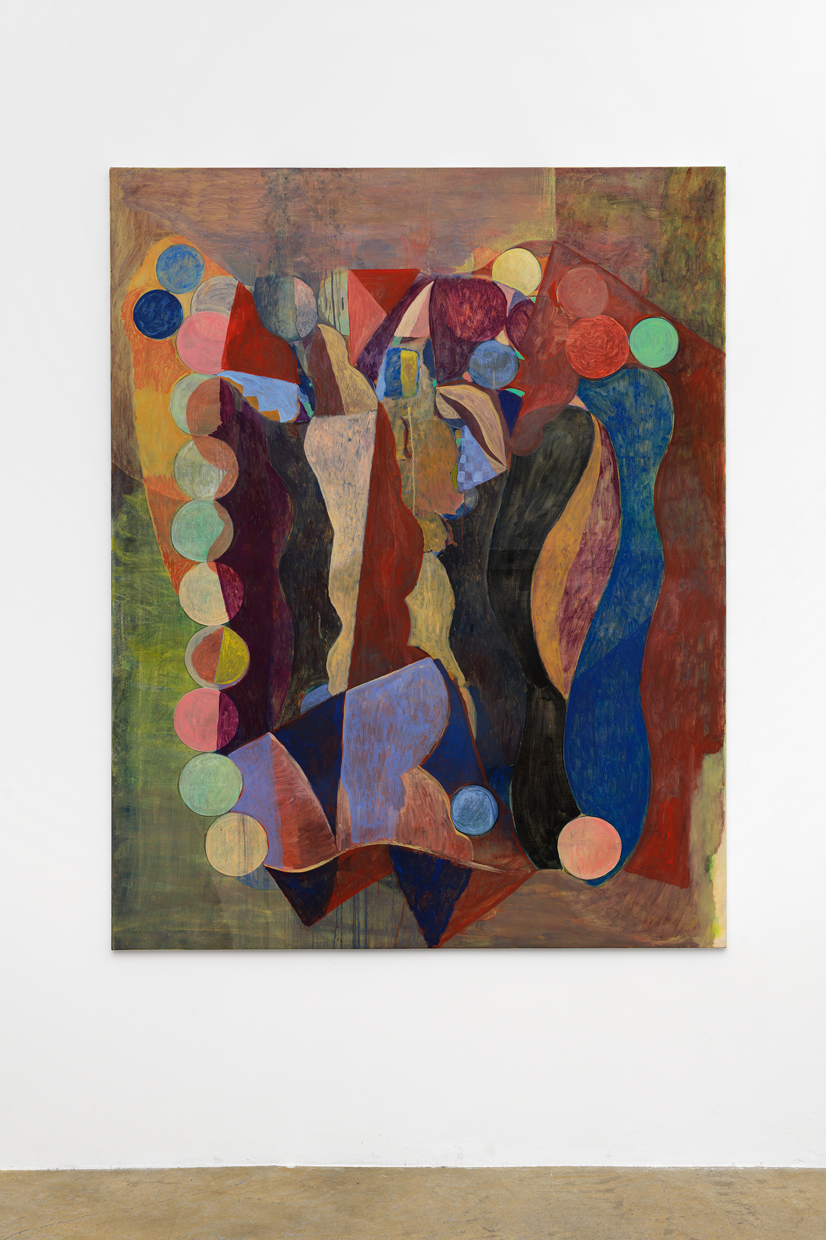


soleil.je (pronounced “soleil point je”).[1]
The title of this first solo exhibition by the artist Romain Bobichon at the Galerie Florence Loewy came from a typing error by the artist’s mother, writing too fast on her computer’s keyboard.
It evokes both one of the most powerful stars in the universe and a referential value, closest to our inner self: the personal pronoun of our individuality faced with the world. Two value nodes poles apart from each other, linked or separated by a period that does not end anything, much to the contrary.
Before falling asleep, I sometimes play with nuanced forms of gray that emerge in the dark infinite landscape of my closed eyelids. When I was a child, I thought I was a master of these liquid abstractions, these sometimes granular, sometimes smooth materials. Working hard to attenuate the rough forms to create a silky material like oil, before being able to fall asleep in this monochrome whose color (#16161D) has a name: eigengrau, “intrinsic gray” in German). This color is that of an impossible black. It manifests itself in a non-vision context, through the appearance of photons that are luminous in the dark. This color is the memory of a mental gray, a light in the retina.
In Romain Bobichon’s paintings, the grays are colored in dark, almost muddy nuances. This sometimes uncontrolled phenomenon in painting comes from aggregates of the material, meetings between colors. Colors that are nonetheless chosen, as much as the chosen stretcher formats, the work timeframes, which are partially chosen. Whereas the measurements of one’s body, one’s hands, one’s torso are not chosen. The gestures are subject to the intuition of this body, these hands. Working conditions are variable: an unstable economy with changing natural light. The mind is nourished by collective stories in the daytime and solitary readings at night.
It is summer and the canvases are drying in the studio. I could describe to you in this text what I saw there: the formats, the colors, the materials, the forms. But a textual description of these paintings would not in any way show an exact representation of what you are seeing today as you read these words. In the same way that you and I do not have an identical visual spectrum, and that our eyes do not read the same nuances that are played out in transparency, the language that I will have used to partially describe these paintings will probably have been disturbed by my subjectivity and my personal emotions. On the other hand, the pictorial phenomenon is played out in each of the paintings and is being produced even as I write these lines: layer after layer, covering one painting after another, would not make it possible to create a static image of them. Whatever the case, it is obvious that if I could write Romain Bobichon’s paintings, they would not warrant being hung in front of you. However, silence is not called for and these words more clearly come from a relationship, experienced contextually with the works and thoughts shared with Romain than a vain search for a semiotic utopia (search for signs, to read them and say them aloud). This text is therefore to be apprehended like a commentary on a relationship superimposing (once again a story of layers) two presences: that of color and that of language.
If Romain Bobichon does not take anything from elements of the real, he pays particular attention to his thoughts for the others (artists) whom he summons like passing friends, more than chronological reference points in art history. He summons them to stroll with them in the history of forms and colors. At the end of the day, he leaves them without any regrets and returns to the solitude of his studio. In Romain Bobichon’s sedimentary paintings, there are layers of stories hidden in them, as there are in himself. They reveal his subjectivity as a whole and their relationships, which are woven in this space-time that is dedicated to them, as unique variants of themselves. All these layers of relationships, conditions, uncontrolled impulses spring up like “a surprise that (tells him) something (that he didn’t know) already.”[2] The colors talk to each other, “block each other, contradict each other; they live and die according to movements of destruction and perpetual reconstruction.”[3] They are relational, they circulate between themselves, between you and me. Covering one painting after another creates this very canvas, creates a vibration, a visual noise that is perceptible according to the attention paid to these surfaces that retain the memory of those that preceded them, like sisters of another generation or past experiences that withstand time.
Have you already tried to specifically identify each instrument in an orchestra, each row that emits and composes a symphony? It is not really this identification that counts, but the very result of listening to it, and here, of seeing it. In the same way that heteroclite objects, which nourish the collecting of hoarders (people who keep everything or never throw anything out), do not have links to each other apart from their relationship to the body and their accumulator who lives in the last empty spaces of his invaded environment. Could abstraction be a form of pictorial Diogenes syndrome? Cannibalizing the memories of forms and colors, assembled and mixed in the painting’s transparency. The accumulation of each form, each color, each musical tonality creates the sound coherence and visual perception of a homogenous and harmonious or dissonant ensemble depending on the intention of the writing, calling out to each other in the interstices of silences, of each of them.
Certain people fill the void with speech, in order to create a constant link with the other, as though silence altered the link between bodies and minds. Others appreciate the void between them. They hear each other in a shared sound void that slows down the discussion. This silence creates a link in the reception of information drawn from the discussion that preceded it. The empty space is one of the conditions of the relationship that Romain Bobichon creates with his paintings. It becomes a threshold between him and them, between them and us. He is both the conductor of his pictorial thoughts and the friend who creates an intimate link between each of his paintings, respectively being born in the context of his studios: located today in Saint-Beauzile, yesterday in Carquefou, and tomorrow?
Romain Bobichon evoked in our discussions the artist, theoretician and activist Tetsuo Kogawa, who gave an account of his experience in the Japanese free radio movement of the early 1980s. Kogawa reinvented the relationship of transmission and reception of radio waves: from broadcasting (massive diffusion) to the idea of narrow-casting (limited diffusion) involving a more intimate relationship with the receivers located in the intimate perimeters of the city, addressing a group of situated and involved people. We can thus situate the origin and the address of speech. Romain Bobichon also attempts to understand and apprehend these transmissions and receptions (massive/limited) relationships of the pictorial gesture: From where and for whom do I speak? From where and for whom do I paint?
Like signs of invisible punctuation, which dictate the rhythm of our enunciation (we do not see them, but they speak to us), abstraction, if it does not harbor signs, is not however mute. Then like the mouth, which permits us to share thoughts, the hand could transmit a pictorial thought, beyond writing. If the hand liberates speech, does the painting whispers thoughts on the fingertip to my eyes?
[1] “Sun.I” in English
[2] Sillman Amy, Faux Pas. Écrits et Dessins, translated and edited by Charlotte Houette, François Lancien-Guilberteau and Benjamin Thorel, After8Books, Paris, 2022 p. 76
[3] Ibid.
Butterfly March
Gabriel Mills
19 Oct – 19 Nov 2022
1018 Madison Ave., Fl. 3, New York, NY 10075


Gabriel Mills: Butterfly March
October 19-November 19, 2022
Alexander Berggruen is pleased to present Gabriel Mills: Butterfly March. This exhibition will open Wednesday, October 19, 2022 with a 5-7 pm reception at the gallery (1018 Madison Avenue, Floor 3, New York, NY).
Gabriel Mills: Butterfly March features paintings that find peace within paradox, emphatically embracing a self containing multitudes. Driven by divinity, Christianity, numerology, and spirituality, Gabriel Mills juxtaposes images and non-images that are ostensibly discrete, articulating the divergent dimensions of oneself. Through his faith, Gabriel accepts challenges and internal struggle, honoring the process of moving through pain and passion with light, form, color, and composition. Enabling himself to hold these capacious expressions and experiences contemporaneously, the artist affirms exhausting every facet of one’s agency and creative pursuits.
The action of painting—to construct, to remove, to add weight, to make light, to swirl, or in Richard Serra’s words about his sculptures, “[to lift], to roll, to crease, to curve”—becomes symbolic in Gabriel’s work. (1) The artist begins with thick broad layers of paint that he then refines into shorter gestures and precise color arrangements, resulting in topographical surfaces that balance texture and atmosphere. Gabriel painted FUNERAL MARCH through slowly built, dense layers, adding heavy weight to the work. Meanwhile, in his painting All The Dancers Twirling In The Rain Whisper Gently That I’m Out Of Place But Today I’m Reborn, Gabriel finalized the work by scraping away paint. Here, in the artist’s words, the painting evolves “towards lightness and vibrance after removing a burden.” The works that result from this treatment of dense layering and sometimes scraping away become simultaneously celestial and terrestrial as their form and colors approach ascendency while the physicality of the paint keeps them grounded. In these paintings, Gabriel examines the psychological consequences of this incompatibility of the desire to ascend in a body that is physically unable to do so.
As he continues to work within the structure of triptychs, Gabriel employs unconventional ratios to create dissonance through opposition, thus compelling a viewer to slow down. Another element of Gabriel’s triptychs that will implore a viewer to linger is the artist’s resistance to linearity and lack of apparent connections within the arrangement of the panels. Although the panels feel continuous due to the lack of space between them, these rifts in compositions and the suffocated space between them act as abrupt events of change. Indeed, Gabriel ascribes events to be the most significant markers and indicators of one’s experience of “time”. The juxtapositions of Gabriel’s triptychs grapple with time, presence, and non-linear narrative through a conventionally devotional format with art historical ties to religious paintings of threes.
Dealing in contradictions, Gabriel challenges himself to no longer be surprised by obstacles and paradoxes; instead, he is accepting and finds harmony. Like a dancer, Gabriel persists with determination in his work; yet, the final performance—or painting in Gabriel’s case—appears to be an effortless, gentle, graceful dance. This mindful, tenacious approach to painting is a devotional practice to himself, God, and the paint. Speaking about the role of faith in his work, Gabriel stated: “Each mark is a thought, each thought is a mark. Painting is an extension and affirmation of my being.”
Humans often find meaning, purpose, and reward through struggle. As one grows through even the darkest of circumstances, light emerges. Metaphorically marching through life with mindfulness to consistently improve oneself and transcend their ego, one embodies the life of a butterfly. Gabriel Mills: Butterfly March is a procession of metamorphosis that encapsulates and commemorates the multitudes of one’s self, including inner conflict, inconsistencies, and mortality. Speaking about his drive to continue to better himself by virtue of religion and painting, Gabriel stated: “To be a butterfly is symbolic of choosing humbleness, weakness, and kindness—knowing there is strength in that.”
Gabriel Mills (b. 1992, New Rochelle, NY) received an MFA in Painting and Printmaking from the Yale School of Art, New Haven, CT and a BFA in Illustration and Art History from the University of Hartford, Hartford, CT. His work has been exhibited at the Metropolitan Museum of Art, New York, NY; El Barrio’s Artspace PS109, New York, NY; Museum of Arts and Culture, New Rochelle, NY; LoSpazio, Turin, Italy; Alexander Berggruen, New York, NY; Friends Indeed, San Francisco, CA; François Ghebaly, Los Angeles, CA; Green Hall Gallery, New Haven, CT; La Bodega Gallery, Brooklyn, NY; and ARC Gallery, San Francisco, CA; among others. Gabriel will be included in a forthcoming exhibition at the Green Family Art Foundation, Dallas, TX Black Abstractionists: From Then Til’ Now (October 8, 2022-January 29, 2023), curated by Dexter Wimberly. He was an artist in residence at MASS MoCA. The artist’s work is included in the public collections of Institute of Contemporary Art, Miami, FL; Jimenez-Colon Collection, Ponce, PR; and Susan and Michael Hort Collection, New York, NY. Gabriel lives and works in New Haven, CT.
(1) Richard Serra on his 1967 sculpture To Lift, The Museum of Modern Art, New York, 2008.
Maude Léonard-Contant at Kunsthaus Baselland
Digs
9 September 2022 – 13 November 2022
curated by Ines Goldbach
St. Jakobs-Strasse 170, 4132 Muttenz, Switzerland


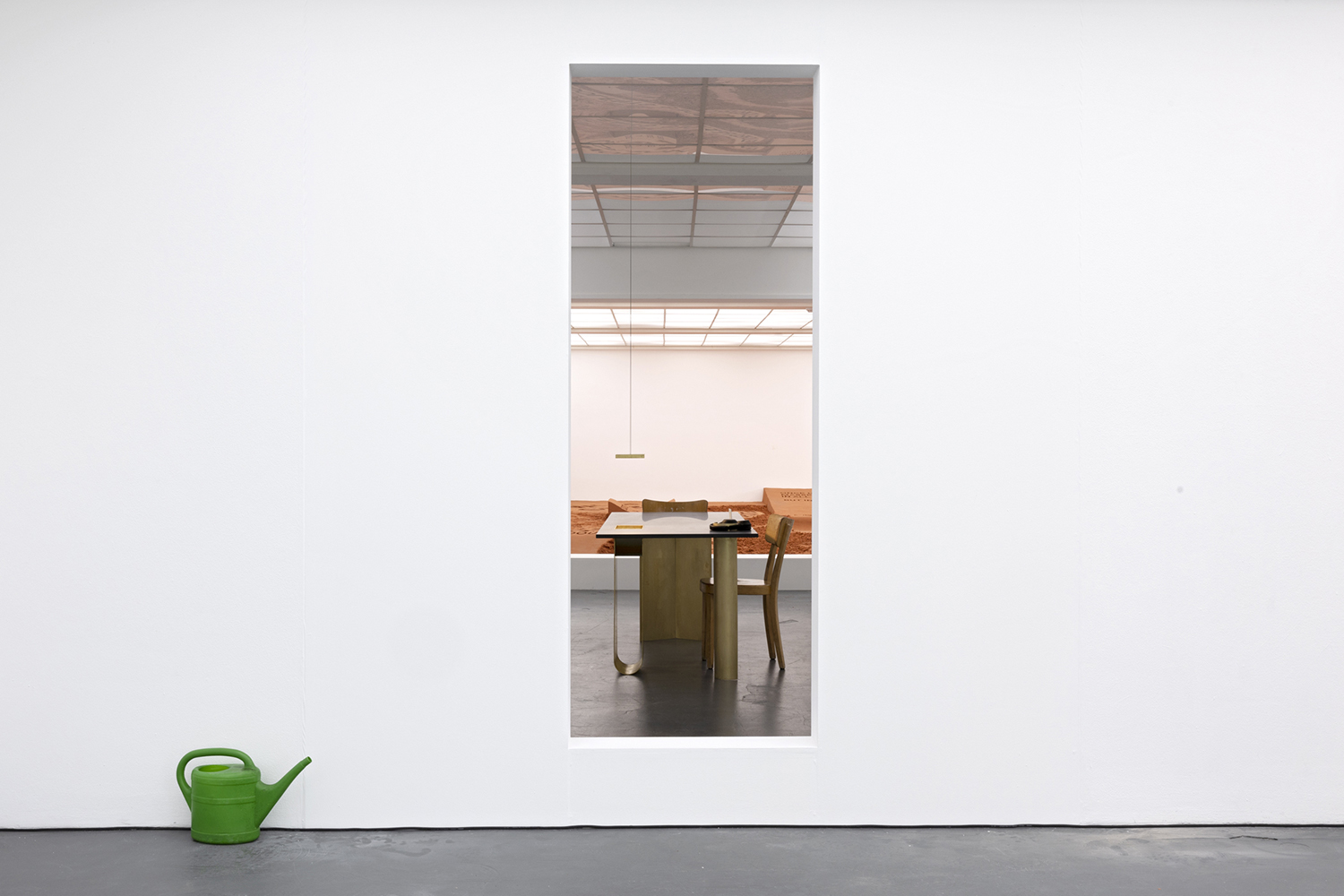
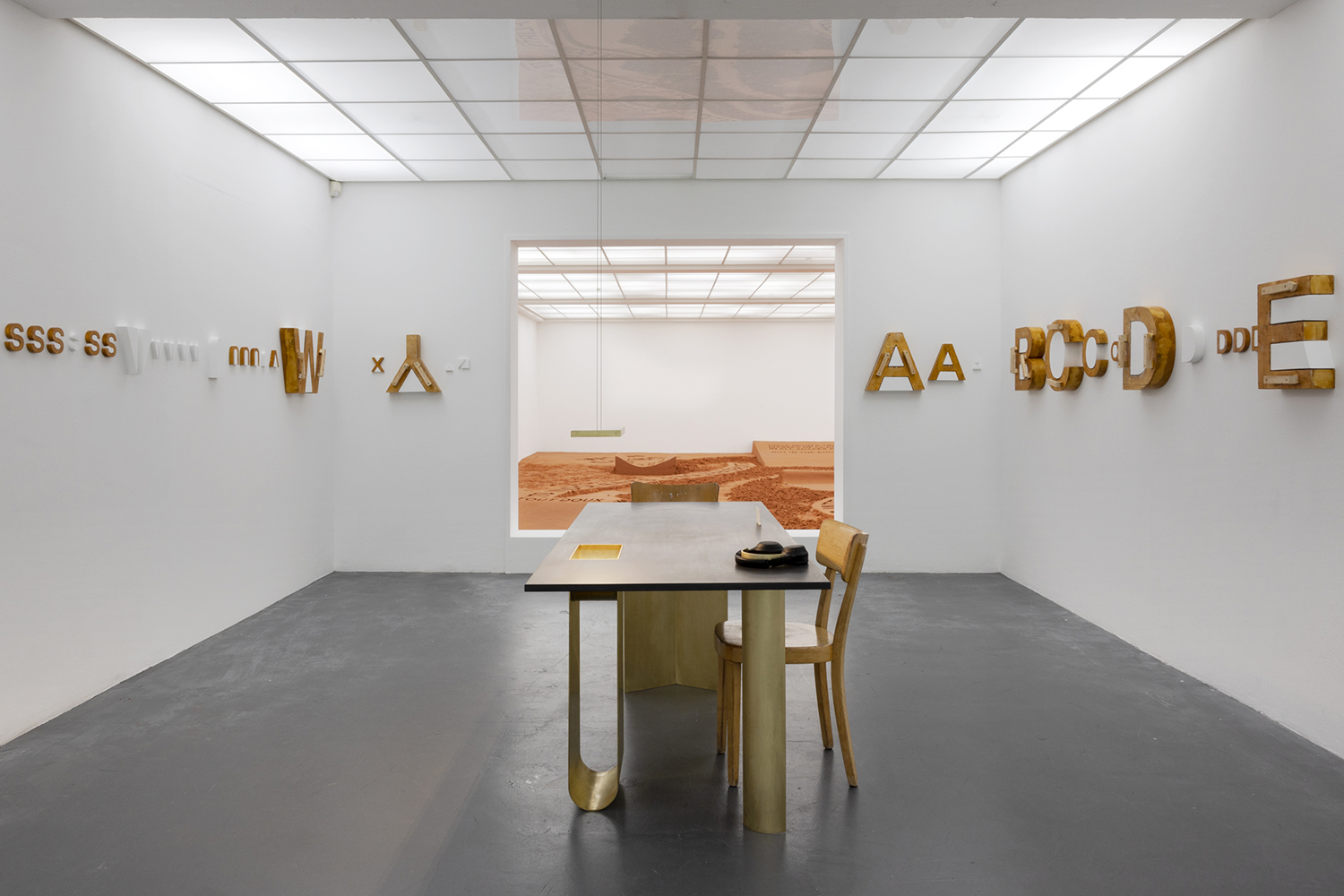


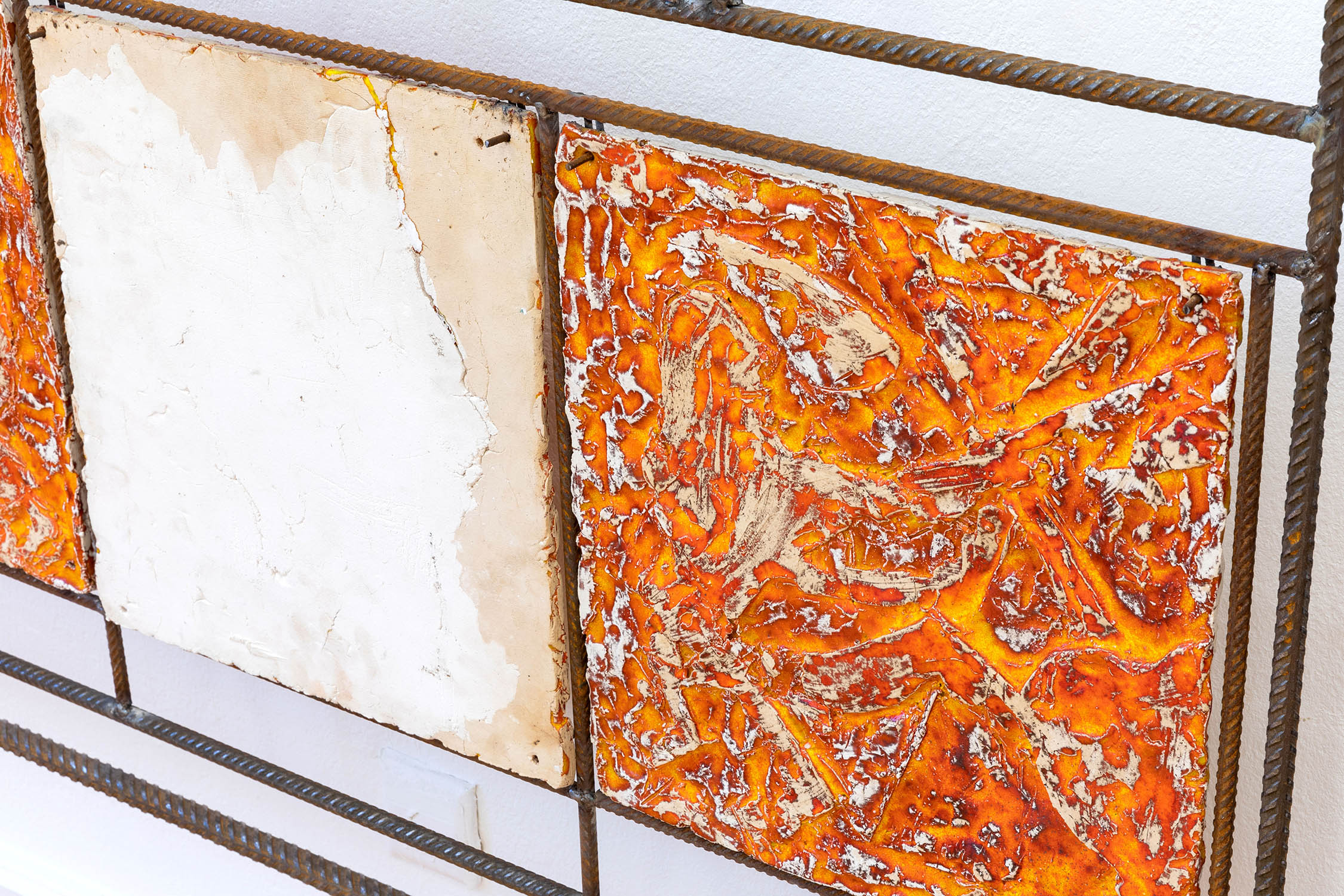


The
medallion is commonly understood as a piece of jewelry set in a round
or oval shape, as a talisman and amulet. It carries emblems,
inscriptions, initials and coats of arms as well as images of beloved
persons and mythical representations. Hung around the neck or pinned
to clothing, its owner wears it on and with him/her/them.
As
a stylistic element, the medallion also appears in architecture,
interior design and decorative arts. As a decorative field or
applique on facades, the medallion has a representative function. It
functions as a mediator and communicator between the inside and the
outside and allows an attribution emancipated from the flatness of
the facade, which refers to the content, the use or the ownership of
the building as well as the status of its inhabitants. The medal,
belonging to numismatics, is inscribed with its representative
meaning. The metal piece with the character of a coin, freed from its
function as a means of payment, is generally awarded as a distinction
of honor and merit to the respective dignitaries. Medal and medallion
are connected by a close etymological and morphological relationship
as well as similarity in dimension and materiality, and yet the
relationship between the public and the private, the representative
and the personal can be determined on the basis of their distinction.
Martin
Chramosta’s groups of works provide an occasion to take a new look at
this very proportionality. The motifs of a large number of small
sculptures, which are either mounted directly on the wall or set in
superstructures with suggestive modularity, refer, for example, to
visual impulses of ancient monumental buildings and mythological
settings, but also to found objects of everyday life and remnants of
artistic practice. These impulses come together in the supposed
triviality of their representation, becoming compositions that in
their directness sometimes recall the decorative flamboyance of the
1950s. In Chramosta’s form of representation lies a leverage that
raises the question of the mutual interaction between abstraction as
a (stylistic) phenomenon and aesthetics of decorative arts and
crafts. The resulting undogmatic immediacy of the works enables
viewers to approach the narrative strands and personal references
inherent in them. Thus, the works gathered in this exhibition can
also be read in their interplay as a diary or personal travelogue of
a stay in Rome. The synergy of the “public” and the
“private” is also inherent in the artistic work itself and
the position of artists in society.
The
materials, mostly left raw, such as clay and steel, are processed in
production methods that are in part reminiscent of the techniques
used to make jewelry, such as setting precious stones in gold or
silver. Fabrication is also used to negotiate the status of the works
in the exhibition space and their environment. Thus, many of
Chramosta’s works bear equal parts the attributes of set pieces of
everyday life and urban space (e.g. fences and gates) as well as
traits of decidedly classical art forms. It seems as if the mostly
artisanal production methods balance the poles between item and
object, turning quotations into imitations and, conversely,
imitations into quotations. Decor as a design element also takes on a
mediating role here.
In
the case of the cylindrical test holes that spread out on the floors
of the two mirrored rooms on the upper floor, fabrication has been
outsourced and is, as it were, preceded. As found objects of public
space, they link in a way to the title of the exhibition. “Miraggio”
in Italian denotes a mirage. The artist thus refers to illusory
landscapes and architectures, such as those created in pleasure
gardens of the 18th century, but also found in the abandoned parts of
the zoo of Rome, as shown in the titular video “Miraggio.”
In this context, then, the test drillings can be understood as an
interrogation of the materialities of public space, but even more as
an interrogation of realities.
Lukas Maria Kaufmann


Athanasios
Argianas / An Ear of Arms
(around you)
28.09 – 16.11.2022
RENATA FABBRI arte contemporanea
Via A. Stoppani 15/c, 20129 Milano

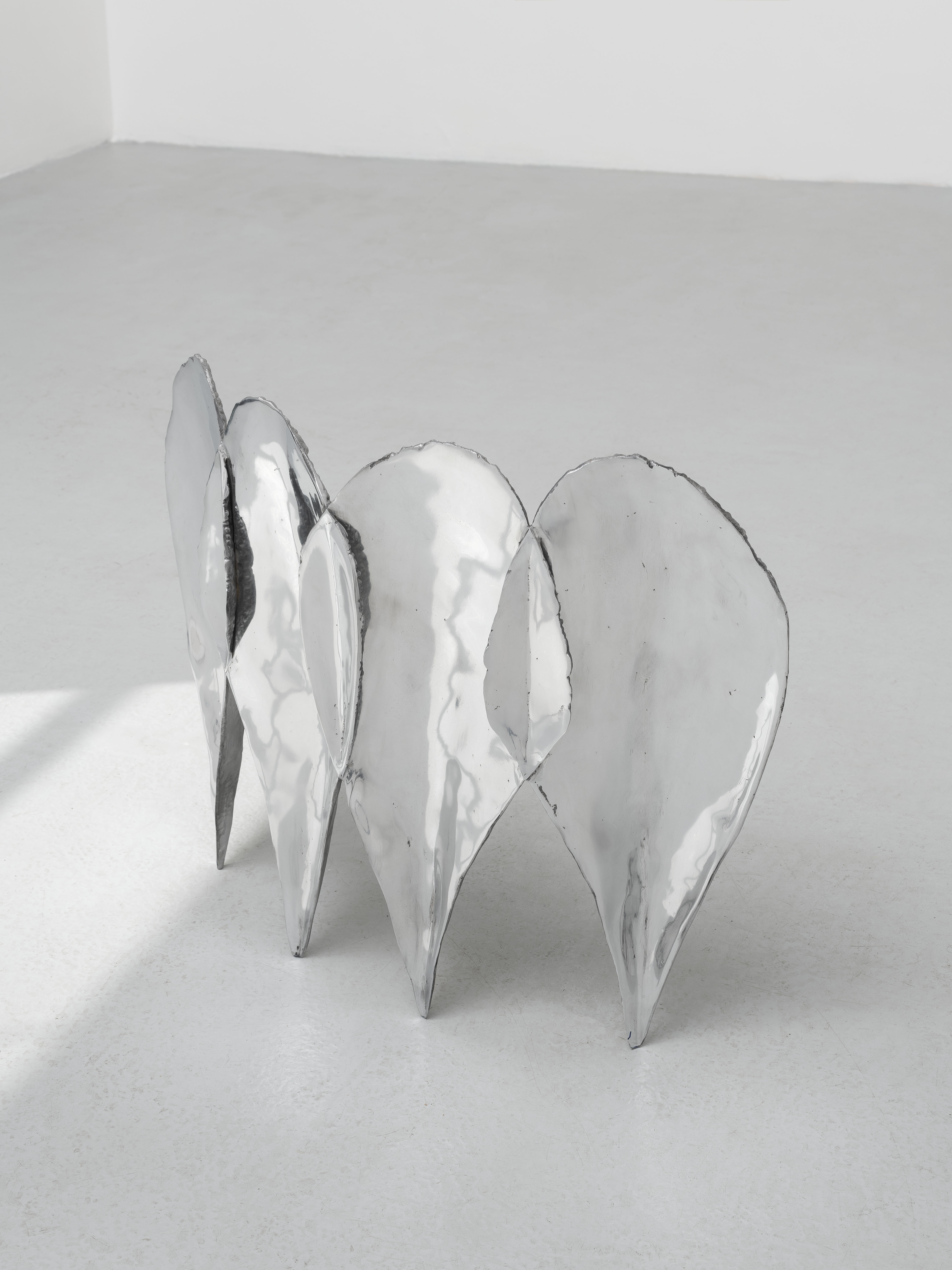


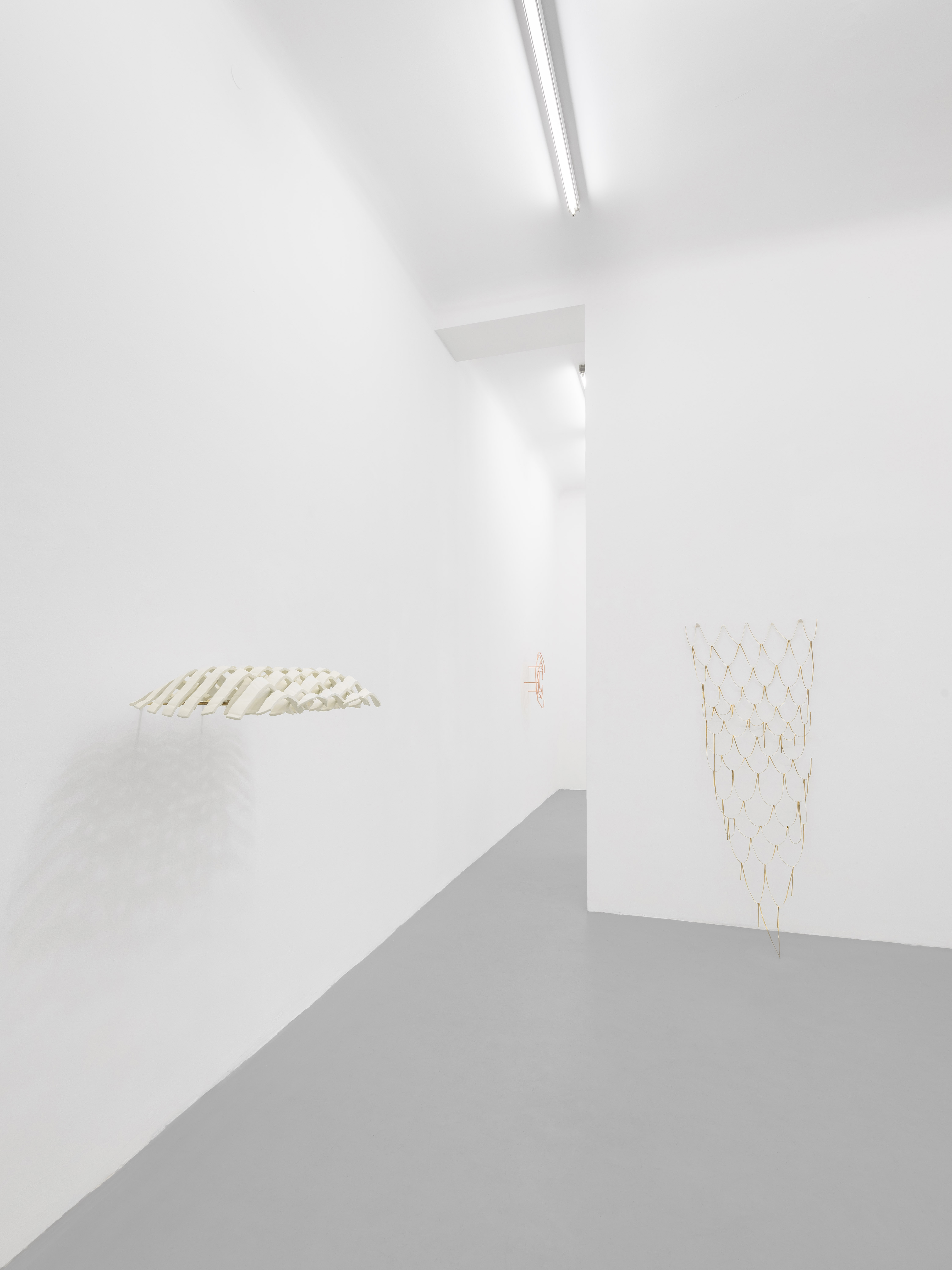


Renata Fabbri is pleased to
announce An Ear of Arms (around you), the gallery’s first solo
exhibition by the Athens and London based artist and composer Athanasios
Argianas. On the occasion, Argianas is presenting a body of new sculptural works conceived specifically for
this project and collectively resonating in the exhibition spaces.
Athanasios Argianas’s
interdisciplinary practice encompasses sculpture, painting, text, performance
and music. It is concerned with the physicality of sculpture versus the
immateriality of performed lyrics, or language, making immaterial objects from
material means and vice versa, and is often informed by his background, and
parallel practice, in musical composition.
An Ear Of Arms (around you) hints at an ear that listens in empathy, rather
than sound, composed of arms—a hugging gesture, transforming to a communal ear.
The exhibition takes shape in various new formats of works: from a tasseled
outline of a wild Cichorium weed, cut in steel, to a 3d scan of a Pinna
Nobilis—a creature currently facing extinction—and an architectural weave of a
scanned Turtle shell, to text etched works that play with the limits of
sculpture through layers of representation and reference. A solid brass ribbon
is bent to pretend it is supple, soft, etched with text that again opens up
another layer of space, that of spoken language, a virtual immaterial
objecthood.
Athanasios Argianas (b. 1976,
Athens) lives and works between Athens and London.
Hollowed Water, his first major solo show in a public institution in
the UK, was on view at Camden Arts Centre, London, in 2020, and toured to ARCH,
Athens in 2021. Has held solo concerts exhibitions at: Max Wigram (London); The
Breeder (Athens); Arcade (with Len Lye; London), On Stellar Rays (New York);
Aanant & Zoo (Berlin).
Selected group shows include:
Grimm (Amsterdam); Mor Charpentier (Paris); Madragoa (Lisbon); Lisson Gallery
(London); RODEO (Istanbul) amongst others. His work was presented at the 30th São Paulo Biennial; documenta 14,
Fridericianum (Kassel); Kunsthalle Wien (Wien); Lisson Gallery (London);
Fondazione Prada, Ca Corner (Venice); Performa 13 (New York); Tate Britain,
(London); The Serpentine Gallery Pavilion (London); amongst others.
Species Counterpoint, a monograph on his work was co-published in 2021 by
Lenz, Milan, with Camden Arts Centre, London, and ARCH, Athens with essays by
Dan Fox, Quinn Latimer, Jen Kabat and an interview with the artist and Martin
Herbert. He records with the Lo Recordings label in London and runs Daedalus
Street with Rowena Hughes, a project facilitating the development of new
artworks by invited artists in their studio in Athens.
Critical essay by Giovanna Manzotti
https://daily-lazy.com/wp-content/uploads/2022/10/athanasios-argianas-at-renata-fabbri-milan-1-scaled.jpg
‘Work’ / Magnus Frederik Clausen
September 8 – October 22, 2022
Claas Reiss
96 Robert Street
London NW1 3QP
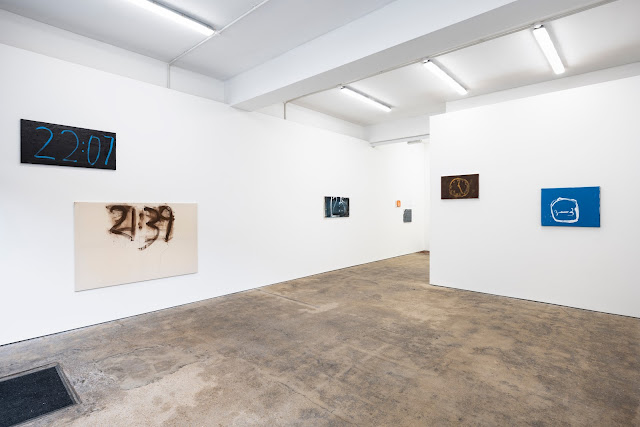
‘Magnus Frederik Clausen’s work pushes the boundaries of painting as a medium and summons a new materiality of this practice. Processual, embodied, post-performative, and conceived in an economy of exchanges linked to the context of the first third of the 21st century, his oeuvre opens an active critical space. From a selection of recent works and some of his interviews, we will see that much of what he engages in is thinking about painting inaction, for an ecology and an epistemology of the latter, today, in a network. …
Delegating the making to another is a recurrent studio practice, from Rubens to Jeff Koons. However, in the era of the guilds and the artist-artisan, copying was the rule. It was mainly a matter of copying the master’s style. Moreover, apprentices or assistants only produced sections. When one thinks of conceptual art, from Lazlo Moholy Nagy’s Telephon Bilder (1923) to all the production practices that are not “from the hand of the artist,” the question remains that of production, of the death of the author/creator, of the series and of art without a trace of affect or brushstrokes. For the clock paintings, Clausen provided general instructions and left all of the makers/executors to interpret them in their own way. He didn’t only delegate the production/execution but also the choice of details and especially the style: the finish fetish. Variability is the order of the day. If Clausen chooses the format, brushes, colours, and the duration of the making, he leaves the freedom of style to the maker/executor. This frames the creative act and poses the division of labor in a different way. The style or way of doing is left to the assistant, taste and choice is left to the artist. Now, is this a non-homologous style? Chaotic? Alternative? Taste remains the artistic variable. But it is complex and difficult to define or transmit, moreover it changes according to Clausen’s mood. It is a little as though the undertaking were akin to a laboratory experiment to determine what would remain intrinsically of the creator’s share in the creative process: the coefficient of art. Value takes up position on the side of what is not (yet) delegable/transmissible. This alters considerably the notion of style as singular element and material signature, while turning over the Duchampian proposal of not ‘having anything to do with taste.’ Here, it is a taste, but without style.’
(From yet unreleased ‘Magnus Frederik Clausen: Painting in Exformation Times’ by curator and writer Marie de Brugerolle).
***
‘Work’ by Copenhagen based Magnus Frederik Clausen at Claas Reiss is Clausen’s first solo show in the UK and forms part of three separate solo presentations of his recent clock painting work group, all titled ‘Work’, at C.C.C. (Copenhagen), Claas Reiss and Braunsfelder (Cologne) during 2022.
The exhibition is accompanied by Magnus Frederik Clausen in conversation with Prof. Dr. Michael Schmidt about his current body of work’s similarities to music and the relationship between composer, conductor and orchestra, also drawing parallels to the musical processes of John Cage, Johann Sebastian Bach or Duke Ellington. The full conversation can be found here.
Schmidt is a musicologist and coordinator of the BR-KLASSIK program at Bayerischer Rundfunk and currently teaches at the Munich University of Music and Performing Arts and at the European Graduate School. He is particularly interested in the development and research of multimedia communication of music. His academic activities include numerous publications on music and media topics and he has held lectureships at various institutions in Germany and beyond.
Jordan Derrien and émergent magazine kindly gave permission to reproduce the recent interview with the artist in May 2022 (click here for the original version).
Clausen’s recent and upcoming solo/duo exhibitions include Braunsfelder, Cologne (forthcoming 2022), Freddy Gallery (with Mads Lindberg), Harris (2022), C.C.C., Copenhagen (2022), Rinomina (with Claus Haxholm), Paris (2021), Spazio Orr (with David Ostrowski), Brescia (2021), AGA Works/Tørreloft (with Sónia Almeida), Copenhagen (2020), The Uffizi (with Mads Lindberg), NY (2020), CGK, Copenhagen (2018), Magasin Lotus, Copenhagen (2018), JIR SANDEL, Copenhagen (2018), Matèria Gallery (with Giulia Marchi), Rome (2018), Years, Copenhagen (2015), Palazzo Lucarini, Trevi (2014). Group exhibitions and film screenings include Haus Wien, Vienna (2021), Art Sonje Center, Seoul (2021), Kunsthal Aarhus, Århus (2021), Copenhagen Contemporary, Copenhagen (2019), Heine Onstad Art Center, Høvikodden (2018), Kunsthal Charlottenborg, Copenhagen (2016), Ringsted galleriet, Ringsted (2016), 56th Venice biennale collateral events, Venice (2015), Bruch & Dallas, Cologne (2015), Luma, Arles (2015), Kunstraum, London (2014), Accademia di Romania, Rome (2012), Arti, Amsterdam (2011), Kenya International Film Festival, Nairobi (2011), Traneudstillingen (with TTC), Hellerup (2011), Maison du Danemark, Paris (2010), Berlin International Film Festival, Berlin (2010).
He also curator and co-founder of Jir Sandel in Copenhagen, editor and contributor of various art publications, and recipient of the prestigious Niels Wessel Bagges Kunstfond honorary (2020) and Danish Arts Foundation grants (2021, 2019, 2018, 2017).
Clausen lives and works in Copenhagen, Denmark.
_installation%20shot_image%20%C2%A9%20Alexandra%20Masmanidi.jpg)
_installation%20shot_image%20%C2%A9%20Alexandra%20Masmanidi.jpg)
_installation%20shot_image%20%C2%A9%20Alexandra%20Masmanidi.jpg)
_installation%20shot_image%20%C2%A9%20Alexandra%20Masmanidi.jpg)
_installation%20shot_image%C2%A9%20Alexandra%20Masmanidi.jpg)
_installation%20shot_image%C2%A9%20Alexandra%20Masmanidi.jpg)
_installation%20shot_image%C2%A9%20Alexandra%20Masmanidi.jpg)
_Angelo%20Plessas,%20Noospheric%20Mandala%20(Growth),%202019,%20Hand%20sewn%20quilt,%20114%20x%20104%20cm,%20Unique%20%C2%A9%20the%20artist.jpg)
_Sine%20Hansen,%20Herztod,%201965,%20Tempera%20on%20canvas,%20100%20x%20100%20cm%20%C2%A9%20Sine%20Hansen%20Estate%20and%20Exile%20Gallery,%20Vienna.jpeg)
_Yorgos%20Stamkopoulos,%20Psalm%20of%20the%20wailing%20wind(pt3),%202014,%20Acrylic%20on%20canvas,%2036%20x%2028cm%20%C2%A9%20the%20artist.jpg)
_Siggi%20Sekira,%20Trouble%20Every%20Day%20&%20Trouble%20Every%20Day,%202022,%20coloured%20pencils%20on%20paper,%20each%2042%20x%2029.7%20cm%20%C2%A9%20the%20artist.jpg)
_Angelo%20Plessas,%20Lifeonthemandala.com,%202021,%20still%20shot%20%C2%A9%20the%20artist.png)
_Yorgos%20Stamkopoulos,%20Psalm%20of%20the%20wailing%20wind(pt2),%202014,%20Acrylic%20on%20canvas,%2047%20x%2036cm%20%C2%A9%20the%20artist.jpg)
_image%20%C2%A9%20Alexandra%20Masmaninidi_Zoe%20Spehr,%20second%20touch,%202022,%20%C3%9840%20cm,%20%C3%9815cm,%20Fake%20fur,%20silicone,%20vibration%20motor,%20touch%20sensor,%20esp32,%20Unique,%20%C2%A9%20the%20artist.jpg)

_Lena%20Henke,%20The%20mind%20is%20like%20an%20umbrella%20Its%20most%20useful%20when%20open%20(Saftpresse),%202022,%20PU-foam,%20Pigment,%20Rubber,%2029.8%20x%2026.3%20x%2042.1%20cm,%20Edition%20of%206%20%C2%A9%20the%20artist,%20Layr%20Vienna%20and%20Klosterfelde%20Edition,%20Berlin.jpg)
_Panayiotis%20Loukas,%20Mistakes%20were%20made,%202018,%20oil%20on%20canvas,%2059%20x%2070%20cm%20%C2%A9%20the%20artist%20and%20Nicelle%20Beauchene%20Gallery,%20New%20York.jpg)
Julija%20Zaharijevic,%20White%20Cabbage,%202021,%20print%20on%20silk,%20digital%20print%20on%20paper,%20ink,%20synthetic%20resin%20varnish,%2062%20x%2062%20x%2024%20cm,%20courtesy%20private%20collection,%20image%20%C2%A9%20kunst.dokumentation.com.jpg)
Images courtesy the artists and Callirrhöe

,%202022,%20detail.%20iron,%20resin,%20pigments,%20acrylic%20colors,%20plastic,150%20x%20107%20x%20118%20cm.jpg)


,%202022%20%20gesso%20and%20inkjet%20print%20on%20canvas,%20BODY%20AI%20fragrance,%2060%20x%2050%20cm%20(1).jpg)


,%202022,%20gesso%20and%20inkjet%20print%20on%20canvas,%20BODY%20AI%20fragrance,%2060%20x%2050%20cm%20%20Kratt%20(5cbad80795a7374b8fc9042c9f6d),%202022,%20gesso%20and%20inkjet%20print%20on%20canvas,.jpg)


,%202022%20%20gesso%20and%20inkjet%20print%20on%20canvas,%20BODY%20AI%20fragrance,%2060%20x%2050%20cm.jpg)

,%202022%20%20iron,%20resin,%20pigments,%20quartz,%20nacre,%20fabric,%20aluminum,%20brass,%20eye%20shadows,%20blush,%20mother%20of%20pearl%20powd.jpg)
,%202022%20%20iron,%20resin,%20pigments,%20shell,%20pearls,%20mother%20of%20pearl,%20mineral%20stones,%20aluminum,%20copper,%20brass,%20synthetic%20hair,%20snakesk.jpg)
,%202022%20%20iron,%20resin,%20pigments,%20aluminum,%20brass,%20fossils,%20nacre,%20plastic,%20mineral%20stones,%20drawing%20on%20paper%20by%20my%20nephew,%2042%20x%2032%20x%202,5%20cm.jpg)
,%202022%20%20iron,%20resin,%20pigments,%20hair,%20brass,%20pearls,%20nacre,%20shell,%20plastic,%20newspaper%20clipping,%20silk,%20butterfly,%2042%20x%2030%20x%203%20cm%20.jpg)
,%202022%20%20gesso%20and%20inkjet%20print%20on%20canvas,%20BODY%20AI%20fragrance,%2060%20x%2050%20cm.jpg)


,%202022,%20iron,%20plastic,%20bronze,%20acrylic%20colors,%2089%20x%2057%20x%2070%20cm.jpg)
,%202022,%20detail%20%20iron,%20plastic,%20bronze,%20acrylic%20colors,%2089%20x%2057%20x%2070%20cmjpg.jpg)

,%20%202022,%20gesso%20and%20inkjet%20print%20on%20canvas,%20BODY%20AI%20fragrance,%2060%20x%2050%20cm%20%20Kratt%20(301a2fbbdb3e91c23613502edd3a),%202022,%20%20gesso%20and%20inkjet%20print%20on%20canva.jpg)
There
is a mixed fragrance in the exhibition, developed by Dorota Gawęda &
Eglė Kulbokaitė together with perfumer Caroline Dumur. Metallic,
musky and warm, it is both the smell of Augè’s idea of “Non-Place”
mentioned above, and of an individual crossing such space,
hypothetically imagined as Tiqqun’s anthropo-morphosis of Capital:
the ‘Young-Girl’.
Its notes come from common undefined raw materials combined with
organic compounds that play important roles in the technological and
biological spheres, known as aldehydes. A times woody, a times
petrochemical or just non-smellable, when you think you have
identified its character this invariably changes again. The ephemeral
artwork markedly embodies the non-ness of its sources and its
molecular essence diabolically penetrates the body, moving beyond
boundaries and splipping consent. It is at the same time a version of
consumer society’s total product and a model for invisible
management, as well as an interface that renders physical things
perceived as virtual, like an idea or a concept. Light plays an
important role too, and it is partially provided by Lucia Leuci’s
sculpture Germinali
Post-Liberty,
two lanterns whose light-bulbs are a pair of iridescent hands wearing
a delicate organza blouse with adorned cuffs. Mannequins and Madonnas
at the same time, these holy remains are preserved in a case coloured
with alabaster dust and metallic eye shadows ranging from blue to
purple, as the hands themselves. The fossils, shells, pearls and
other precious stones that crown the elegant wrists, also appear in
the resin and iron series Bouquet
Eterno:
Art Nouveau shop-fronts and cathedrals windows concurrently, with
layered geometric patterns that depict girls’ body parts such as
legs, ponytails and backsides. These could belong both to Siegfried
Kracauer’s Tiller
Girls
– 1890s non-bodies for capitalist production and abstractness –
and to the more contemporary M¥SS KETA’s Ragazze
di Porta Venezia,
proud of their marginal place and aware of their surroundings which
in the show seem to be captured at twilight, when the day goes to
sleep and everything that is left becomes rather creepy.
Many
yellow and red laser-eyes emerge from the walls, on a series of
canvases which Dorota Gawęda & Eglė Kulbokaitė breeded with
the aid of Generative Adversarial Networks. Their hybrid nature is
hard to grasp. Between image and painting and abstraction and
figuration, blurry backdrops reveal layered gestures that complicate
everyday objects and images. In the total absence of clear references
and fixed forms, teddy bears twist and melt, while piles of clothes
become demonic and daisies take on a supernatural look, like a forest
at night. The title of these works, Kratt,
is a clue: it refers both to malevolent household creatures from
Baltic tradition and algorithmic-liability, channelling a digital
folklore that escapes authoriality as we know it. Under the scrutiny
of these naughty figures, a crowd of blossoming trolley-sculptures by
Lucia Leuci comes to life animating the space. Each of them carries a
story which is revealed by their symbiotic companions. There are
Argentina e Peru, two innocent ceramic babies – embrions of
consumerism – kept in a hospitable cave-womb. There is a couple of
cheeky copper tropical parrots whose materiality renders them even
more alive and adaptable, reacting to external environmental
conditions and ready to conquer the streets of Milan; and a group of
succulent Capital-leeches made of bronze, more human than one would
think. Also in a distributed group, are the five gracious creatures
that recall Donna Haraway’s butterfly-girls and evoke the
prosthetic-accessories crowding future shops. Finally, there is the
tiniest dog with its best friend: a homeless man who lingers daily in
Corso Buenos Aires destined, for the eyes of many, to stay anonymous
and ghostly until the next twilight. At a better inspection one might
notice that the group of trolleys-sculptures not only germinates in
the gallery space; these are in transit too, their roots exposed and
eradicated curl in a dynamic dance. They unveil a sense of protection
and non-human companionship, as well as a colder detachment,
non-belonging and alterity.
The
works in the show present a highly layered symbolic lexicon, and an
abundance of gestures, images and materials of various nature –
make-up, trash, rare organic finds, industrial scraps – that
generate a rather variegated kitschy environment where the human is
absent and the demons of contemporaneity come alive. As their
potentials, dangers and contradictions get shuffled and amalgamated,
Corso Buenos Aires becomes a haunted and haunting landscape of
commodity fetish and other relics of excess, a point of departure for
both strategies of production and narratives that describe a changing
sense of collectivity, while re-defining the familiar. Corso Buenos
Aires has its relevance in Lucia Leuci’s practice; the intimate
relationship the artist has with this place has been the subject of
past shows, and has emerged throughout her career in various forms.
Dorota Gawęda & Eglė Kulbokaitė on the other hand – being
literally far away – embody a more distant position to the subject.
The encounter of their peripheral gaze and Leuci’s deep involvement
creates an uncanny resemblance with the transient essence of the
place. The recurrent theme of negation, of non-ness, is not to be
looked at as sole absence, but rather as a condition for otherness.
Anonymous Encounters is a nightmare, a psychedelic trip, a holy
vision in a lonely field.
Caterina
Avataneo
Lucia
Leuci (b. 1977, Bisceglie, Italy) lives and works in Milan.
Lucia
Leuci is a visual artist based in Milan. Her artistic practice
focuses on the use of drawing, painting, sculpture and installation
as primary needs and means of expression. She explores reflexive
actions that transcend individual choice – primitive performative
acts that perpetually scale between intimate manual skill and
collective action. Lucia Leuci has exhibited among others at the
Fondazione Adolfo Pini and Tile project space in Milan, Like a Little
Disaster in Polignano a Mare, Polansky gallery and Berlinskej Model
in Prague, Oulu Museum of Art and Titanik gallery in Finland, Museum
of Angra do Eroísmo in Portugal, Alta Art Space in Malmö and THE
POOL in Istanbul.
Gawęda&Kulbokaitė
– Dorota
Gawęda and Eglė Kulbokaitė (b.
1986 & 1987, Poland and Lithuania) live and work in Basel.
Dorota
Gawęda and Eglė Kulbokaitė are an artist duo established in 2013
and based in Basel. Both are 2012 graduates of the Royal College of
Art in London. Their work spans performance, sculpture, painting,
photography, fragrance and video. Creating sensory environments that
directly involve the audience, using both screen technology and
organic elements, they generate fragmented narratives that echo our
contemporary anxieties. Gawęda and Kulbokaitė are the recipients of
the Swiss Performance Art Award 2021 and the Collide Residency Award.
In 2022 they are on residency at CERN in Geneva/Hangar in Barcelona
and EPFL, Lausanne. They are also the founders of YOUNG GIRL READING
GROUP (2013– 2021).
My Street, and the Films I Dream Of
Menelaos Karamaghiolis, Katerina Komianou
Curated by Panos Fourtoulakis & Titus Nouwens
7 July – 29 September
Haus N Athen off-site
Vatsaxi 6, 104 38, Athens


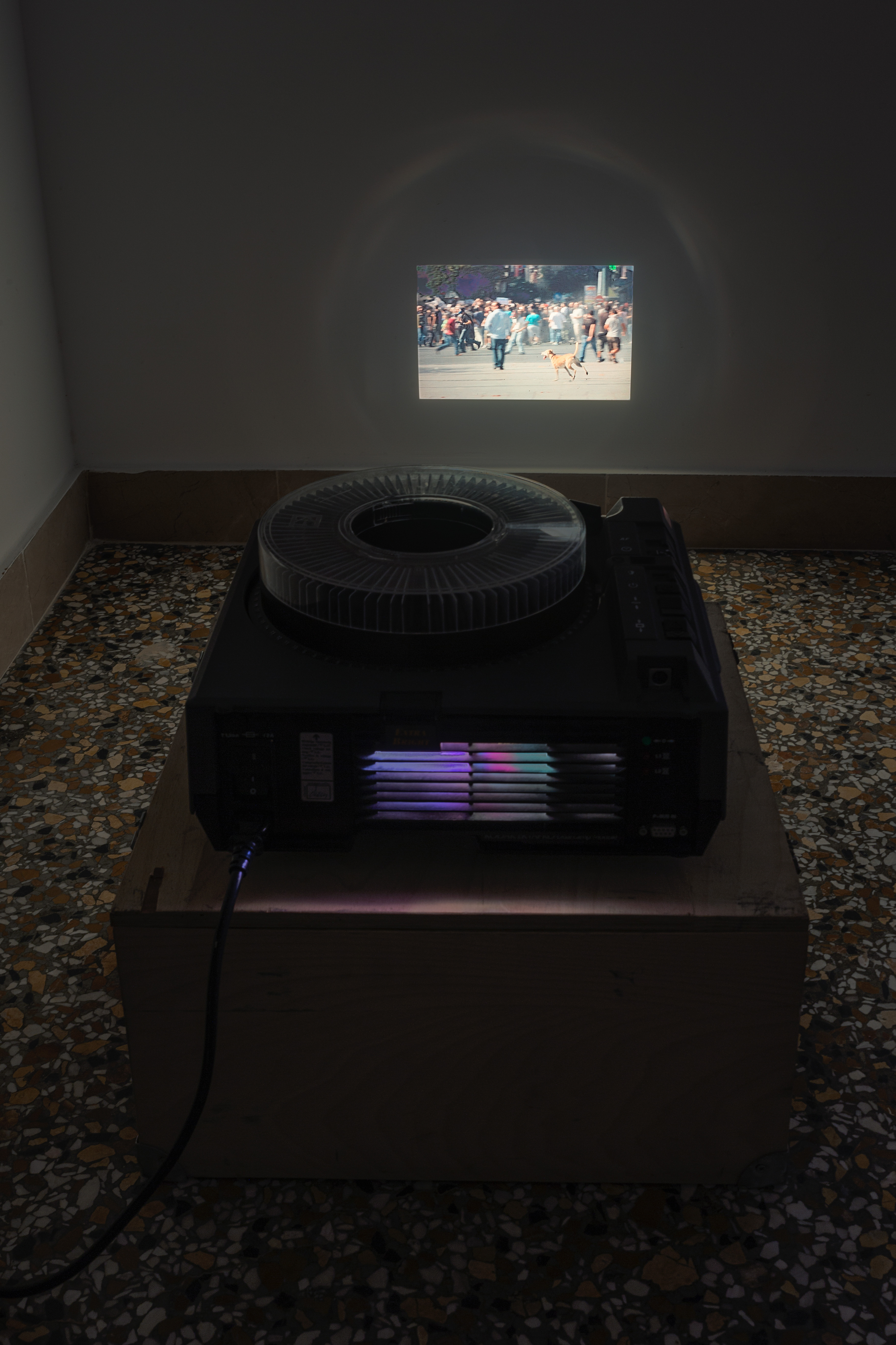
For our first exhibition at Vatsaxi 6, an off-site space by Haus N, we are honoured to present new work by Menelaos Karamaghiolis and Katerina Komianou.
Fokionos Negri street and Exarcheia square, two sites of cultural and political significance in the centre of Athens, are the contexts of the presented works. The artists explore notions of time, perception, memory and their intimate relationship to these public spaces through observing, documenting and archiving that which often goes unnoticed.
A spontaneous moment of four boys swimming in a street fountain at night forms the subject of Karamaghiolis’ ‘City Divers’ (2022). The fountain is on Fokionos Negri street, where a stream runs underground. Originally shot with the artist’s mobile phone camera, the video is cut up into stills and projected in digital and analogue formats in varying rhythms and scales across the interior and exterior spaces of the exhibition. Moving bodies turn solid. Time is slowed down, and elements that are invisible in real-time reveal themselves. An everyday scene at the doorstep of the artist’s home turns mystical, exemplifying his ability to document that which is extraordinary out of ordinary encounters. Karamaghiolis documents reality in ambivalent ways, inviting viewers to insert their own meanings for what they witness. “Reality is stranger than fiction” he writes.
Alongside ‘City Divers’ (2022), we present ‘Unseen I’ (2019), where the camera follows a stray dog running across a protest. The two works continue the series the artist has been developing over the past ten years, where he documents life in the city as experienced by those who tend to remain invisible.
Katerina Komianou’s ‘For Now and Forever’ (2018-ongoing) comprises more than 500 photographs of the sculpture of three young Eros standing next to one another for over a century. Close-ups of the eros’ body parts intertwine with long-distance photographs of the square — posters, stickers, paint, anarchist placards, toys, and police shields appear. Through this daily documentation over the past four years, the artist captures the traces of temporary interventions that the sculpture endures, sometimes even for a few minutes, before they disappear and get replaced by others. Komianou’s documentation allows us to understand the power of the symbol; a public sculpture used as a blank canvas by everyone to express how they feel about the city. By looking at the photographs, it is almost impossible to identify when they were shot, as the artist uses films from different decades, confusing our understanding of linear time. The artist explores this further through the installation, where she arranges photographs of different periods into a single body. The changes in the sculpture reflect the changes happening in Exarcheia, intertwining with those occurring in the artist’s life at the time of documentation.
In this joint presentation, the two artists come into an intergenerational dialogue, where one captures the same subject in different moments in time, while the other examines a singular moment through various forms and perspectives. Urban myths intertwine with personal histories; in two works that are as much about what they depict as those who created them.
Bios
Menelaos Karamaghiolis is a filmmaker who works in Athens producing feature films, documentaries, video art, radiomovies and video installations starring real-life neglected heroes. His work transcends frontiers and stereotypes and serves as an essential tool for dialogue and social change. His films have received international acclaim; ROM (1989) has been considered “a turning point for Greek documentary films” and “a masterpiece that must become a classic of the history of cinema”, BLACK OUT (p.s. RED OUT) (1998) was considered as “the first post-modern Greek film” and J.A.C.E. – Just Another Confused Elephant (2011) participated in 48 international festivals, including TIFF Toronto International Film Festival, winning 11 awards. His interactive documentary series, MEETING WITH REMARKABLE PEOPLE, includes 12 feature films, 180 short films. His video installations have been shown at the National Museum of Contemporary Art Athens, the Venice Biennale, Rodeo and Geneva Contemporary Art Center. He is currently working on video installations and live events of the ongoing collective community projects ‘’the AfroGreeks’’ and the “Greekies”
Born in Piraeus, Katerina Komianou is an artist based in Athens, working with sculpture and photography. She studied at the Athens School of Fine Arts, in the workshops of Giorgos Lappas and Nikos Navridis (2013-2018). Komianou participated in Performative Transcending Somatic Dinner, curated by Lydia Antoniou and Giorgos Bekirakis (2021); Unhappy Monuments, curated by Christoforos Marinos, ARTWORKS in collaboration with OPANDA (2020); The Same River Twice: contemporary art in Athens, curated by Margot Norton and Natalie Bell, DESTE Foundation, Athens and New Museum, New York, in collaboration with the Benaki Museum (2019); ASKT Graduate Thesis Exhibition (2018).
https://daily-lazy.com/wp-content/uploads/2022/10/my-street-and-the-films-i-dream-of-at-haus-n-athen-off-site-at-vatsaxi-6-athens-greece-1-scaled.jpgNacy Lupo and Monique Mouton, Destiny Cornucopia
22/9/2022 – 12/11/2022
Spazio Veda
Manifattura Tabbachi, B6, Via della Cascine 35, Florence, Italy


Six Decades of Women Artists with:


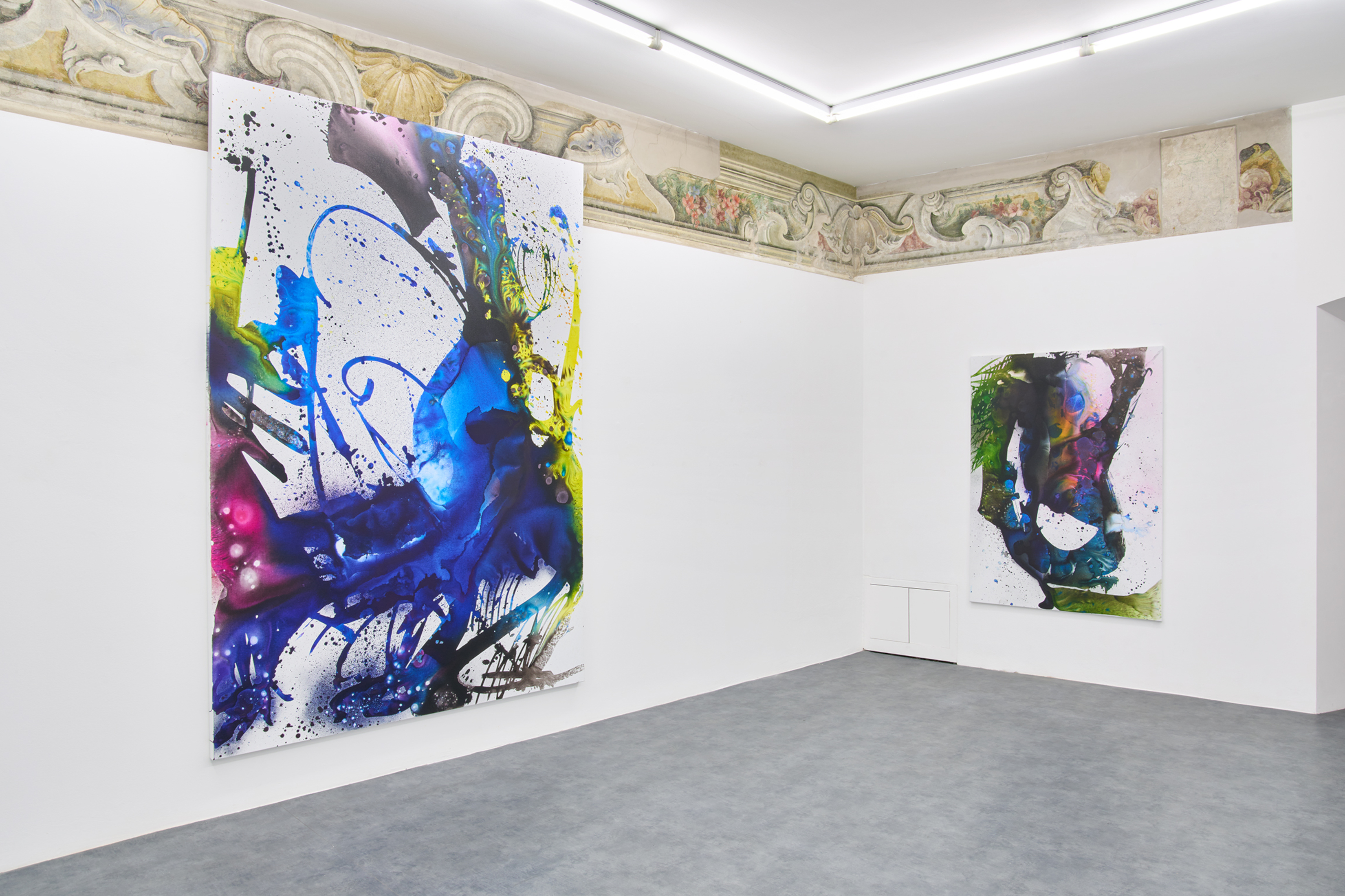


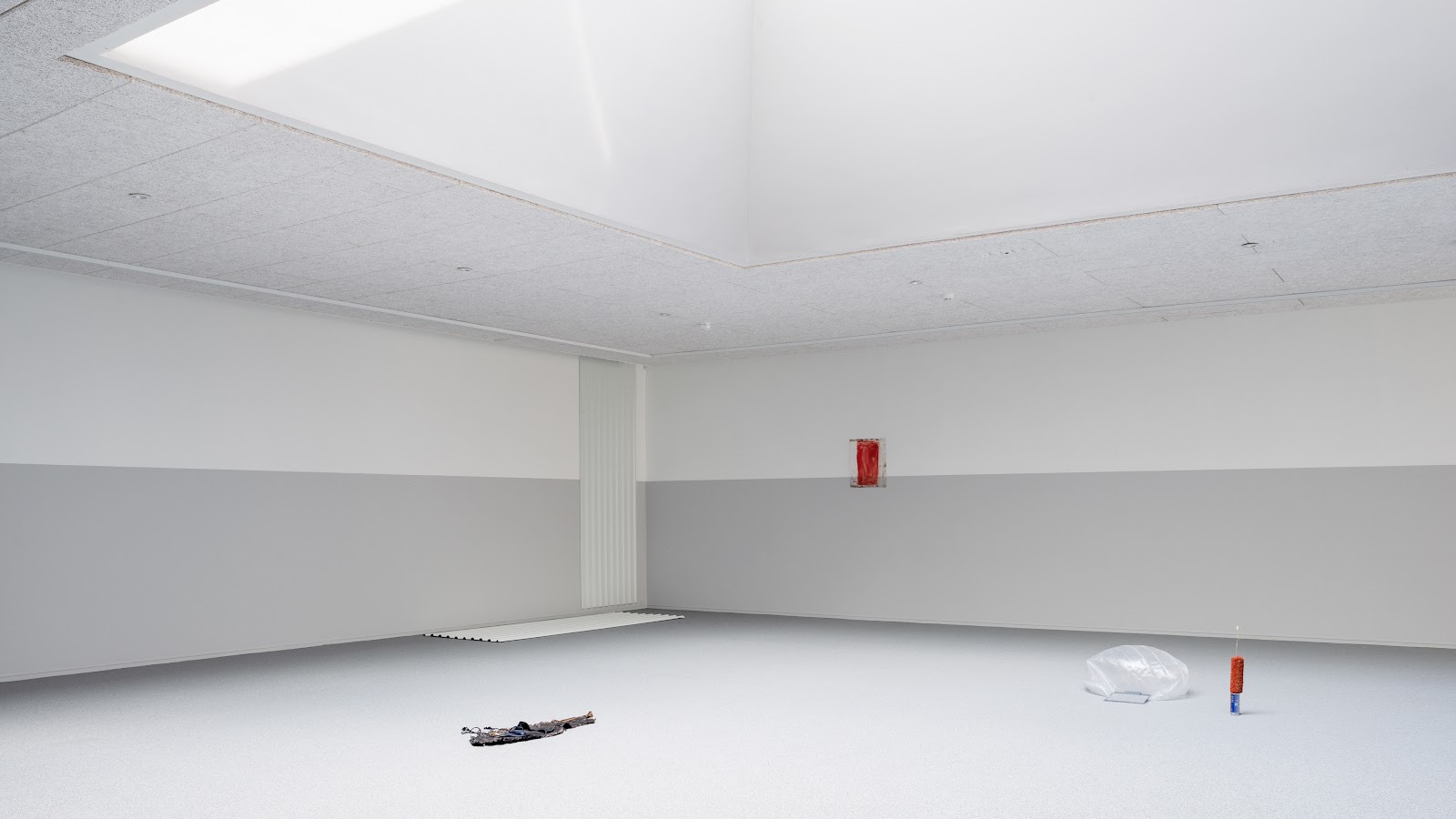


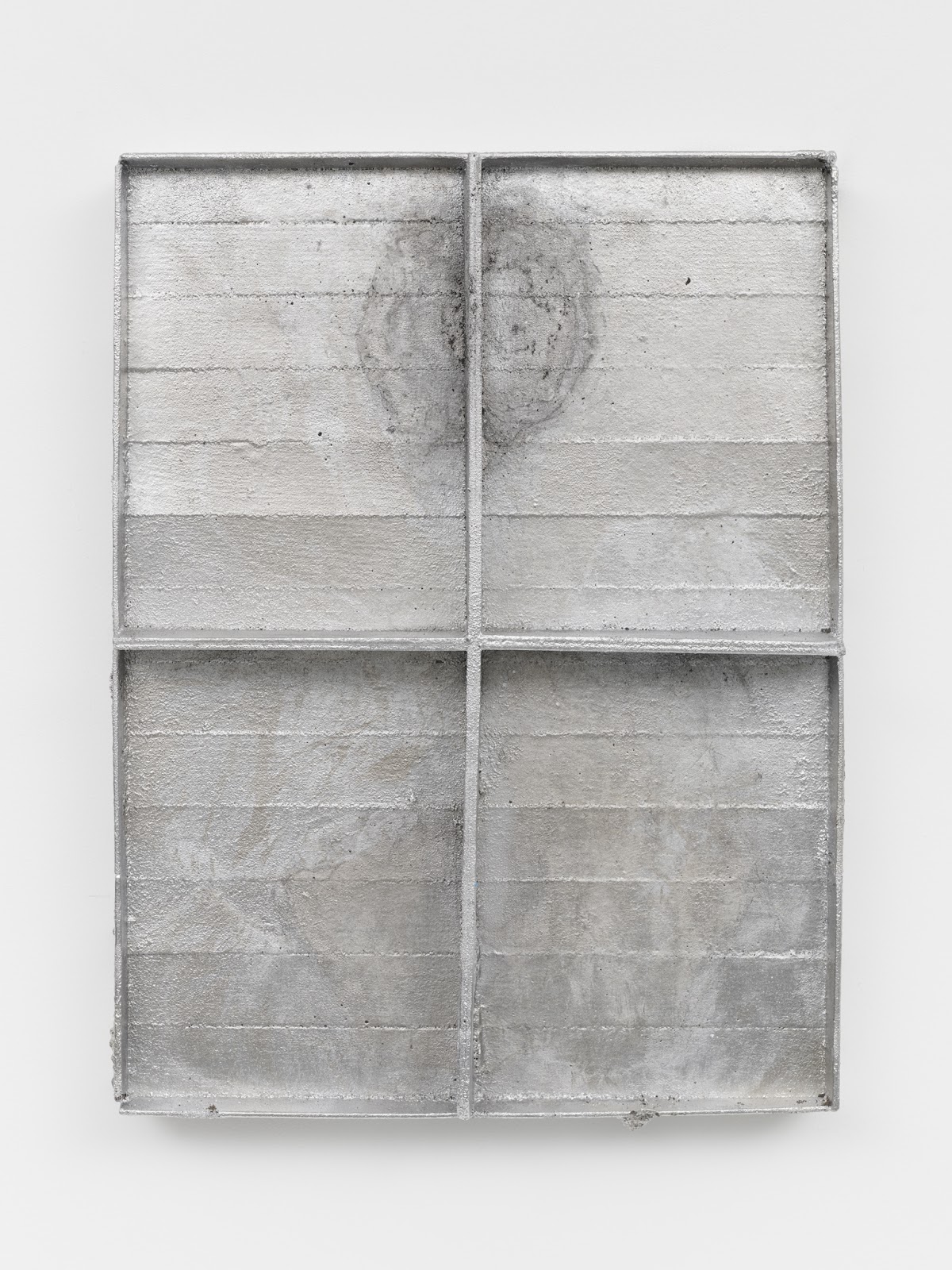


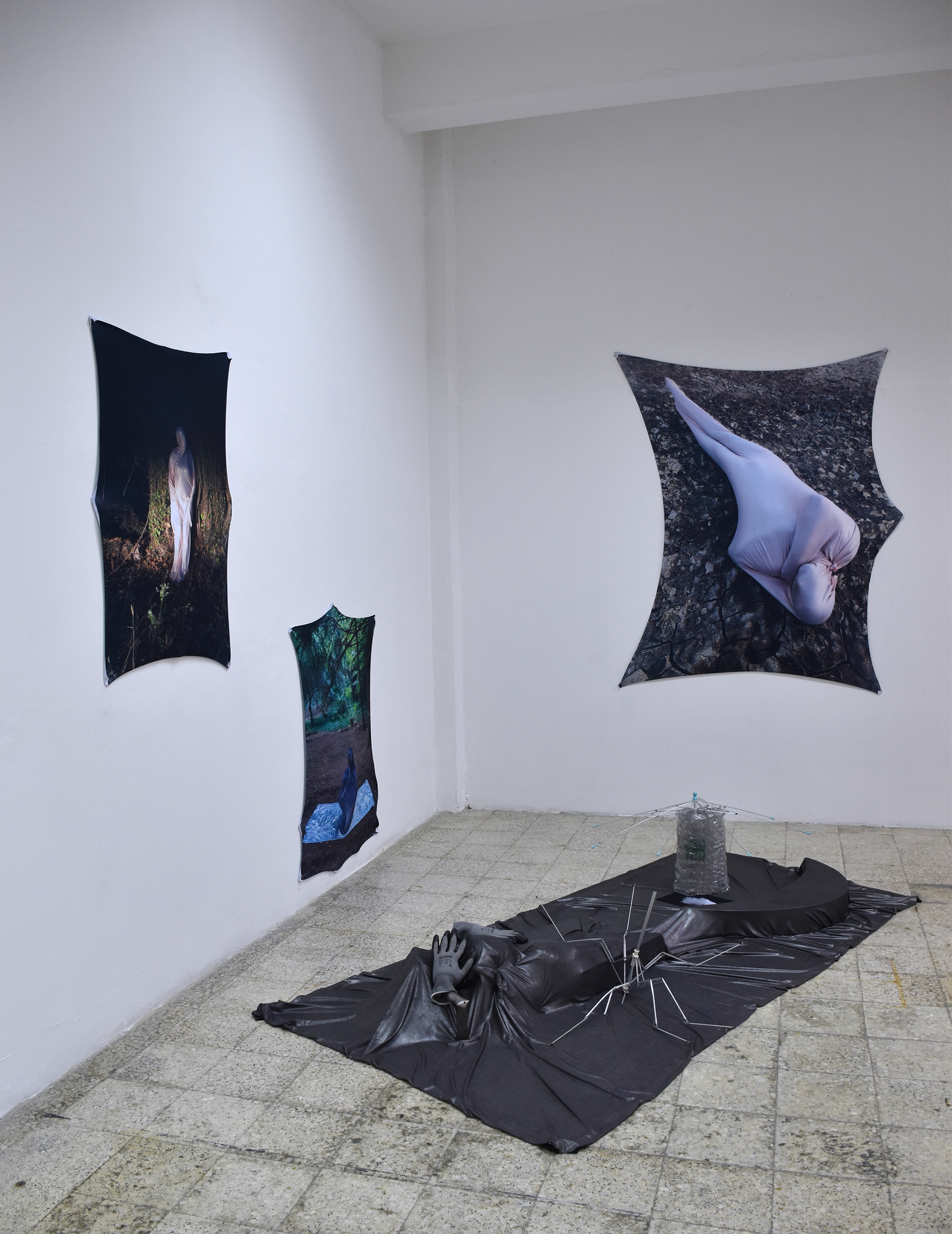


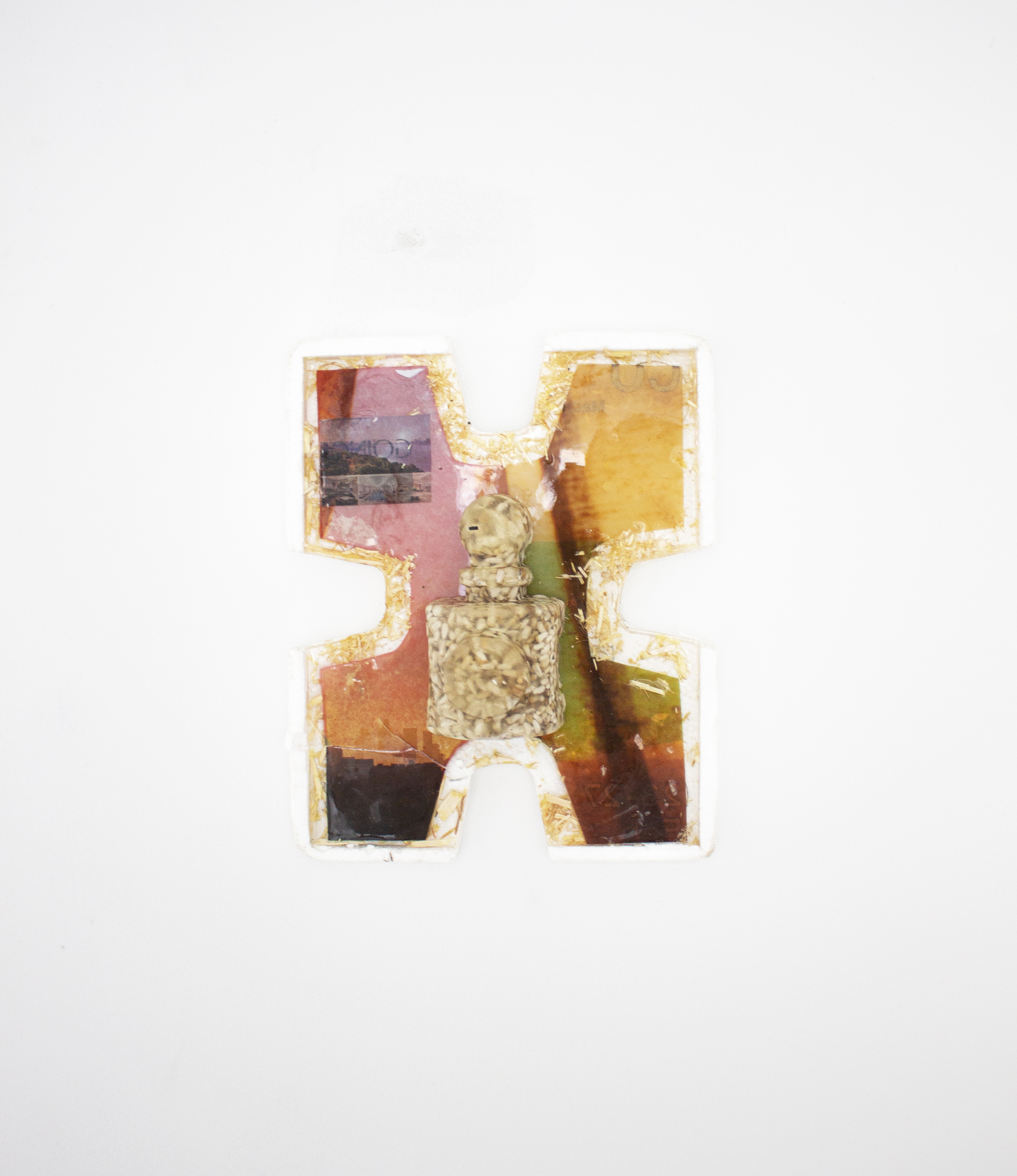





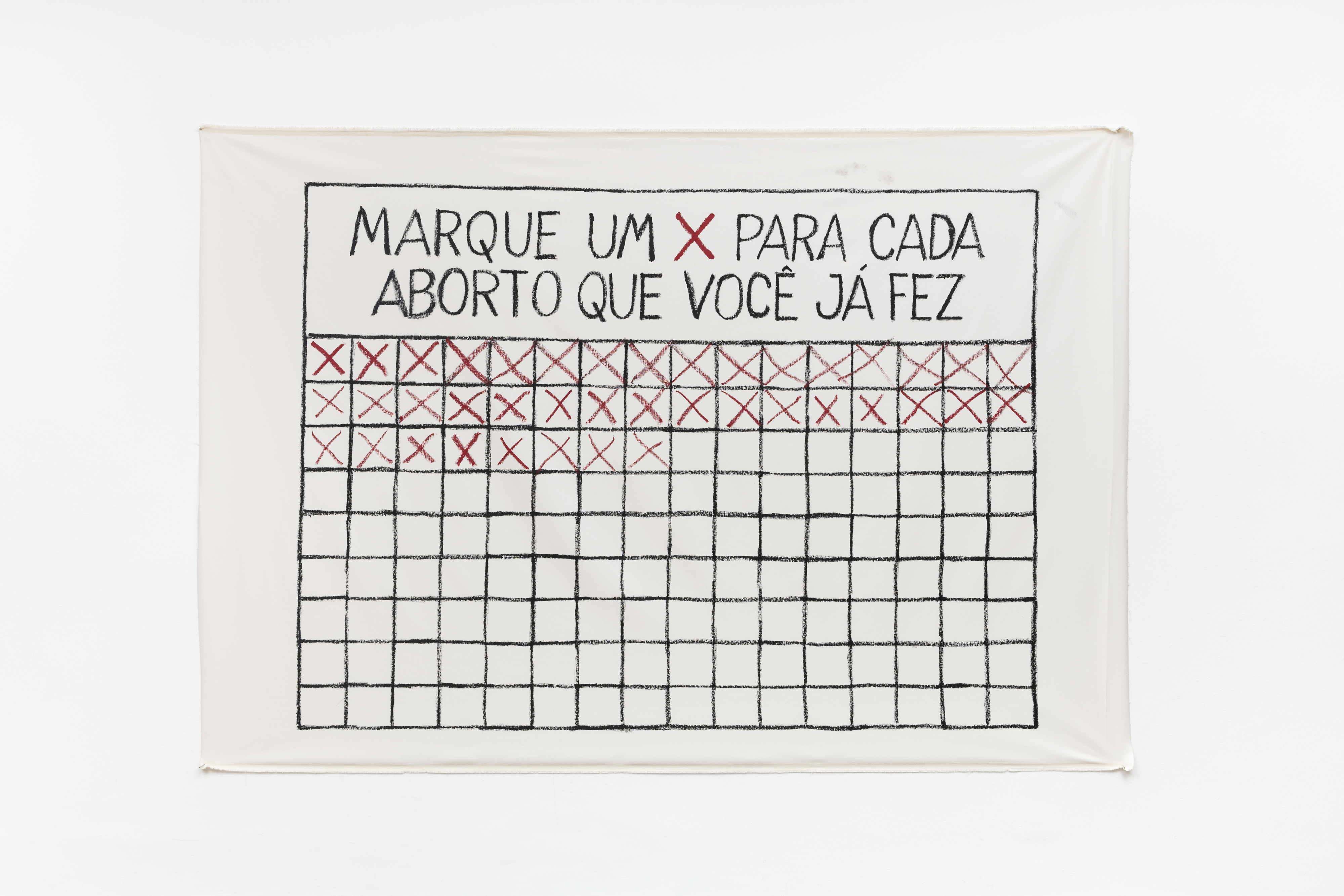


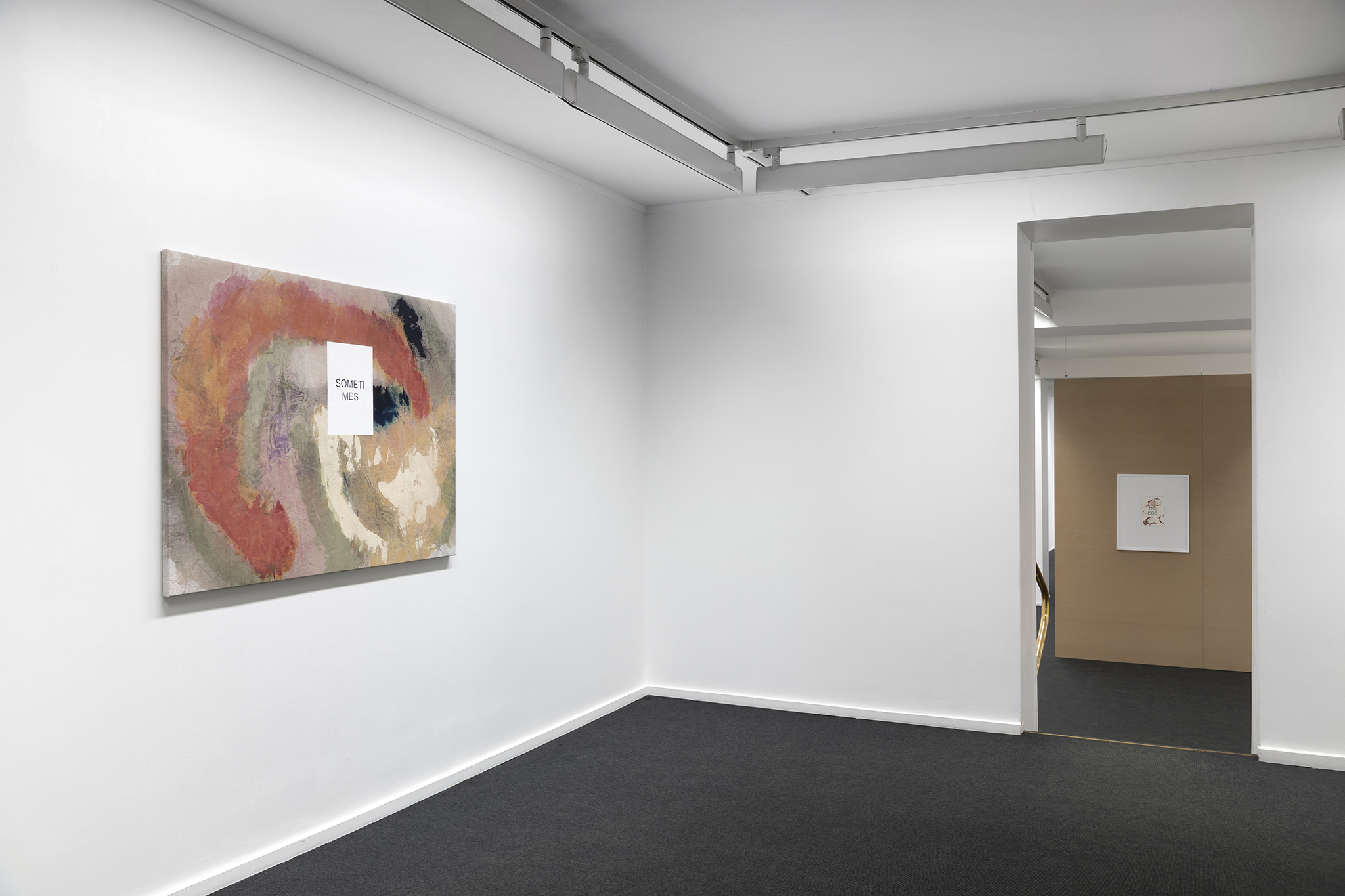


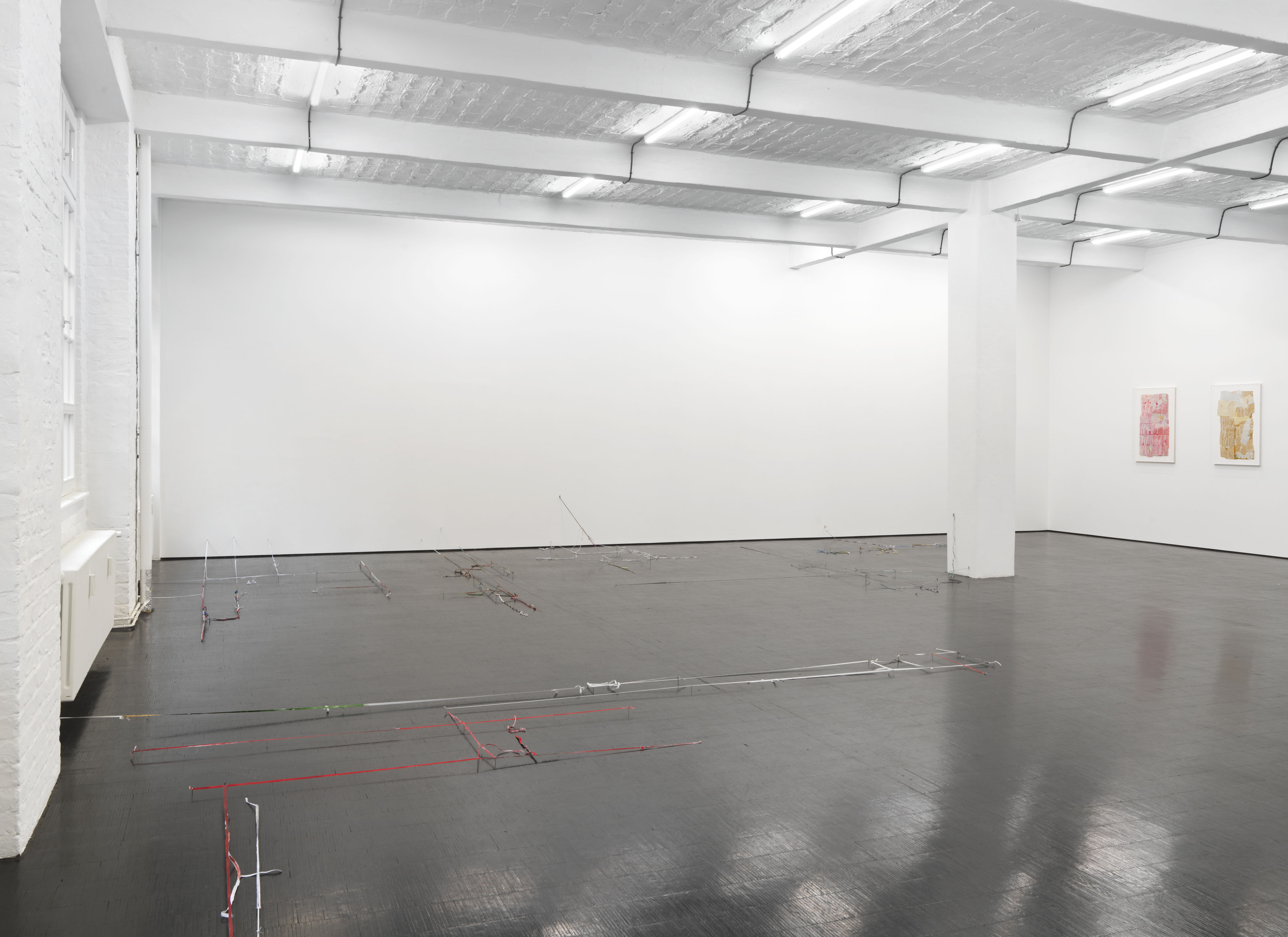

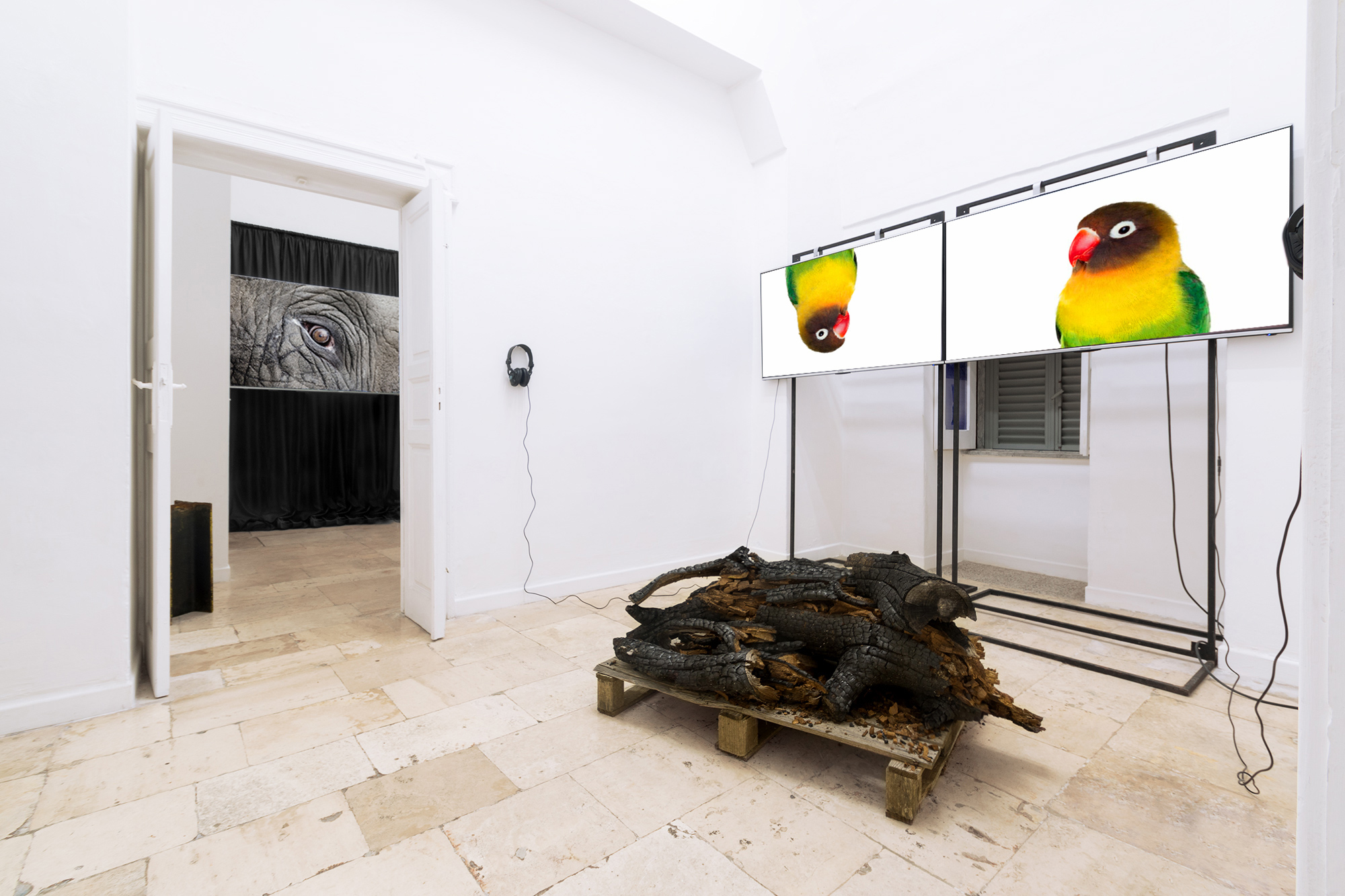


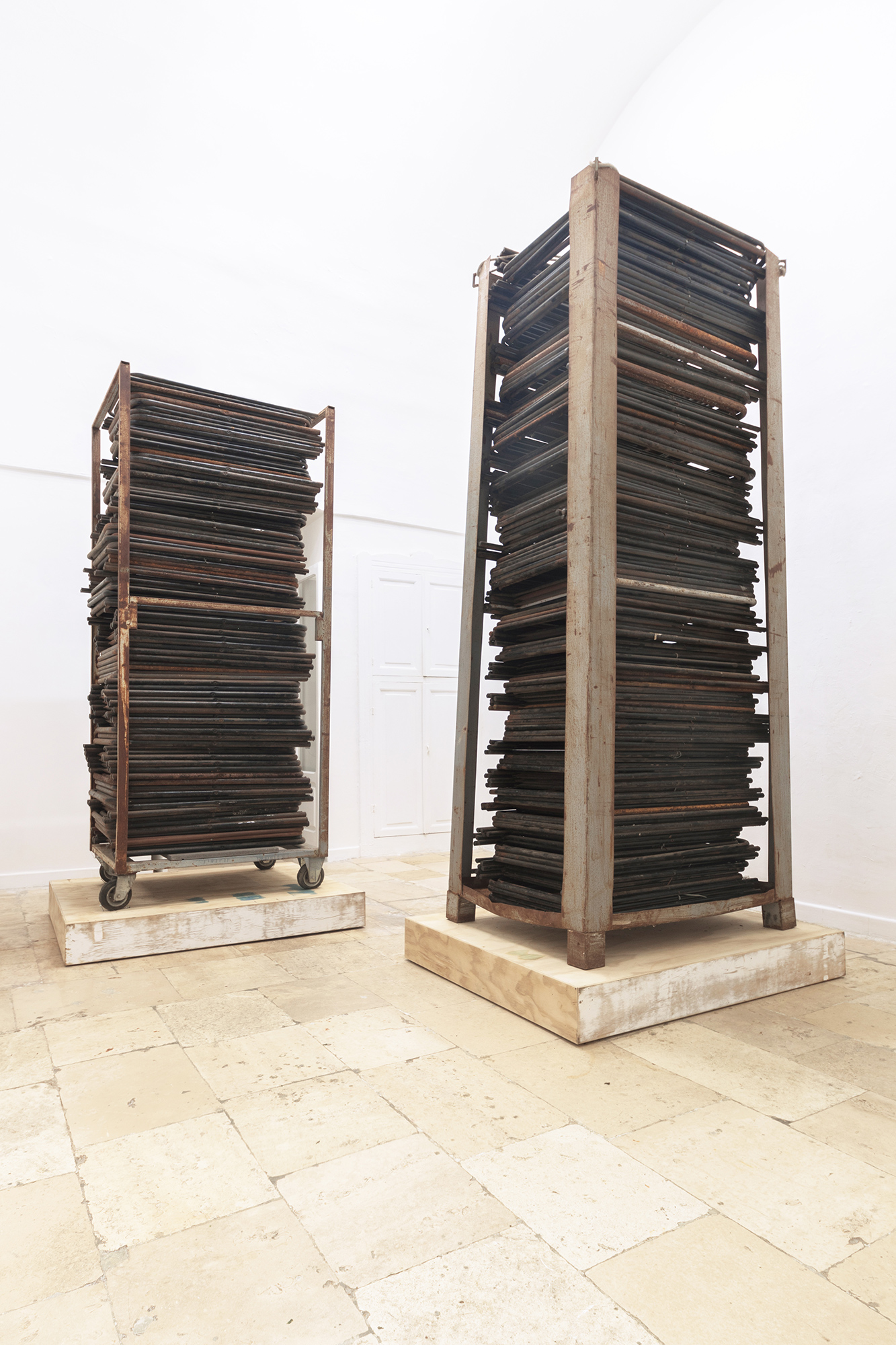

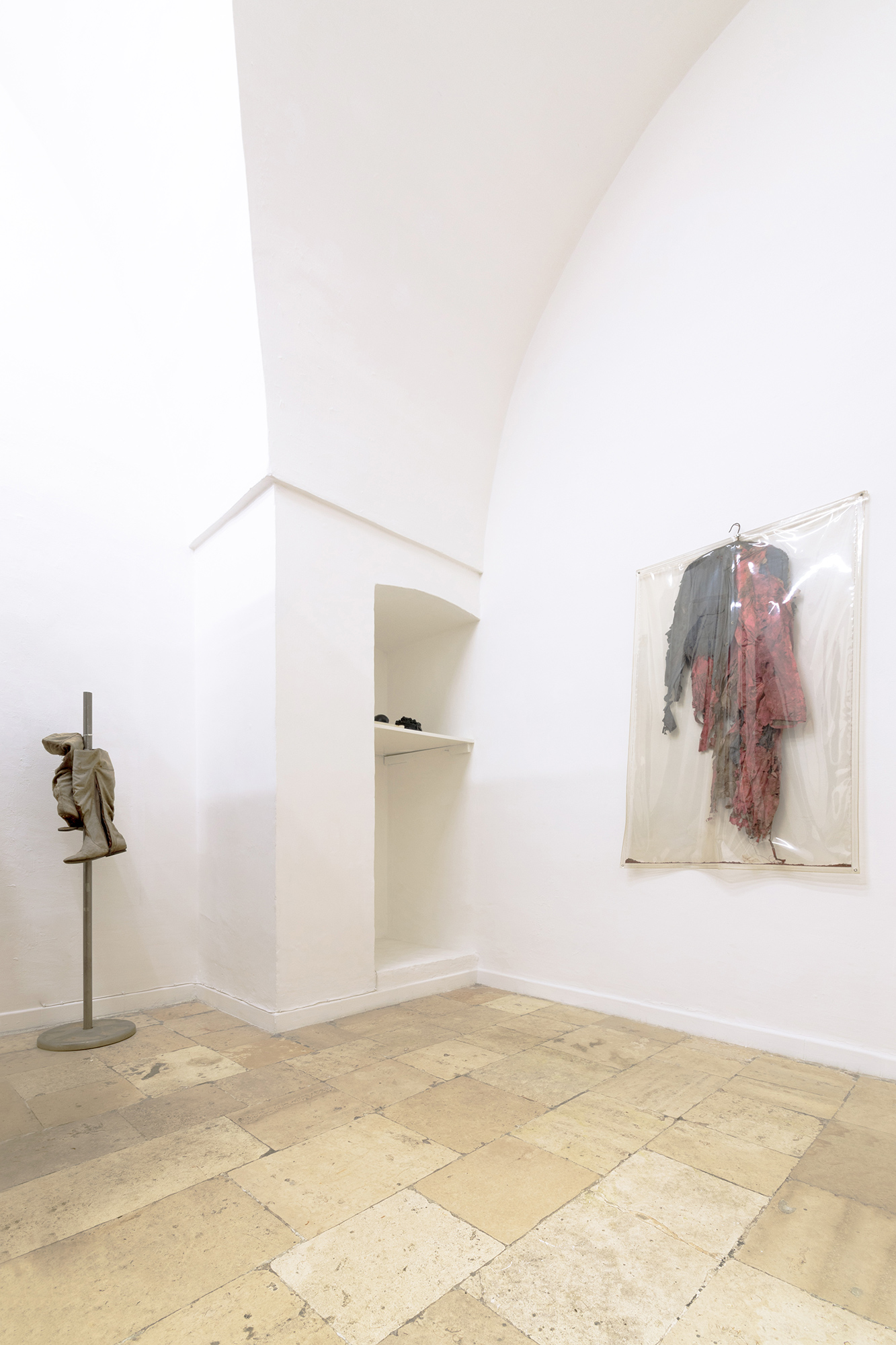


_Encaust,%20oil%20and%20pastel%20on%20canvas_180x135cm_courtesy%20the%20artist%20and%20ArtNoble%20gallery.jpg)


_installation%20shot_image%20%C2%A9%20Alexandra%20Masmanidi.jpg)
_installation%20shot_image%C2%A9%20Alexandra%20Masmanidi.jpg)

