








Methylene Blue Dreams begins with a desire that has become increasingly familiar: the desire to optimize ourselves. We are encouraged to become the best versions of who we are, or better yet, who we might be. Better skin, healthier hair, more defined muscles, greater mental clarity and maximum happiness. We work upon ourselves through supplements, wearable technologies that monitor our heart rate, count our steps, and measure our sleep, as well as through superficial and internal medical interventions. We biohack our blood chemistry in pursuit of youthfulness and treat the body as a limitless field of experimentation. In the process, the machine becomes humanized and the human becomes mechanic, as though we were somehow insufficiently ourselves.
Yet we exist as complex organisms composed of multiple layers, humours, spirits, bacteria, and atoms. In some sense, each of us contains an entire forest within, as mentioned by the artist. Distinct biomes coexist beneath the illusion of a singular self, each populated by forms of life that possess their own agency. What emerges from us yet begins to exist independently of us? As though these forms had escaped the very conditions that once enabled their existence, only to find themselves no longer sheltered by them. An environment so altered that it surpasses itself. As though organs, tissues, and microscopic communities were undertaking exoduses from this body in search of regeneration elsewhere and from external knowledge.
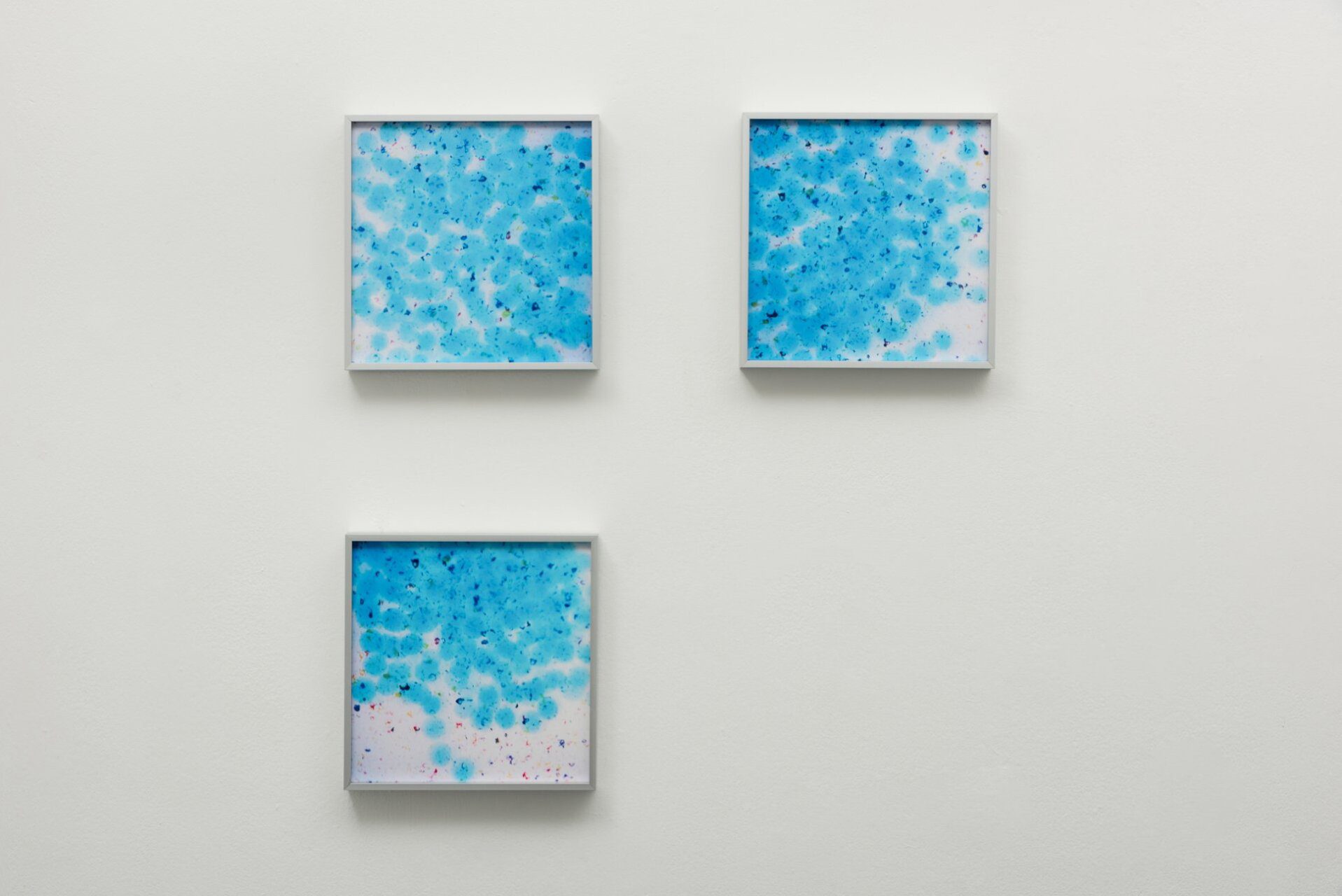
The exhibition takes its title from methylene blue, a medical compound historically used as a treatment for poisoning and as a dye that renders the body’s internal structures visible. It is also one of the first synthetic drugs, occupying a curious position between diagnosis, intervention, and enhancement. More recently, it has re-emerged within cultures of optimization, promoted for its potential cognitive and neurological benefits.
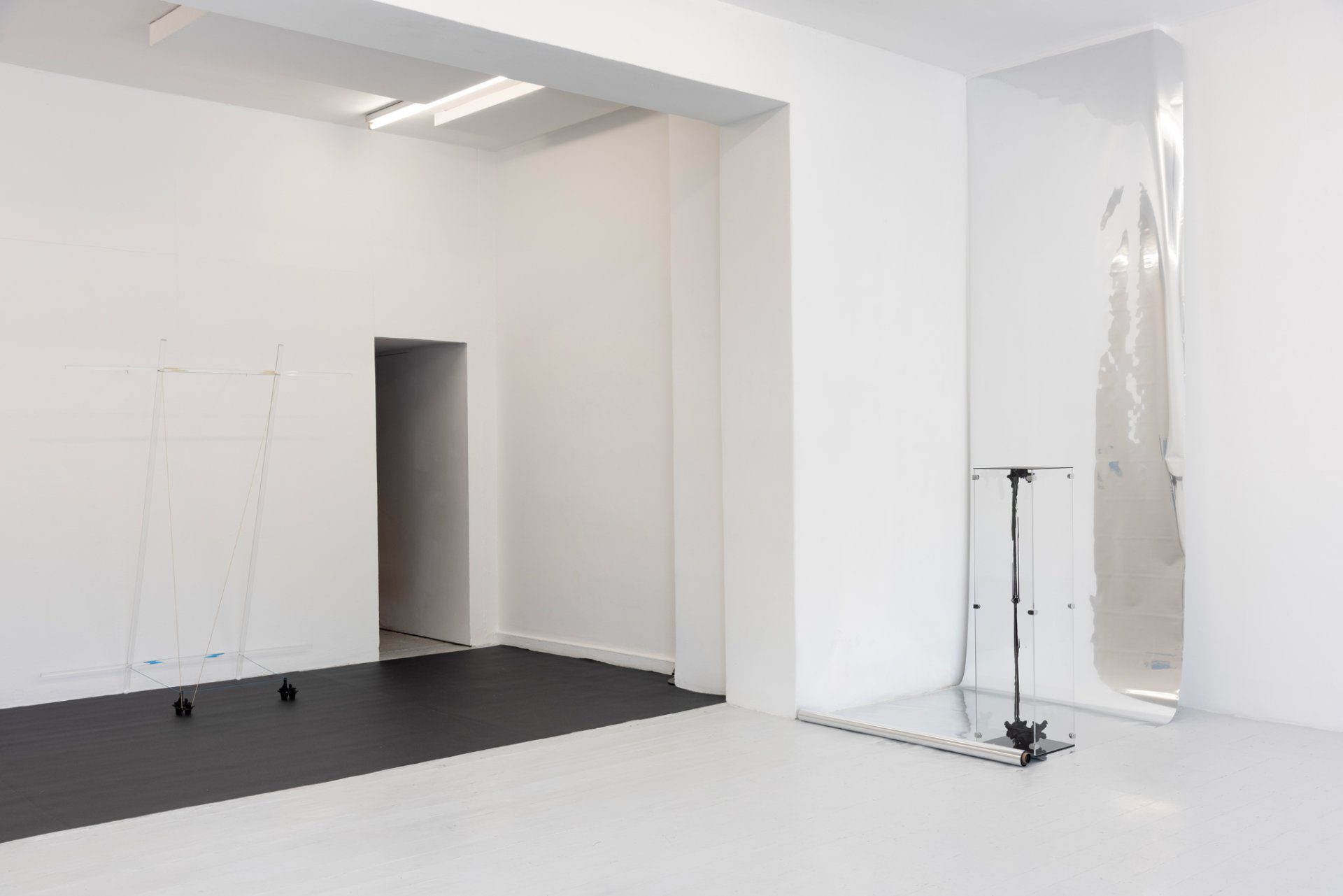
Here, methylene blue operates as both material and metaphor. Historically employed to reveal, trace, and uncover what lies beneath the surface, it becomes a guide through the exhibition itself: through its sculptural environment, speculative organisms, and fragmented anatomies. It supports a different form of circulation that moves between bodies and states of matter. It becomes a means of navigating its transformation rather than restoring the body to wholeness.
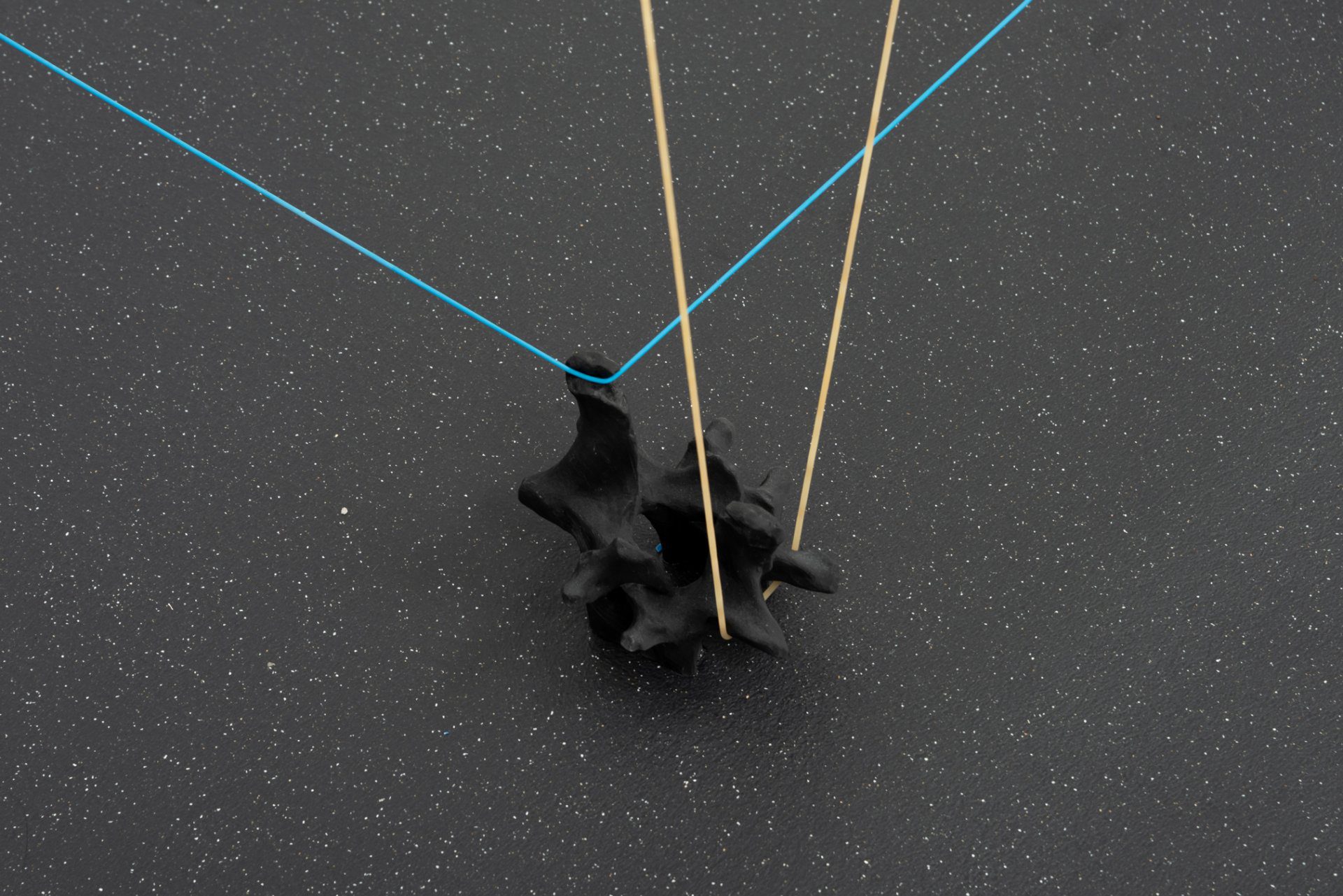
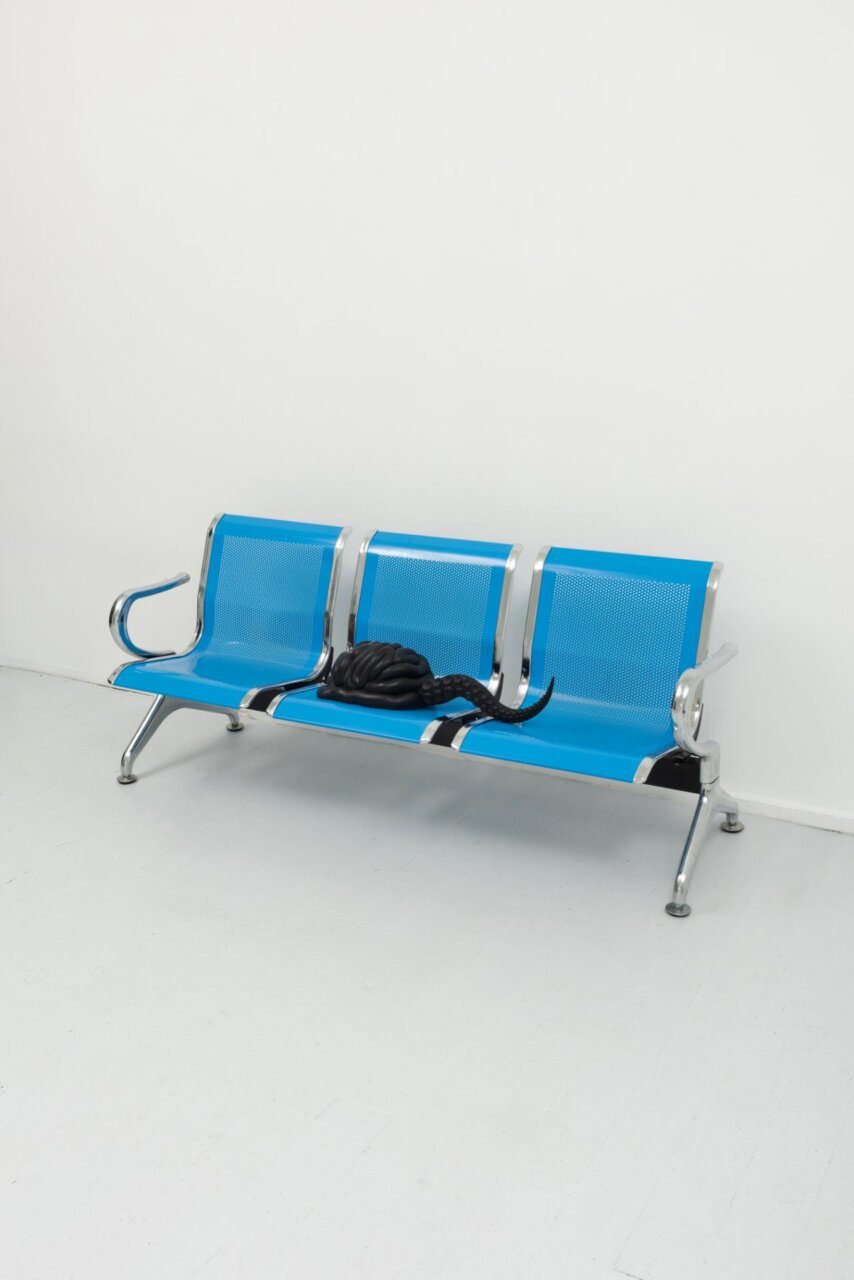
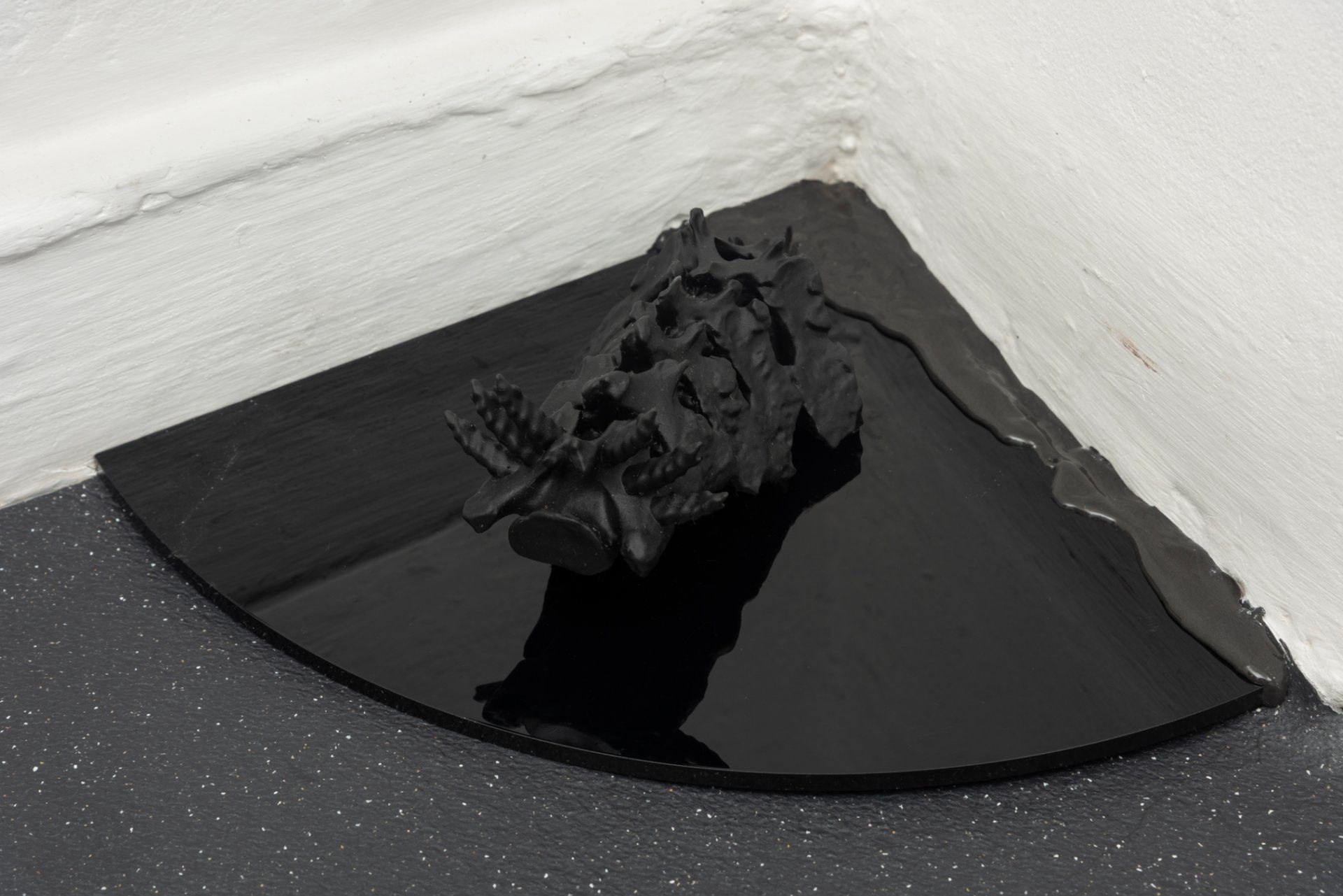
The world proposed in Methylene Blue Dreams inhabits this threshold. Bodies no longer appear as coherent wholes but as reconfigurations of distinct forms of life in various stages of transformation. Organic matter merges with synthetic forms; fragments detach, migrate, and reorganize. Throughout the exhibition, a recurring black ooze seeps across surfaces and structures. Part residue, part organism, part speculative material, it appears as evidence of a body that has no boundaries – like the mycelium that maintains an interconnection even when seemingly scattered. While the methylene blue seeks to uncover, the black ooze performs the opposite gesture. It devours, obscures, and renders forms increasingly illegible. Between them emerges a tension between transparency and opacity, revelation and concealment.
The exhibition unfolds within a space that resembles a medical waiting room, yet it does not seek to treat the human body. Instead, its attention moves away from it. The human, now ailing, is no longer the unquestioned subject of attention, and does not hold the knowledge necessary to navigate in such an environment. It may even become expendable. What remains are the fragments that struggle to stay alive: parts that detach themselves from the whole, dismantle existing structures, and reorganize into new bodies, new assemblages, and new systems of relation. What emerges is a process of continual reconfiguration, where life persists precisely through its capacity to exceed the boundaries of the forms that once contained it.