
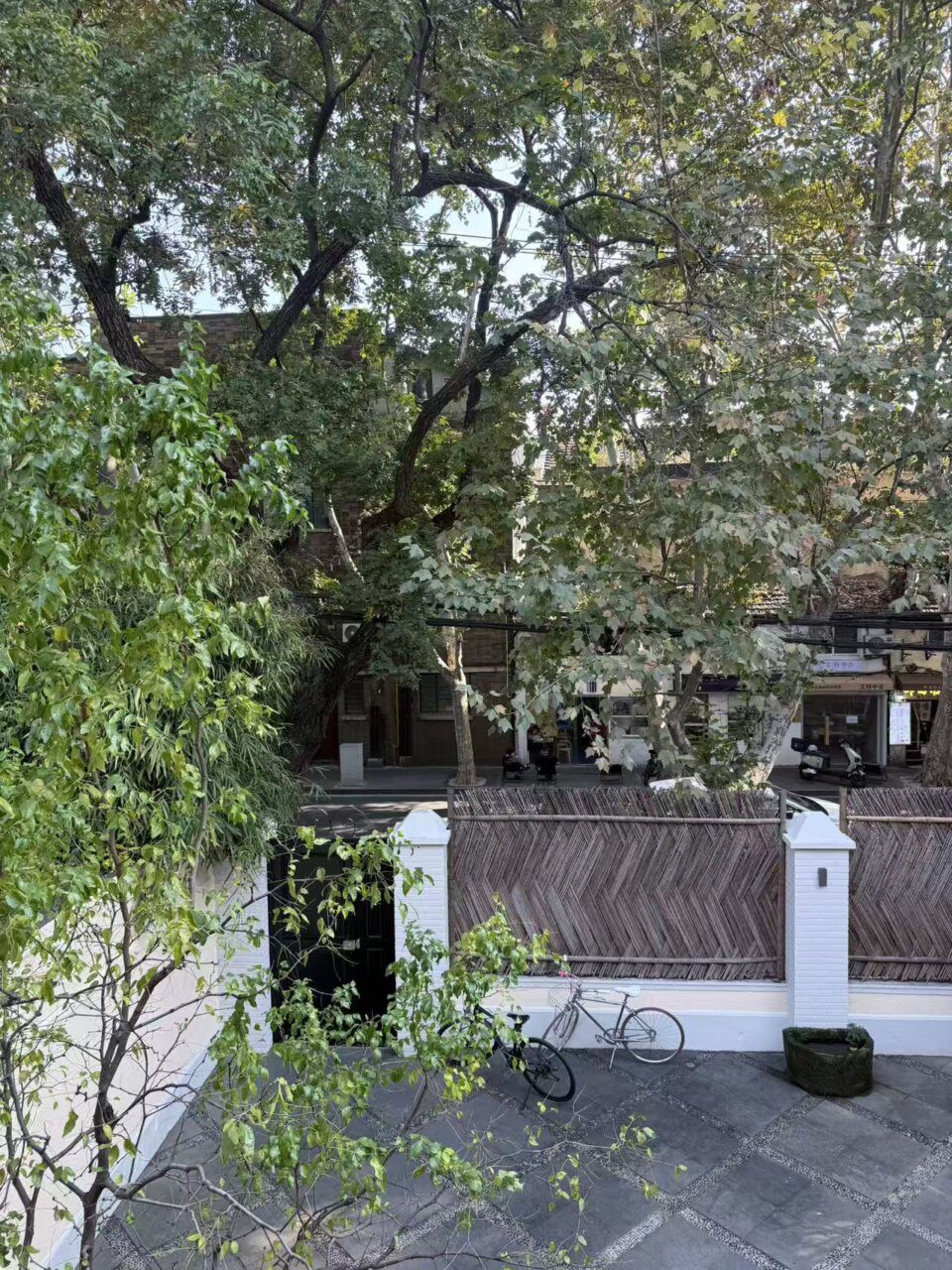
Looking out from second floor balcony at Cheruby. Photo: Karen Wang
11/14/2025
Happened Here by Karen Tong Wang
Coro de Soles Menores (Chorus of the Minor Suns) is Barbara Sanchez-Kane’s field-research exhibition in China, following a residency as part of the inaugural artist-in-residence program at CHERUBY. The exhibition opened on November 8th amid the Shanghai Art week, as all galleries gathered in the city for the annual art fairs and the biennial.
We pushed open the iron gate and walked into a generous front yard freshly paved with minimal planting, noises from the intersection were subdued by the trees surrounding us. The building designed by the Huagai Architectural Firm for banker and bibliophile Ye Jingkui in 1939, now houses CHERUBY, was in full view.

Ashtray made by the artist as a gift. It was full of stubs from the opening day. Photo: Karen Wang
A couple of people were smoking outside, behind them were banquets of flowers, congratulating the opening day. Cherry and Tone greeted us while finishing up their cigarettes. They tipped ashes into those gold plated steel pole ashtrays, a wobbly two branch design. We were told these were a gift from the artist. The same metal finishing, recalling occasions for government officials, was seen on the sculptures inside.
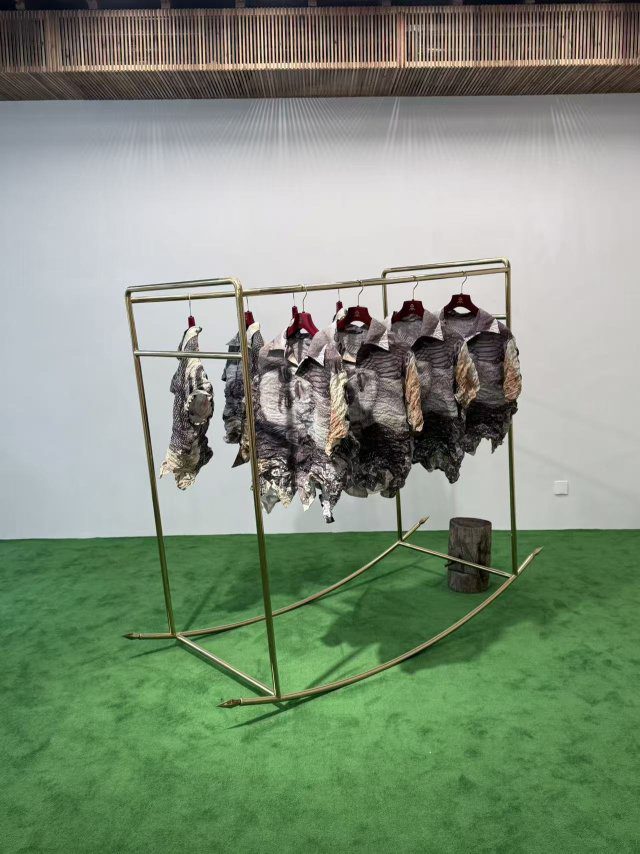
Intercambio Vernacular (Vernacular Exchange, 2025): a garment and also an artist edition fashioned from metallic memory fabric, a material echoing the minerals found in magma. Photo: Karen Wang
A hotel-lobby-cart-style clothing rack, with the bottom wheels replaced by two spear headed curved rods. The texture of the green carpet was consistent with the hospitality of historic hotels atmosphere, our steps were silent. The rocking motion was paused by a piece of tree log, contrasting the shining gold plated metal. Hanging on the rack were wearable pieces that had the print of Frida Kahlo on Mexican pesos. They looked like oversized crumpled banknotes, evoking a sense of nostalgia in a country of digital payment.


Bárbara Sánchez-Kane, Caballero de Noche, 2025, Photo: Karen Wang
On the second floor, a translucent tailored jacket made of leather was hooked on a bronze body part. The specificity of tailoring accentuated by the change to the semi-clear material was curated to perform authority and masculinity. The piece was set against the balcony overlooking the former French concession zone.
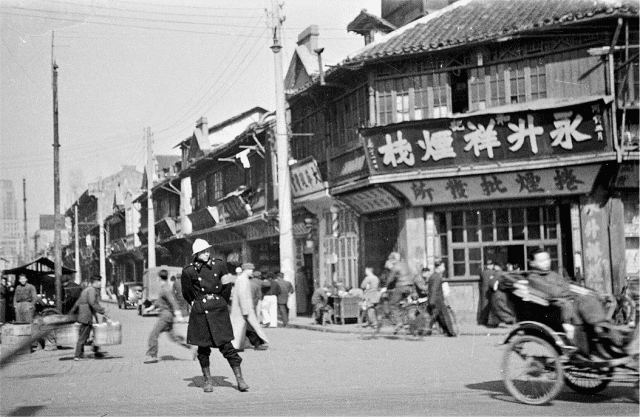
An unidentified street within the French Concession in 1939. Image Source: https://asiamoney.weebly.com/towns-and-cities—shanghai.html
Shanghai has always been a tolerating and open city that melts cultures. This openness was initially forced upon its history in the 1840s when the British named this fishing village a treaty port, opening it up to western countries. Two hundred years later, the French concession (Fa zu jie) turns out to be the defining area of downtown Shanghai where colonial architecture and the plane-trees lined streets all become part of the tourist appeal. The “Aesthetic Priority storyline” desensitized us to the nuances of political and identity conflicts within historical narratives, favoring an interpretation that celebrates cultural fusion and innovations.
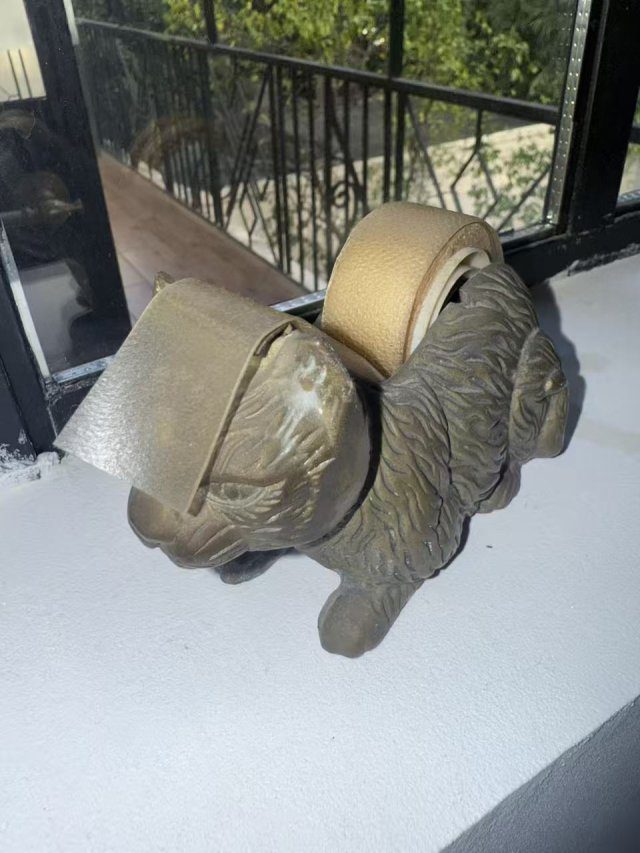
Tape dispenser on second floor window sill. Photo: Karen Wang
A resting sphinx like stone cat on the window sill, rolls of tape made of translucent leather, could be scraps from the clothing pieces. The tail of the tape fell on top of the cat’s head, like the Qin dynasty emperor’s crown. The tape dispenser was Kane’s local vintage market find that reminded her of the cats frequent his home in Mexico. I felt the weight of the stone, worn out edges so smooth and round, calmed the longing for home.
There were pieces scattered throughout the space, like well-loved scraps turned into functional objects, as if fixing up something for your own apartment. Shanghai wasn’t a place to mine, to source, but where things happened, lived, labor performed. I was reminded of Hito Steyerl’s quote about how politics is not to be thought of happening somewhere else and what makes art intrinsically political: its function as a place for labor, conflict, and…fun.
It happened here.
References:
Luo, Qingyu. Framing the Narrative of Chinese Post-Colonial Heritage: Storylines and Mechanisms of Shanghai Concession Heritage Management. AESOP ANNUAL CONGRESS, 2025.
Steyerl, Hito. “Politics of Art: Contemporary Art and the Transition to Post-Democracy.” Journal #21, www.e-flux.com/journal/21/67696/politics-of-art-contemporary-art-and-the-transition-to-post-democracy. Accessed 27 Nov. 2025.
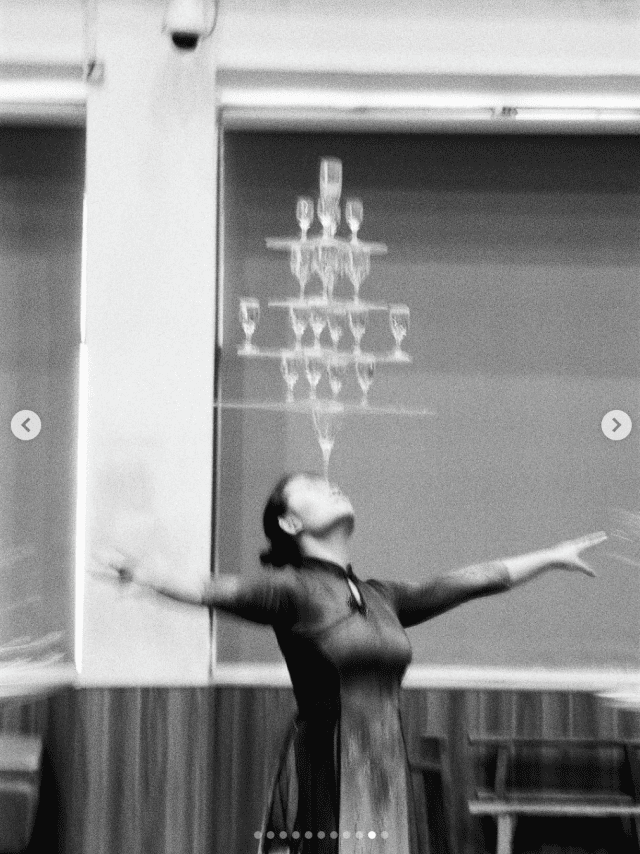

Screenshots of Instagram post from @ c.h.e.r.u.b.y
A performer balancing a glass tower with arm stretching out for balance, the same performance was shown on exhibition poster, in which the performer was wearing Sanchez-Kane’s clear leather piece.