






Kunstraum Engländerbau Vaduz
27 October – 13 December 2026
Paulo Wirz: Sistema Mestre
Every evening, we slip into it. Read. Listen to podcasts. Swipe across our smartphone screens. Have sex. Give ourselves over to feelings that occupy our minds and return in our dreams. Enter fictional worlds. In bed, all these things come together. It is a space between past and future. It also frames our lives, from birth to death. In between, we grow or shrink. And night after night, we try to exchange exhaustion for vitality and gloom for hope.
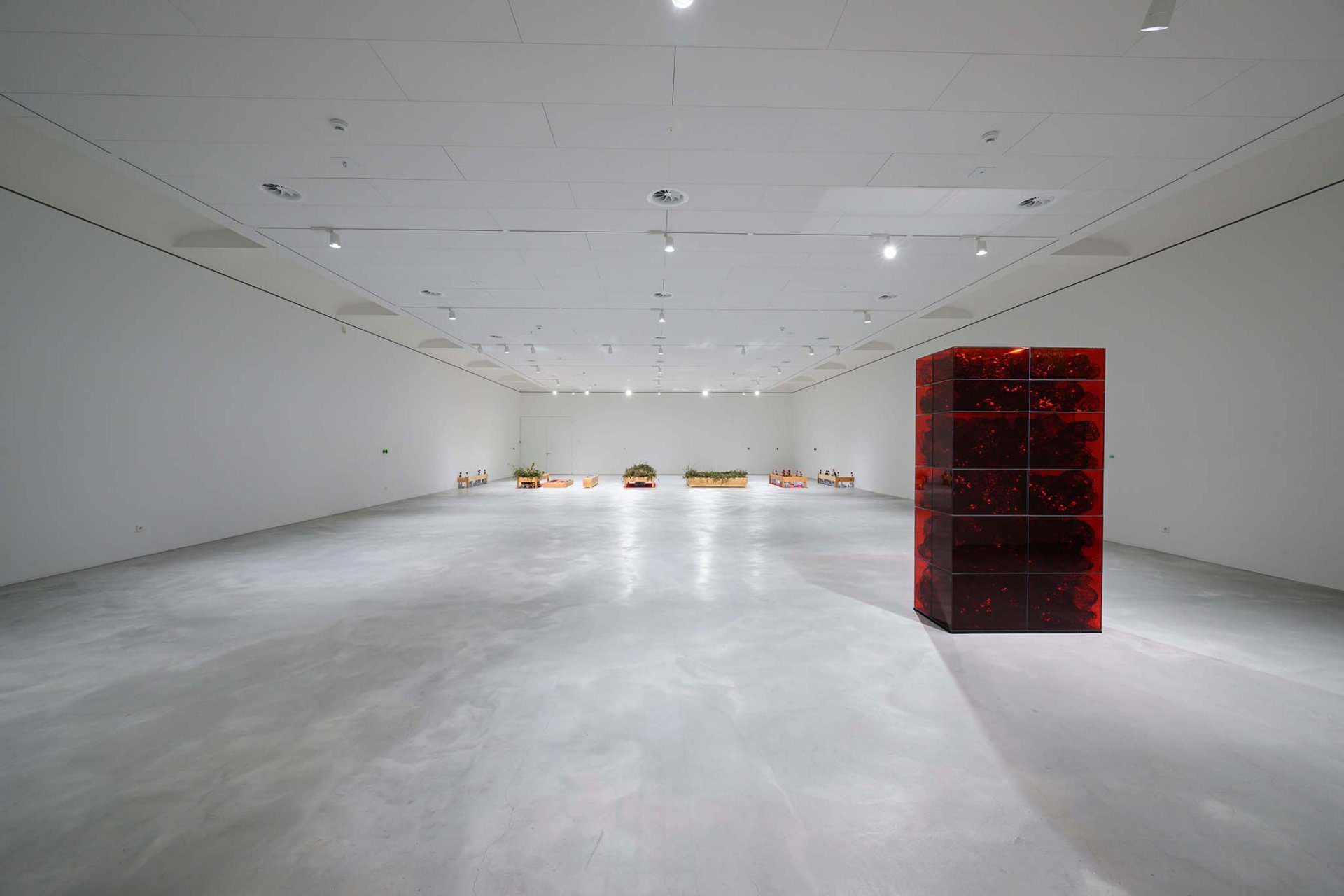
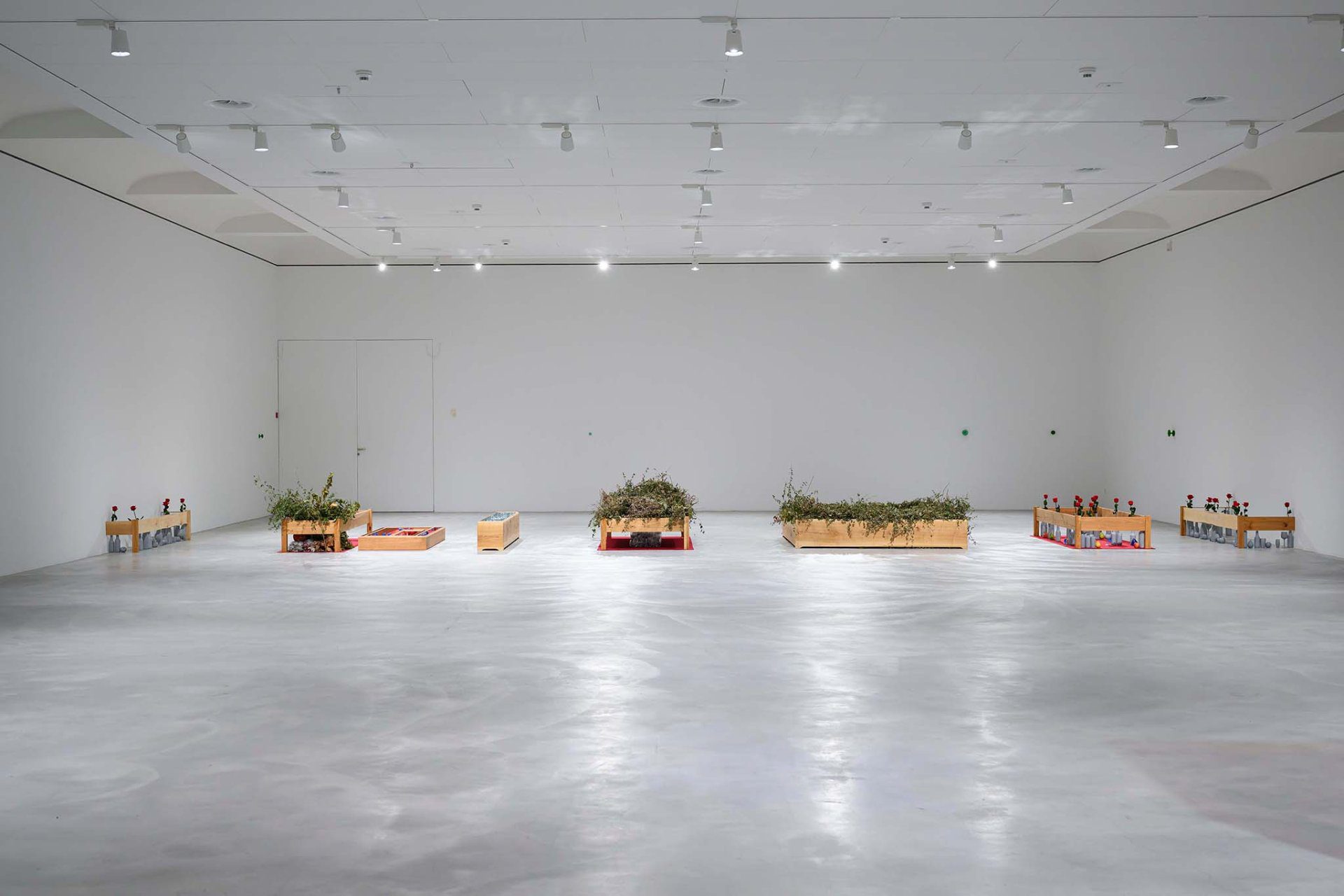
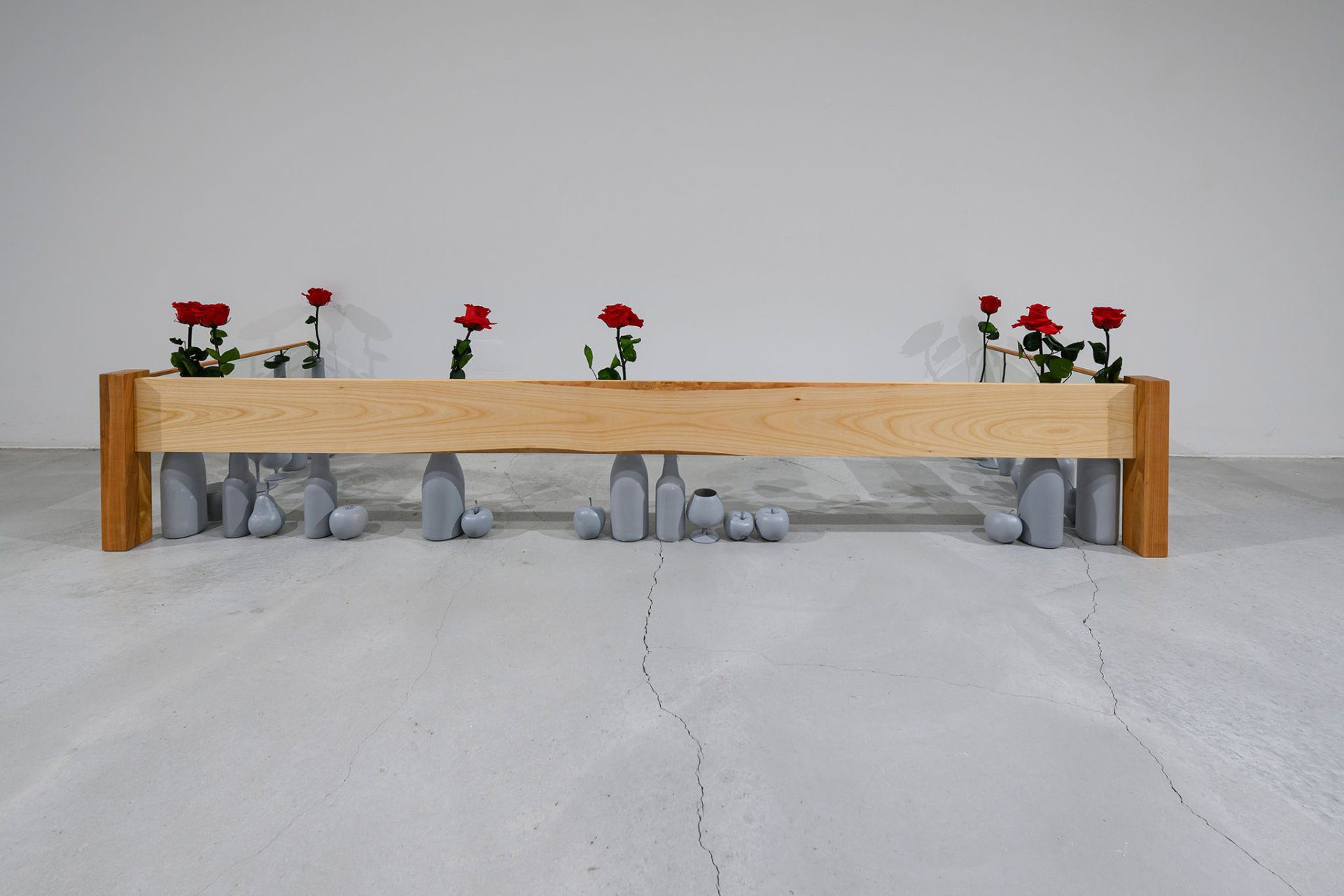
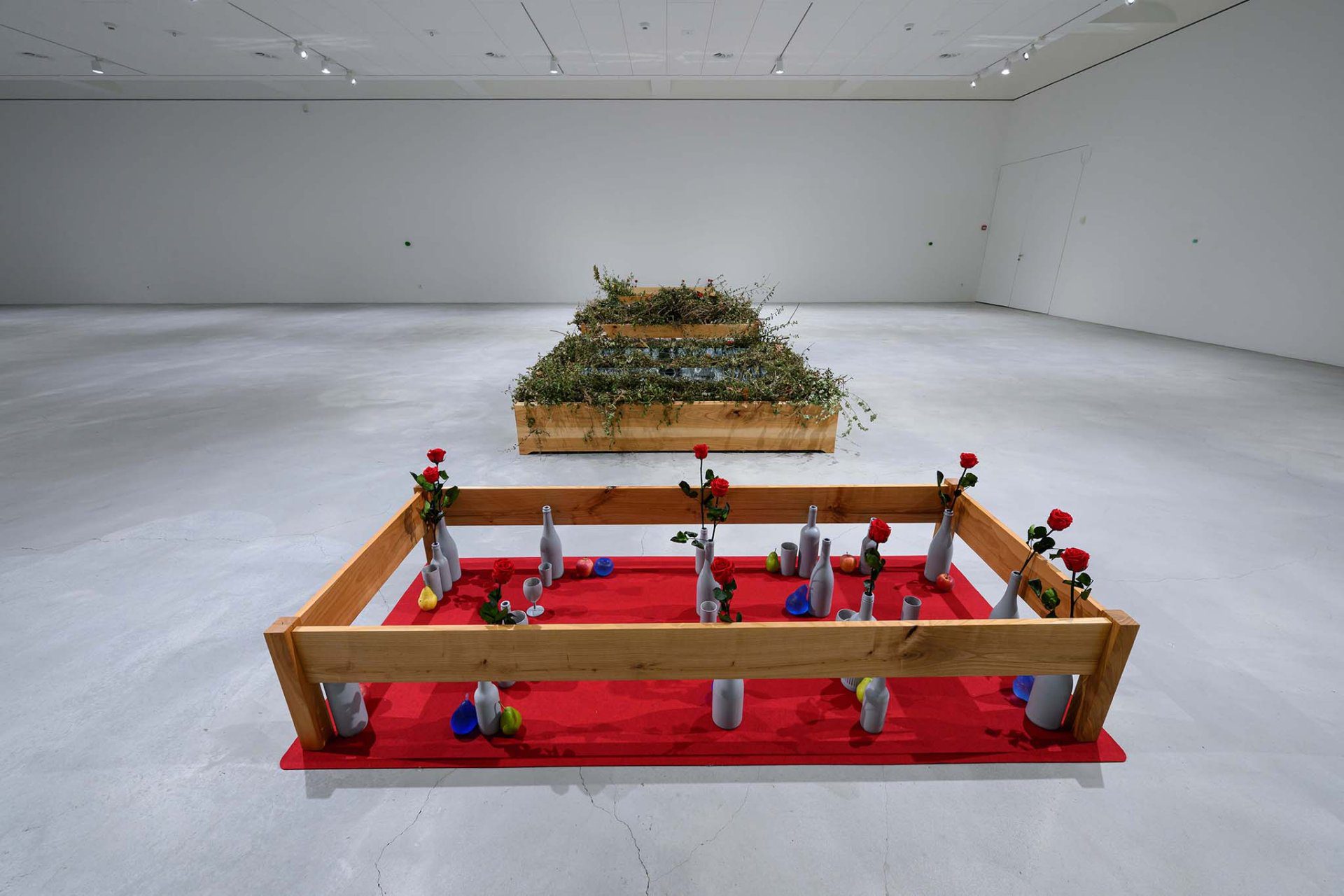
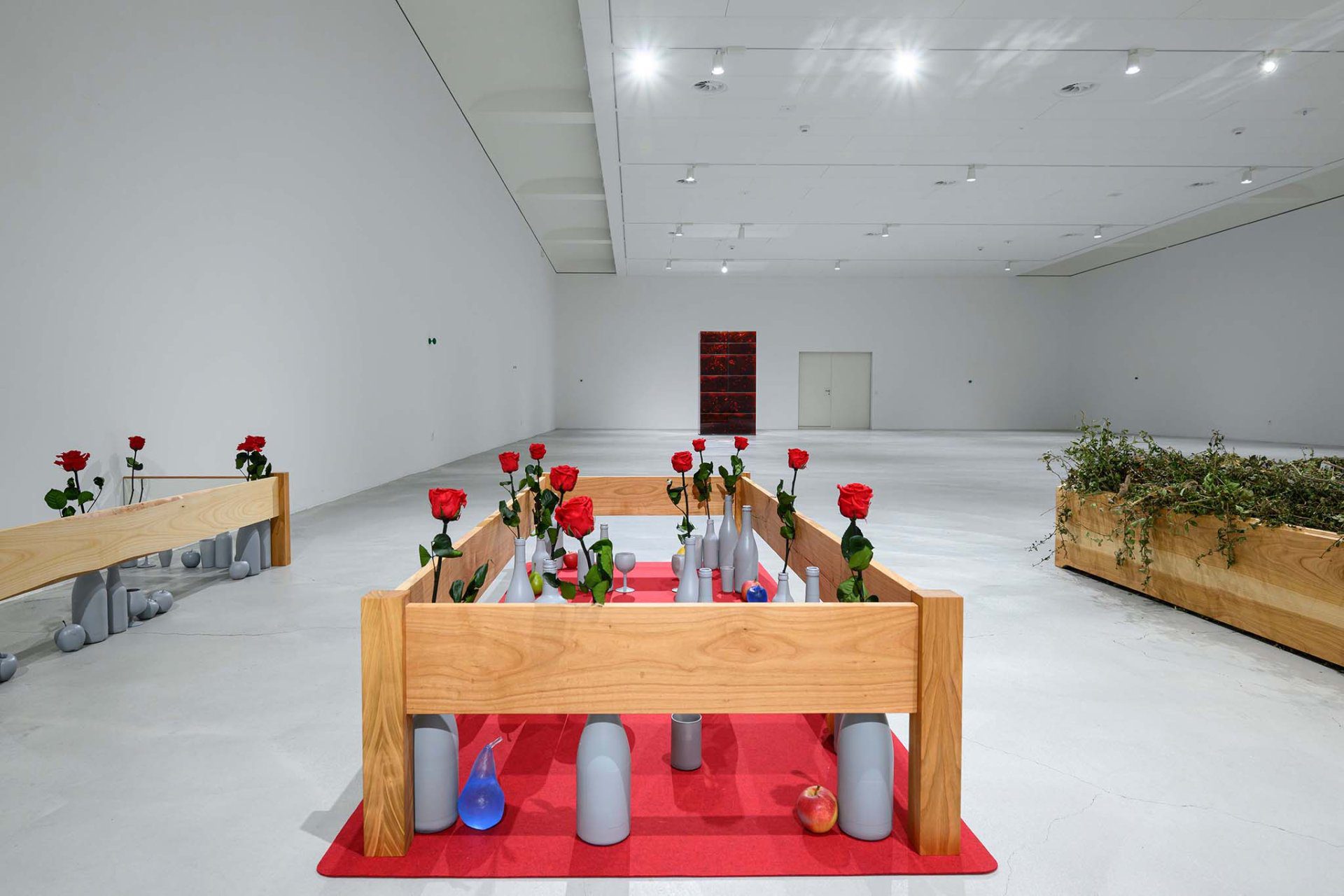
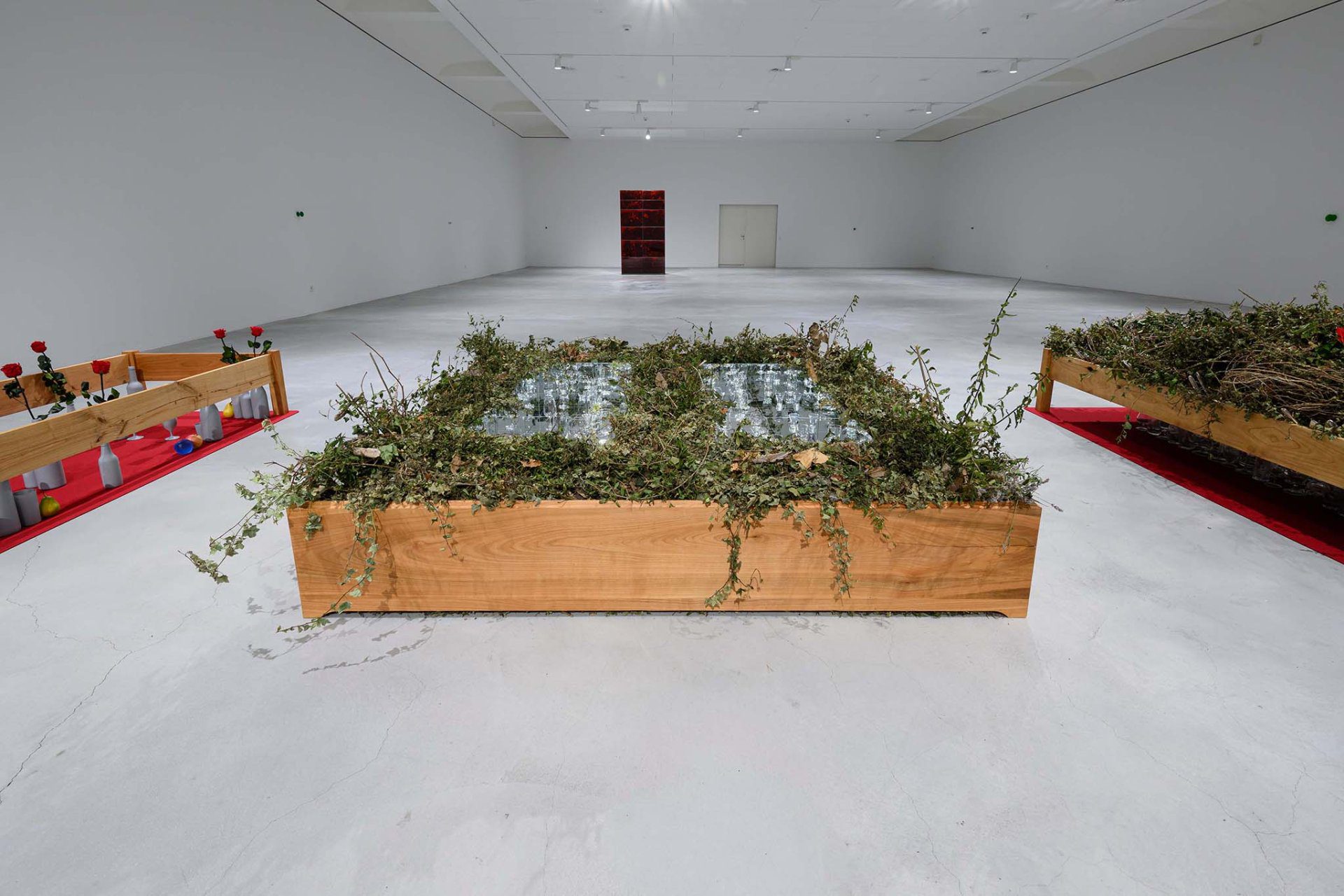
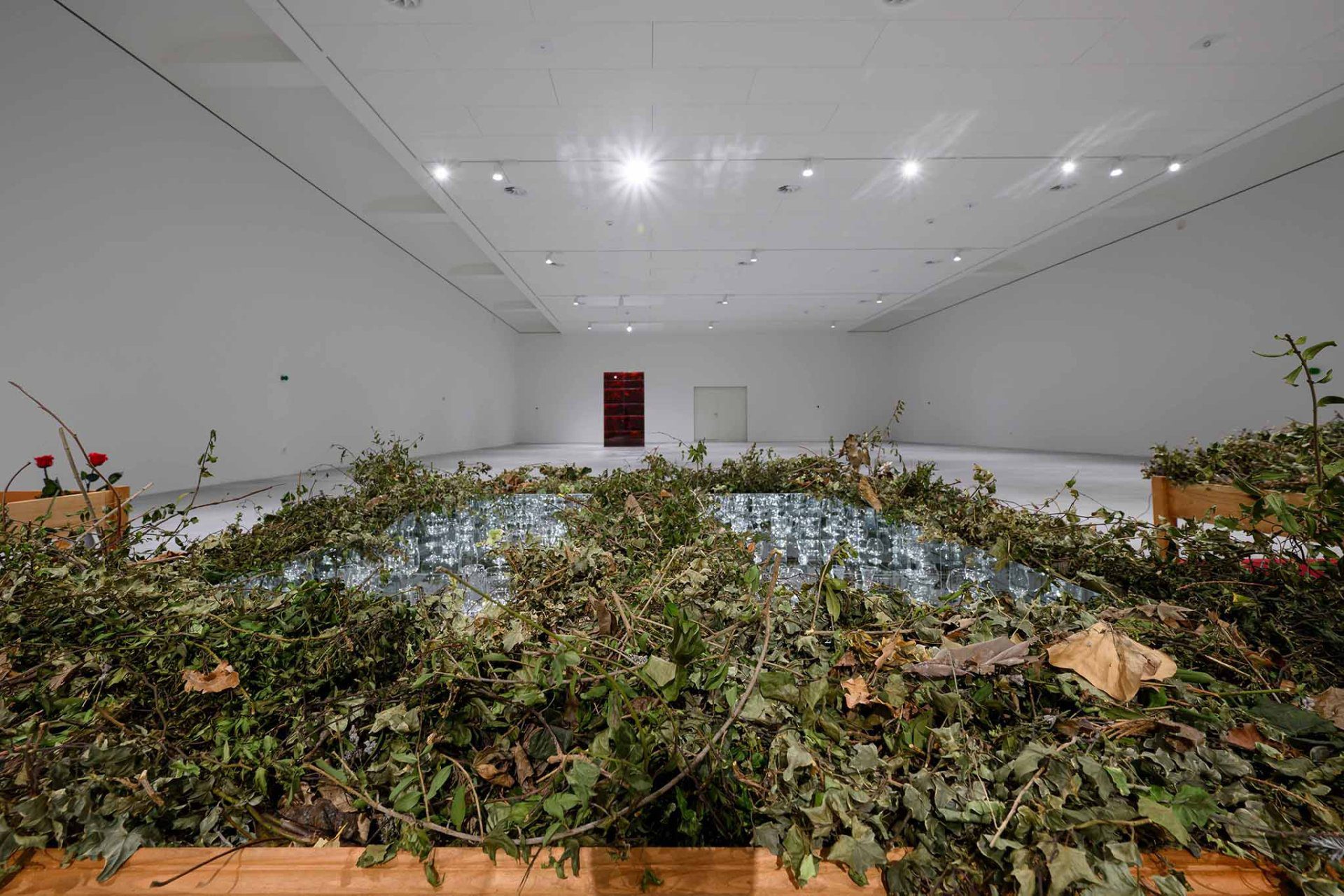
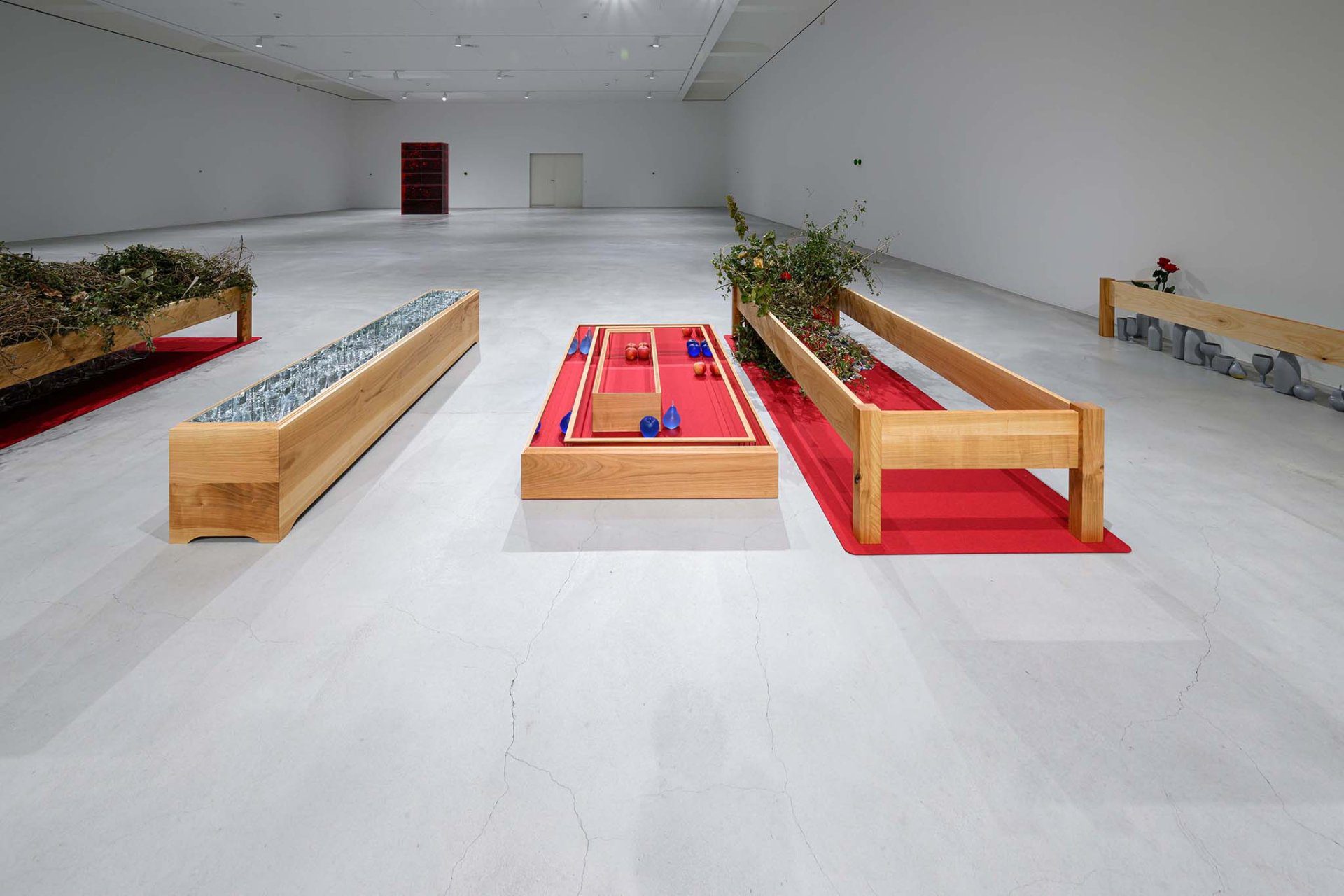
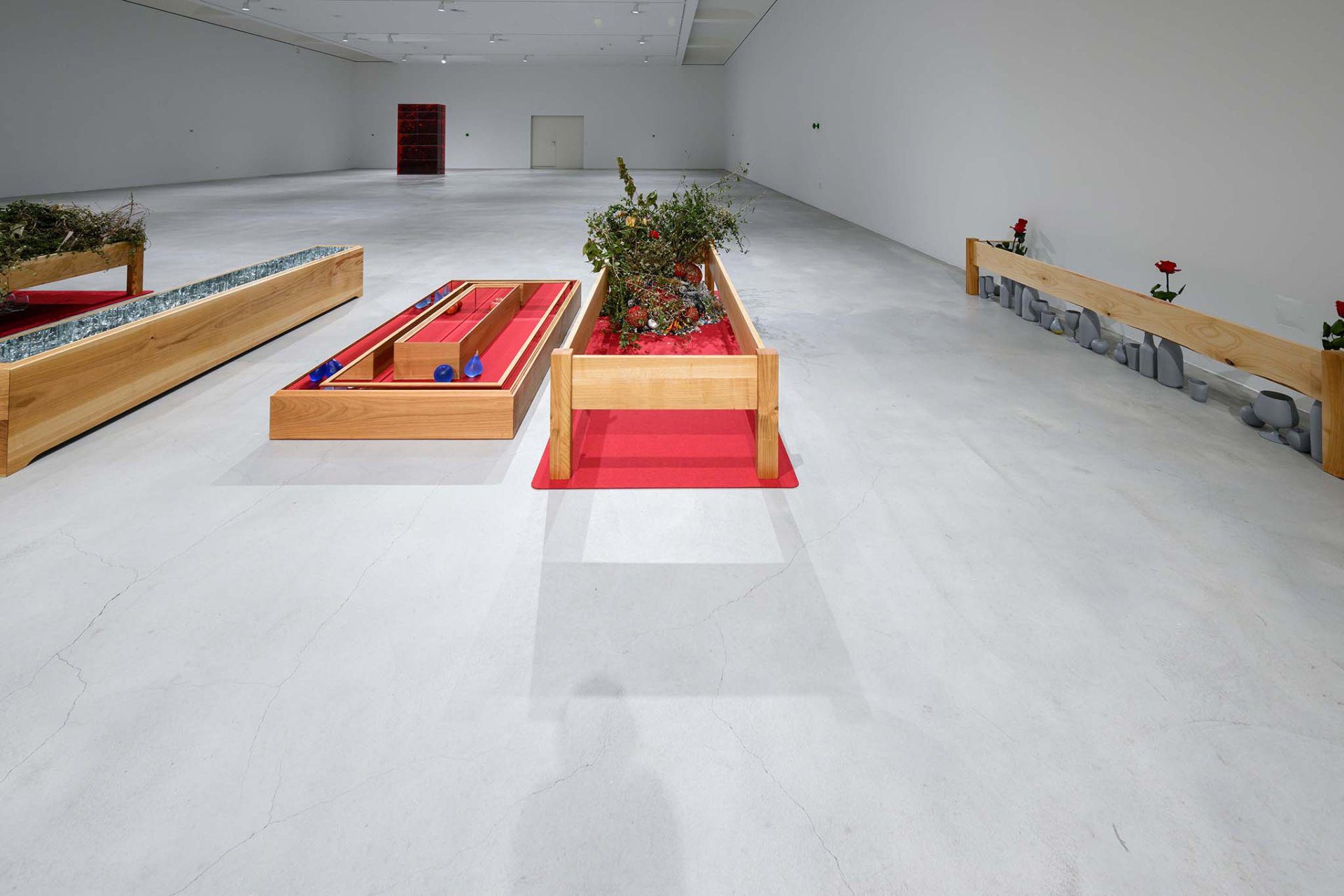
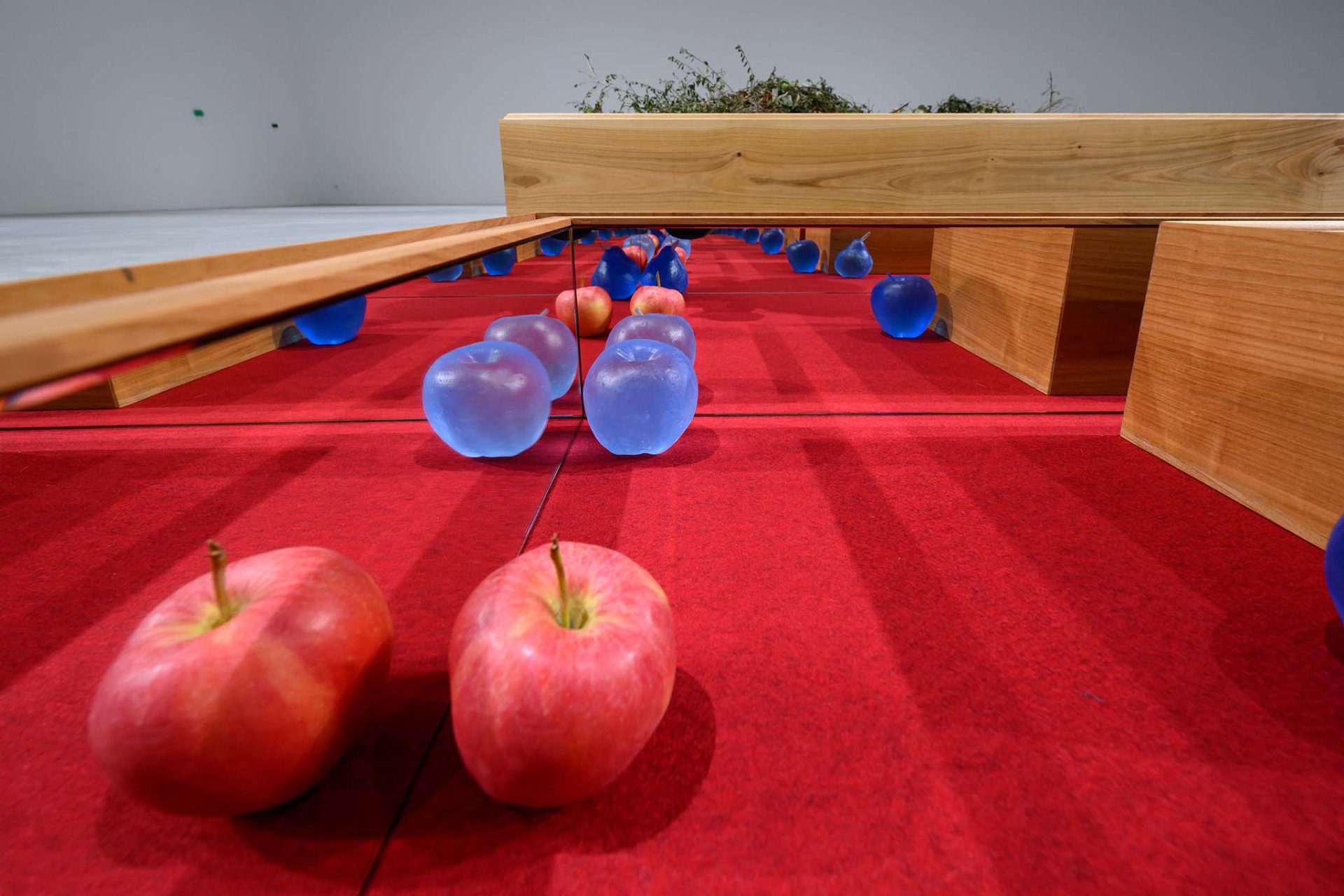
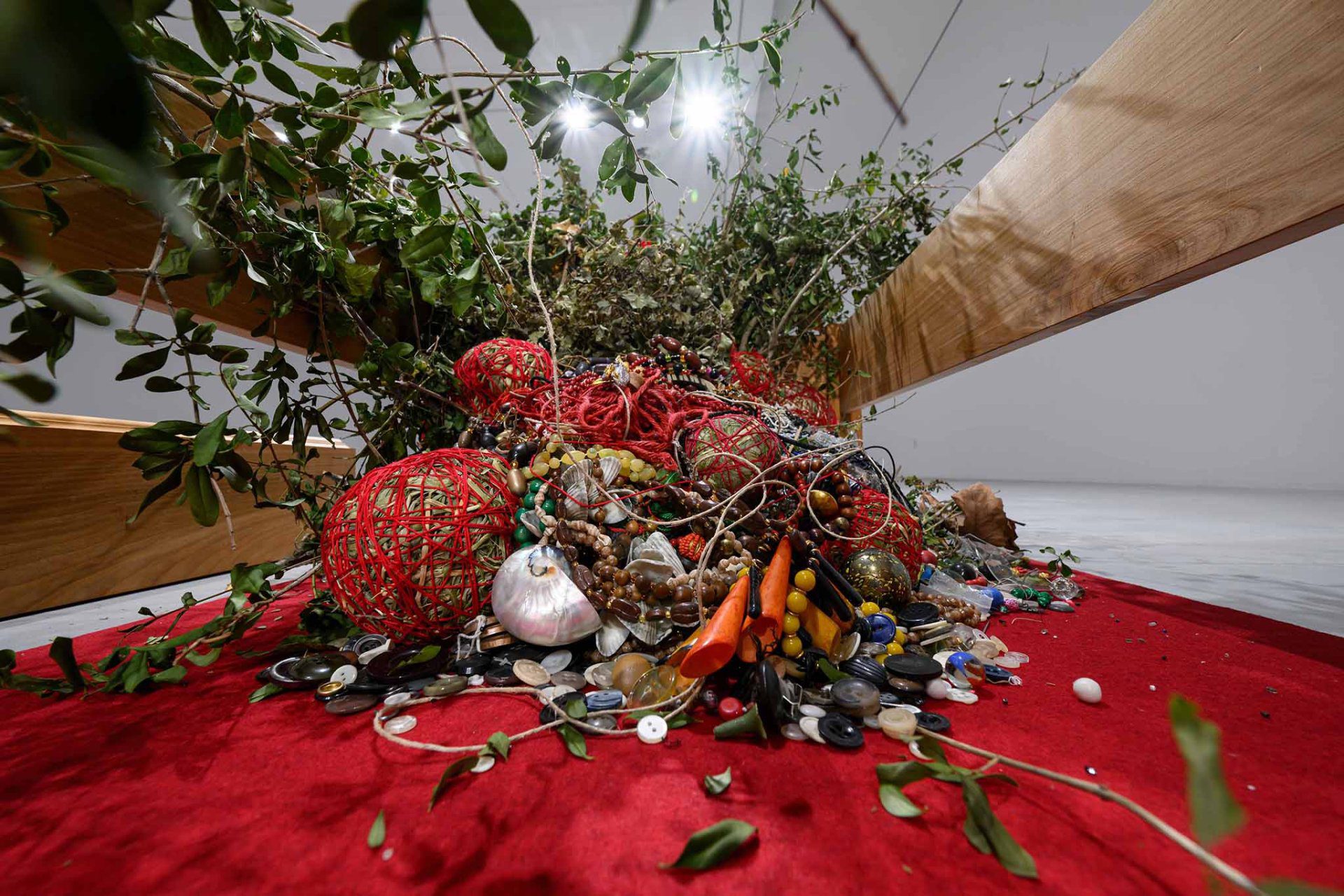
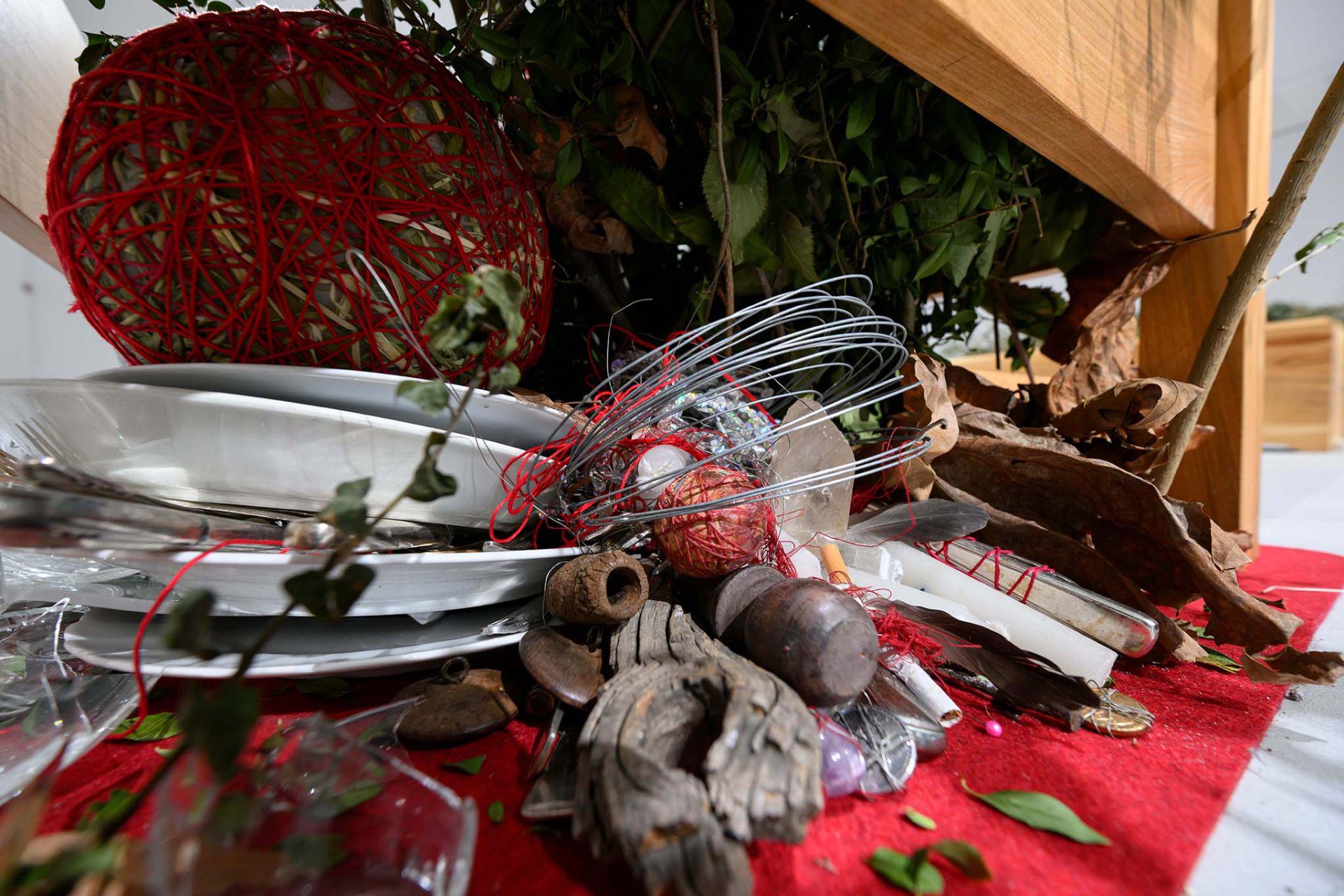
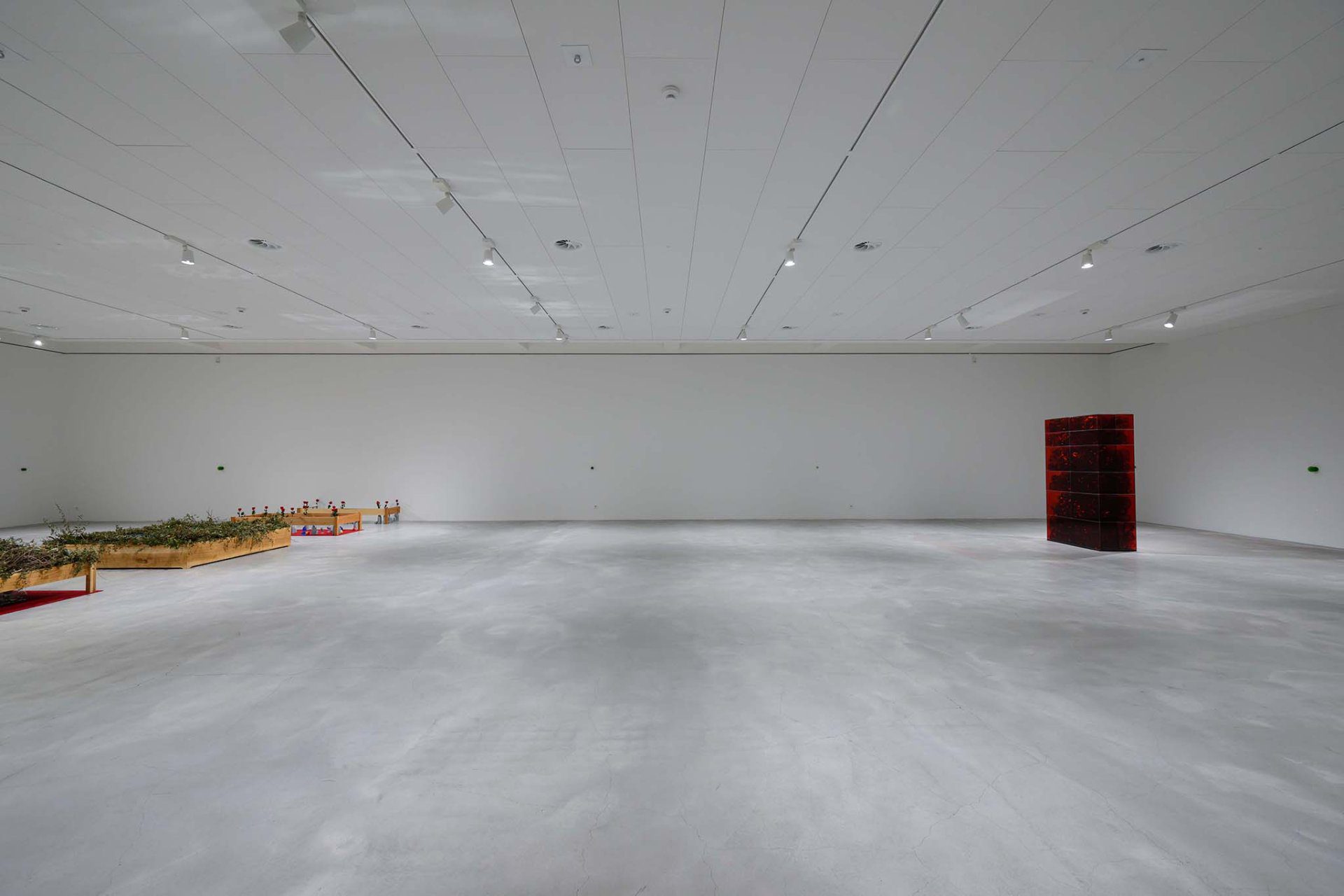
The bed-like sculptures that spread horizontally through the Engländerbau in Sistema Mestre take up these ideas*. In these works, the bed becomes a place where fundamental human experiences take shape: birth, growing up, reproduction and death. Their resemblance to composting beds extends this cycle. What decays nourishes new life. Flowers, crockery and fruit recall grave goods and still lifes. These arrangements give the exhibition a dreamlike, mysterious atmosphere.
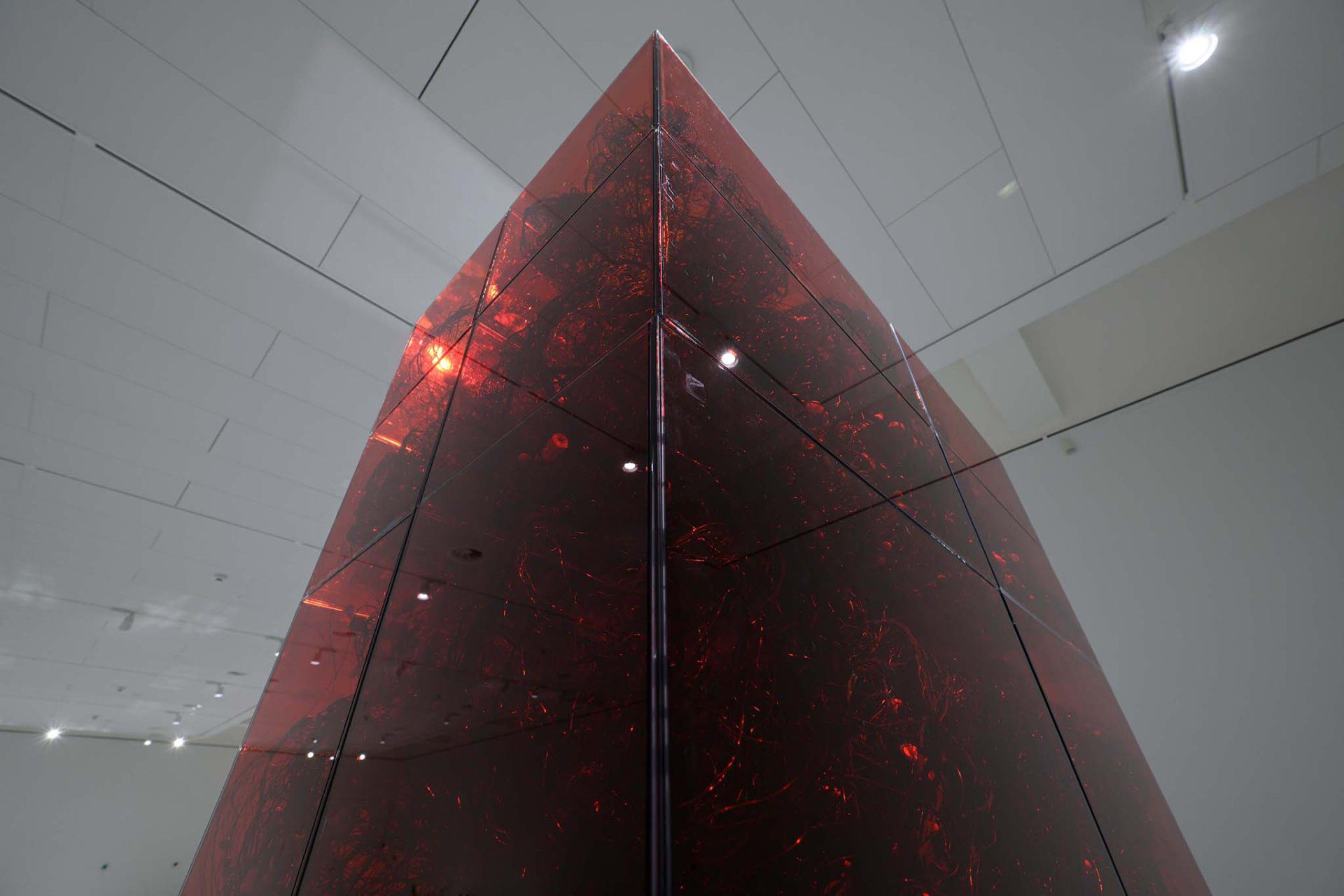
The vertical sculpture Criadouro (Breeding Chamber) stands in contrast to the horizontal works. From a distance, it resembles a glowing server tower. A closer look reveals a kind of terrarium. Its dark red, shimmering glass panels recall church windows, giving the sculpture a sacred quality. Inside, threads, beads and buttons form a dense web. This inner world seems both technological and organic.
The eye-shaped glass objects Agentes (Agents) are distributed across the exhibition walls at the height of portal door handles. Their resemblance to doorknobs suggests entering and leaving, but also control over who is allowed in. At the same time, they seem to watch over the exhibition space, creating a tension between watching and being watched.
Together, the works give the exhibition a ritual character. Rituals can offer support by giving fundamental human experiences a recurring form. A ritual can become a journey towards the origins of human existence, creating meaning and restoring order to chaos. Creating meaning in this way can help us cope with suffering. One traditional interpretation links ‘religion’ to the Latin religare: to bind or bind back. In this sense, ritual can also be understood as a form of reconnection that offers guidance in times of profound change. Yet as the pace of change accelerates, such guidance seems increasingly difficult to find.
The accelerating pace of capitalism, attacks on democracy, and technological and ecological upheavals deepen the sense that change is beyond our control. Many people experience these changes as a threat to their independence and security. A linear view of time that sees history as a process of continual improvement offers little guidance here. This is where Wirz’s artistic practice begins. It asks how far today’s world is moving away from basic human needs, and what opportunities remain for us to help shape it.
Sistema Mestre can be read as an image of an overarching system whose forces limit our ability to act. When authoritarian views shape public debate, political moderation alone can seem an adequate response to society’s needs. The question of what changes are actually needed then slips from view. The staging of political conflicts overshadows fundamental questions about society: What matters to us? What do we want to stand up for, and what do we want to resist?
Amid these upheavals, Wirz’s exhibition invites us to pause and reflect on what matters most. The works create space to ask what place deeply rooted human needs have in our lives today.
Ailton Krenak’s understanding of ancestrality offers another perspective on Wirz’s work: a living relationship with ancestors and the earth that sustains the present and makes a future possible. It includes inherited knowledge and experience, as well as the ‘memory’ of stones, mountains, rivers and forests. This way of thinking challenges a narrative of progress in which the old must be overcome for something new to emerge. Instead, past, present and future enter into a relationship with one another. In this sense, Wirz’s exhibition can be understood as a call, in uncertain times, to think in terms of cycles and interconnectedness.
* Wirz calls the individual sculptures serventes, meaning ‘those who serve’, and refers to them collectively as servidor, meaning ‘server’.
Text: Fabian Flückiger